
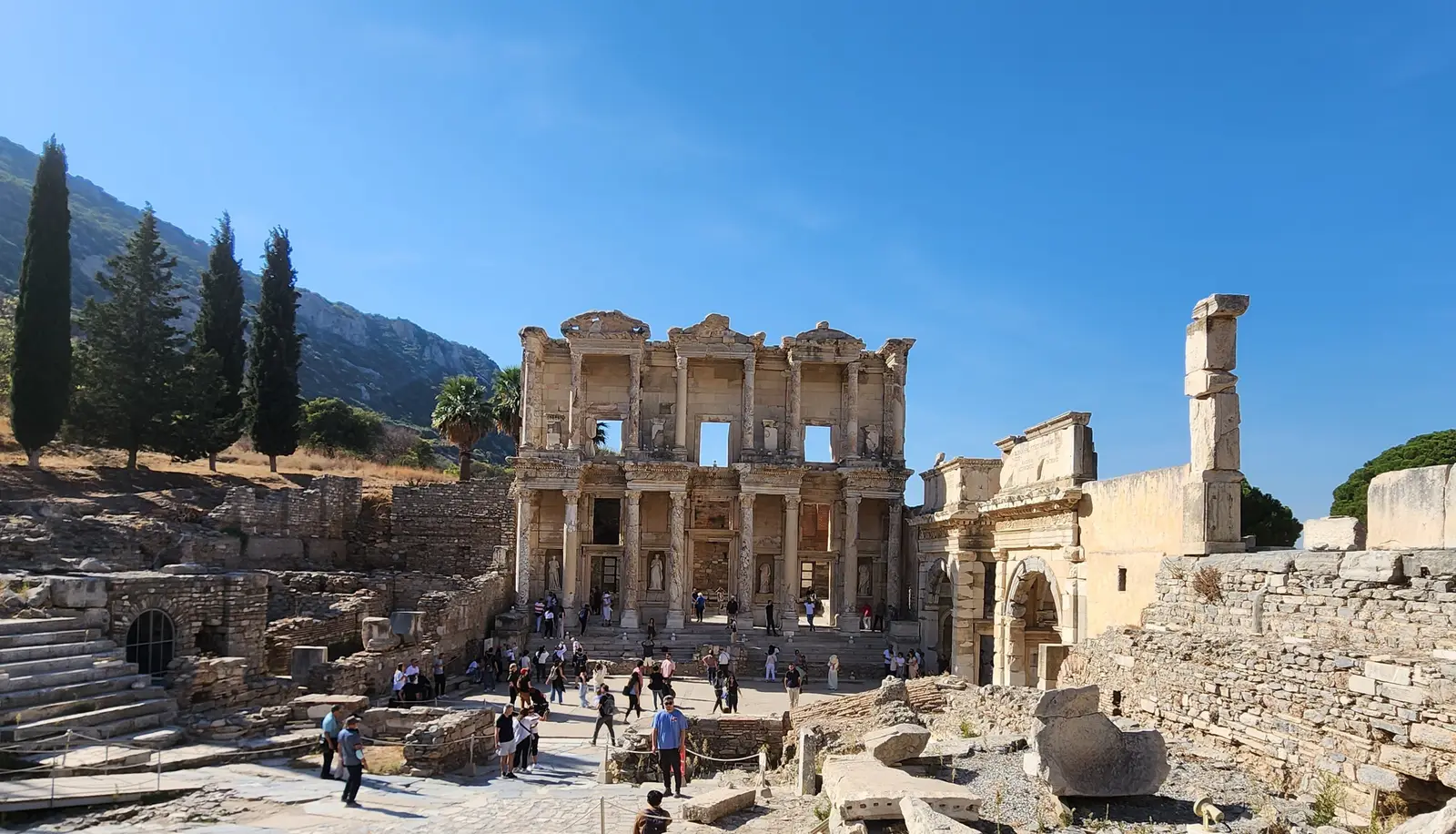
What to see and do in Ephesus, Turkey


Ephesus was built in 1000 BC by the Greeks and was one of twelve cities that were members of the Ionian League.
The city came under the control of the Roman Republic in 129 BC. The city was famous for the nearby Temple of Artemis (550 BC), which was one of the Seven Wonders of the Ancient World. It was one of the most important cities of the ancient world and is now a popular tourist destination because of its well-preserved ruins.
We visited Ephesus on 10/09/2022. While here, we walked through the ancient city and explored the buildings located there.
The city of Ephesus was founded in the 10th century BC by Ionian Greeks. It became an important commercial center and port, with a population that grew to over 250,000 at its height in the Roman period. It was also a center of culture and learning, home to the famous Library of Celsus and the Temple of Artemis, one of the Seven Wonders of the Ancient World.
Ephesus played a significant role in early Christianity, as it is believed to be one of the seven churches mentioned in the Book of Revelation. The apostle Paul spent time in Ephesus and wrote the Letter to the Ephesians to the Christian community there.
Today, visitors to Ephesus can see a wide range of ancient ruins, including the Library of Celsus, the Great Theatre, the Temple of Hadrian, and the impressive remains of the Temple of Artemis. The site is also home to the House of the Virgin Mary, a small stone house where it is believed the mother of Jesus spent her final years.
Ephesus is located near the modern city of Selçuk and is easily accessible by car or public transportation. It is a UNESCO World Heritage site and a must-visit destination for history and archaeology enthusiasts.
Looking for a place to stay? Click here for options.
Looking for things to do? Viator offers numerous tours in the Ephesus area. Click here for details.
Pictures from Ephesus
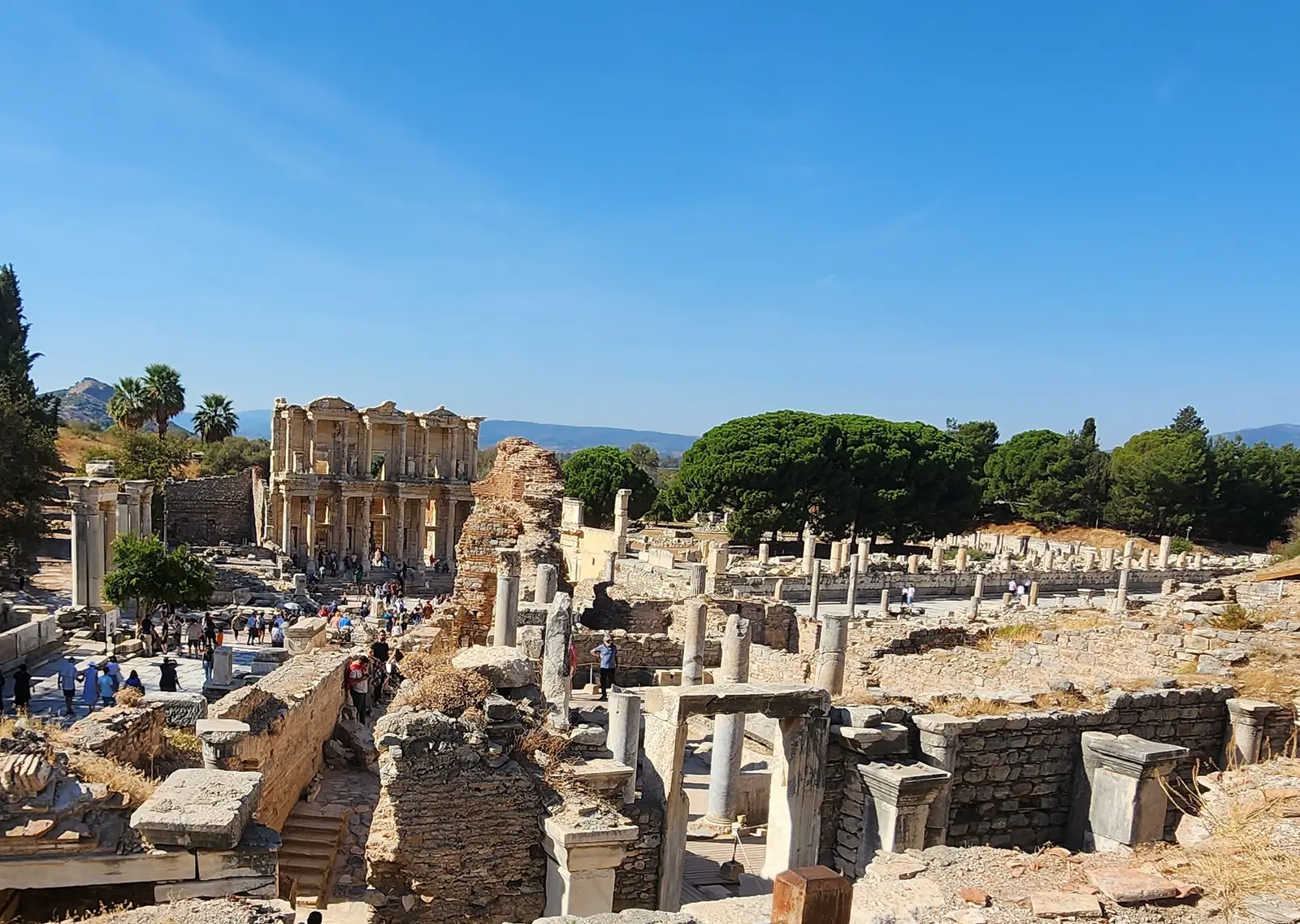
Library of Celsus completed in 135 AD, was one of the biggest libraries of ancient times. It contained over 12,000 scrolls. The two story front of the library contained statues of four female statues placed in the façade’s niches are of Sofia (Wisdom’), Arete (‘Virtue’), Ennoia (‘Insight’), and Episteme (‘Knowledge’).
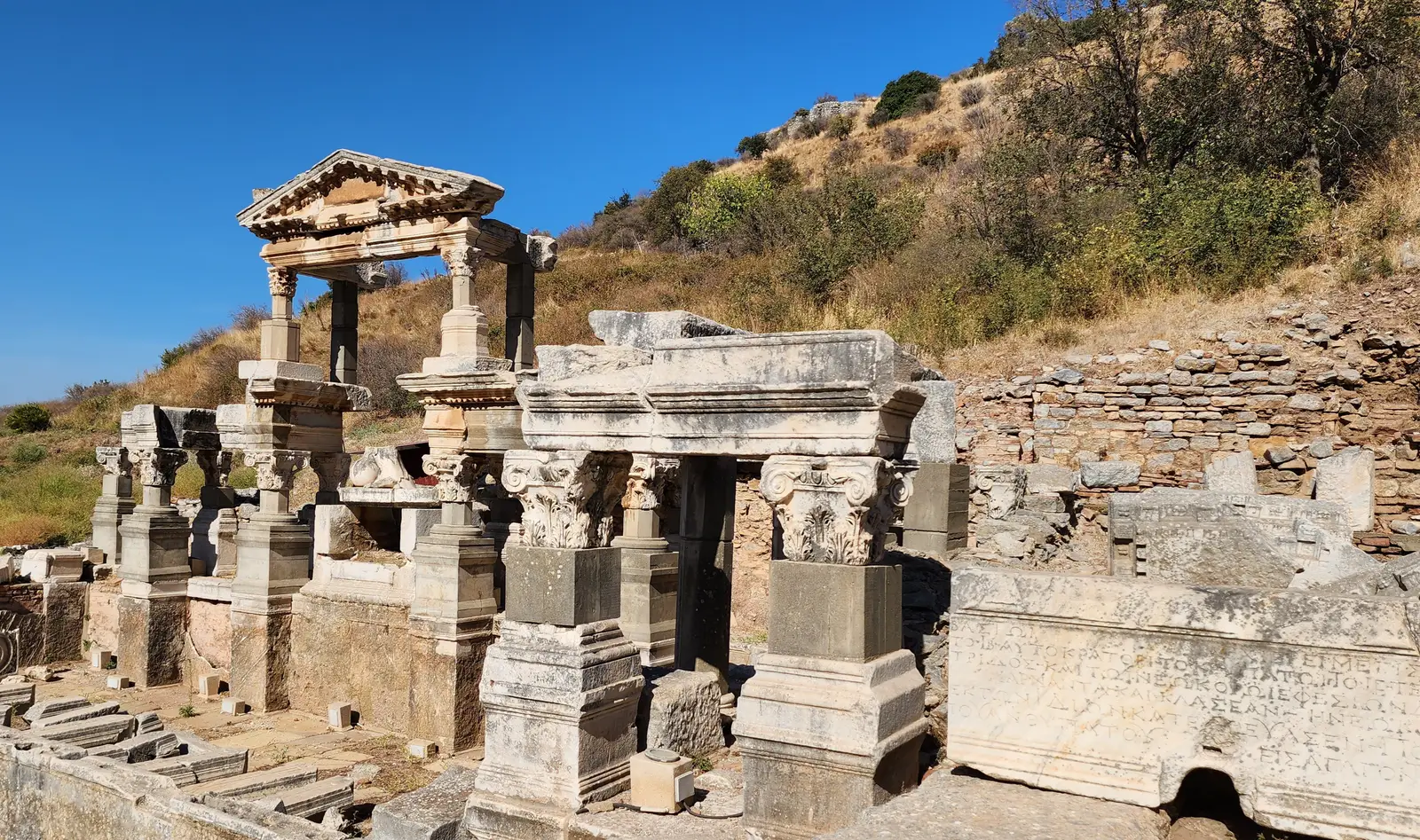
The Temple of Hadrian is one of the best-preserved and most beautiful structures. It was built before 138 A.D and was dedicated to Emperor Hadrian, who came to visit the city in 128 A.D.
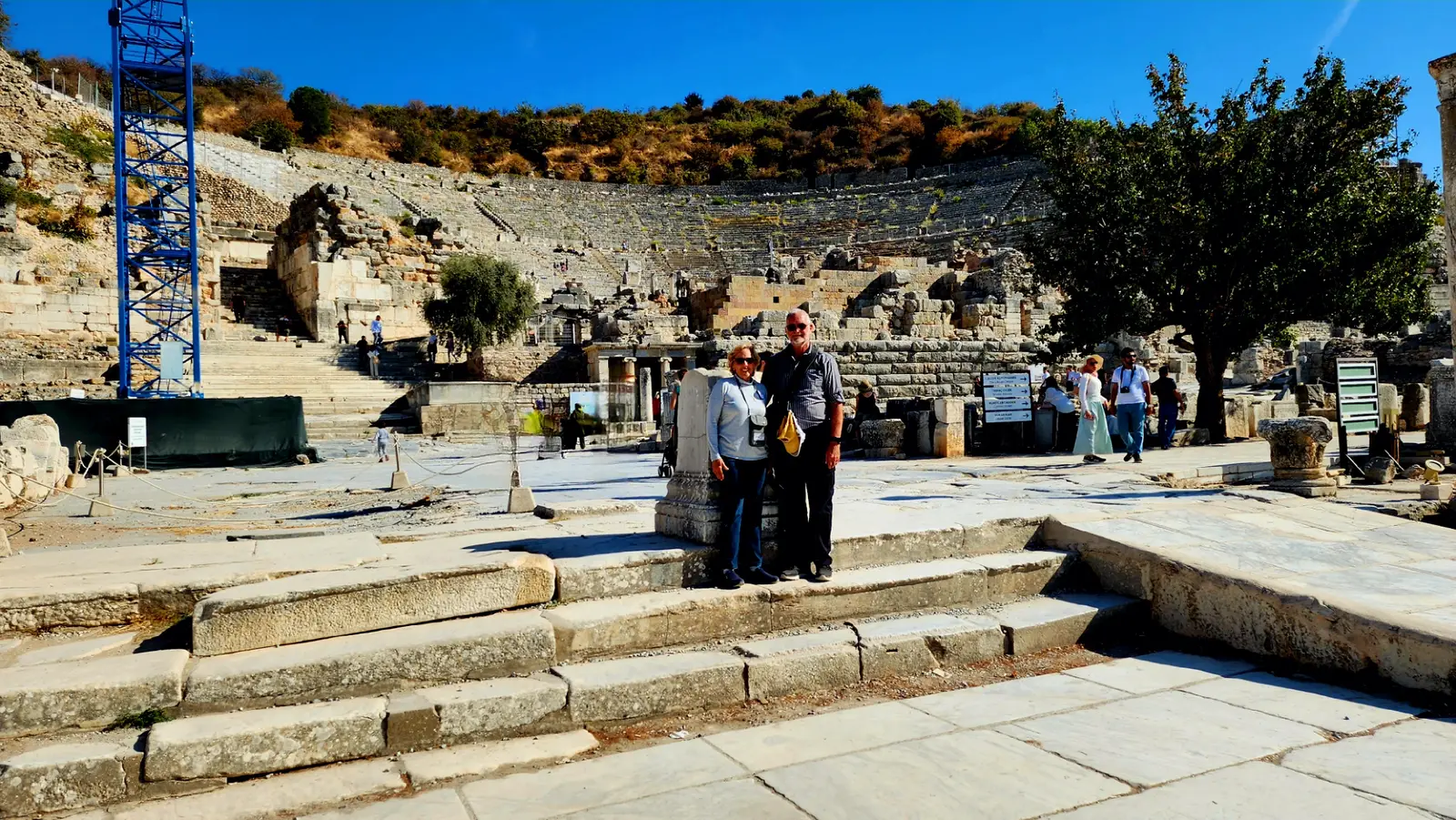
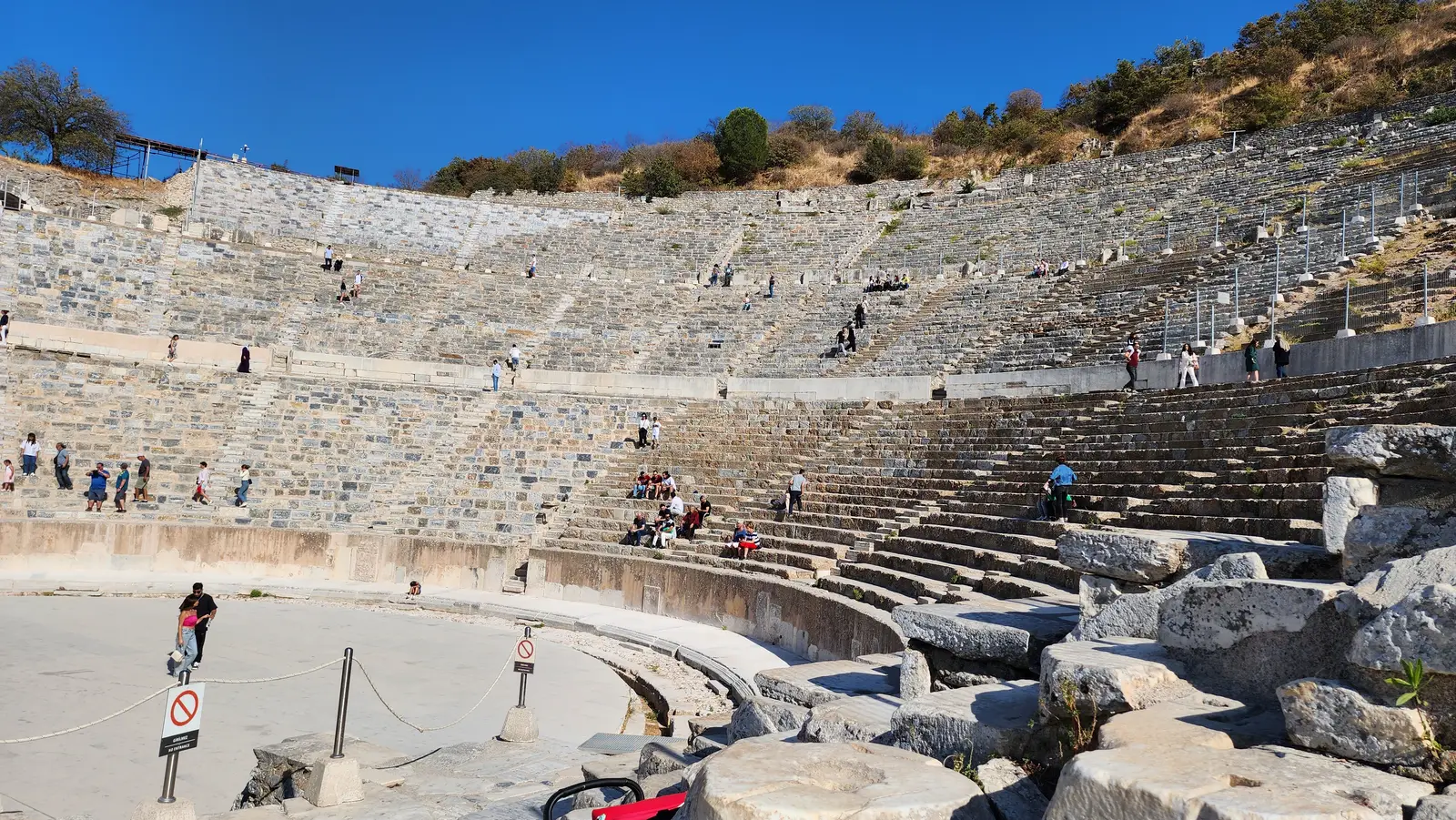
The Great Theatre of Ephesus was first constructed about 250 B.C, during the reign of Lysimachos. During the Roman period, it was enlarged to seat 25.000 people around 44 A.D. The Acts of the Apostles, chapter nineteen, describes an assembly in the theatre where the city clerk defended Paul and his companions around 53 AD. It is believed that the Gospel of John might was written in Ephesus. Is is purported that Mary, the mother of Jesus, traveled there with John and may have spent the last years of her life in Ephesus.
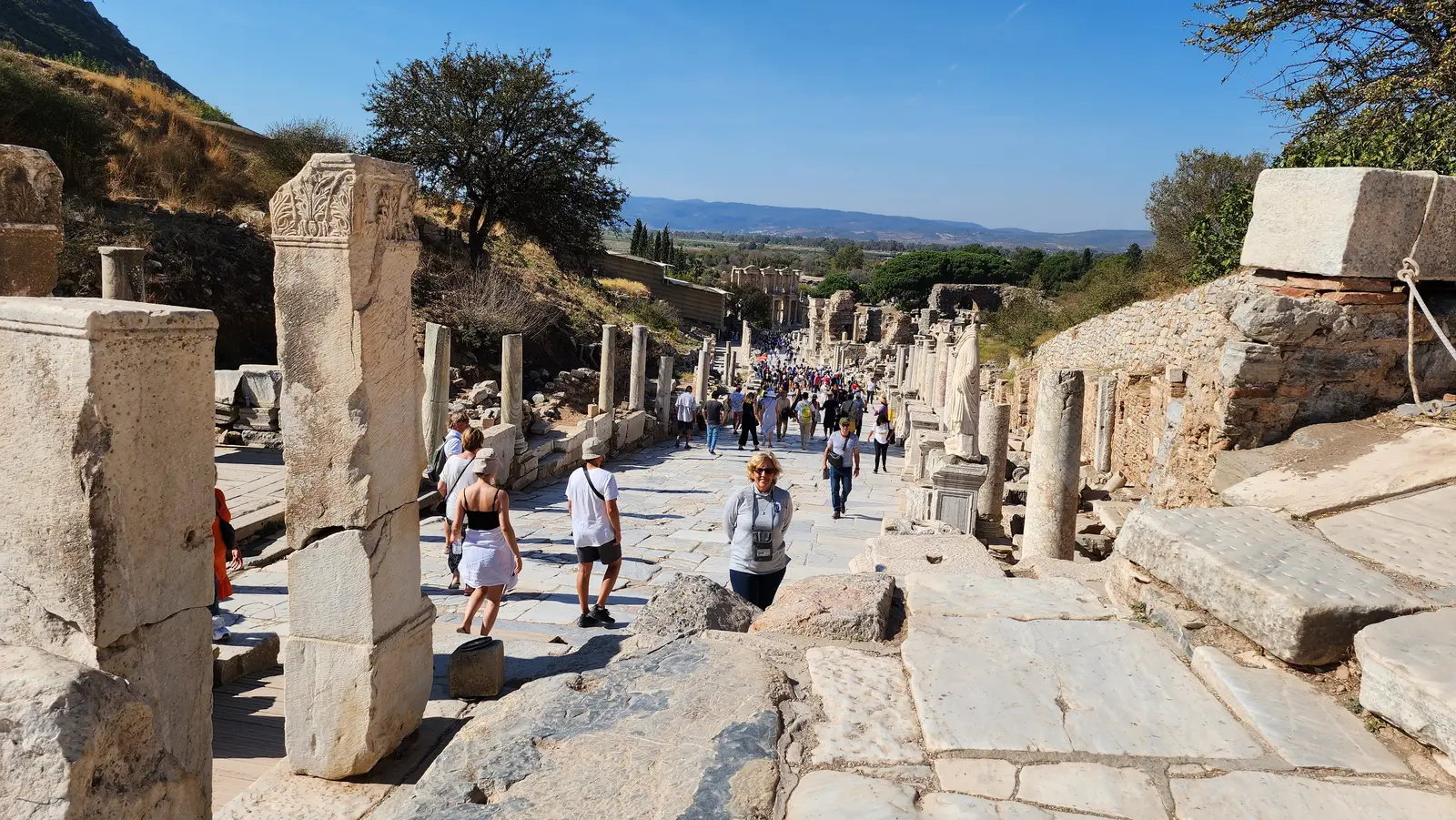
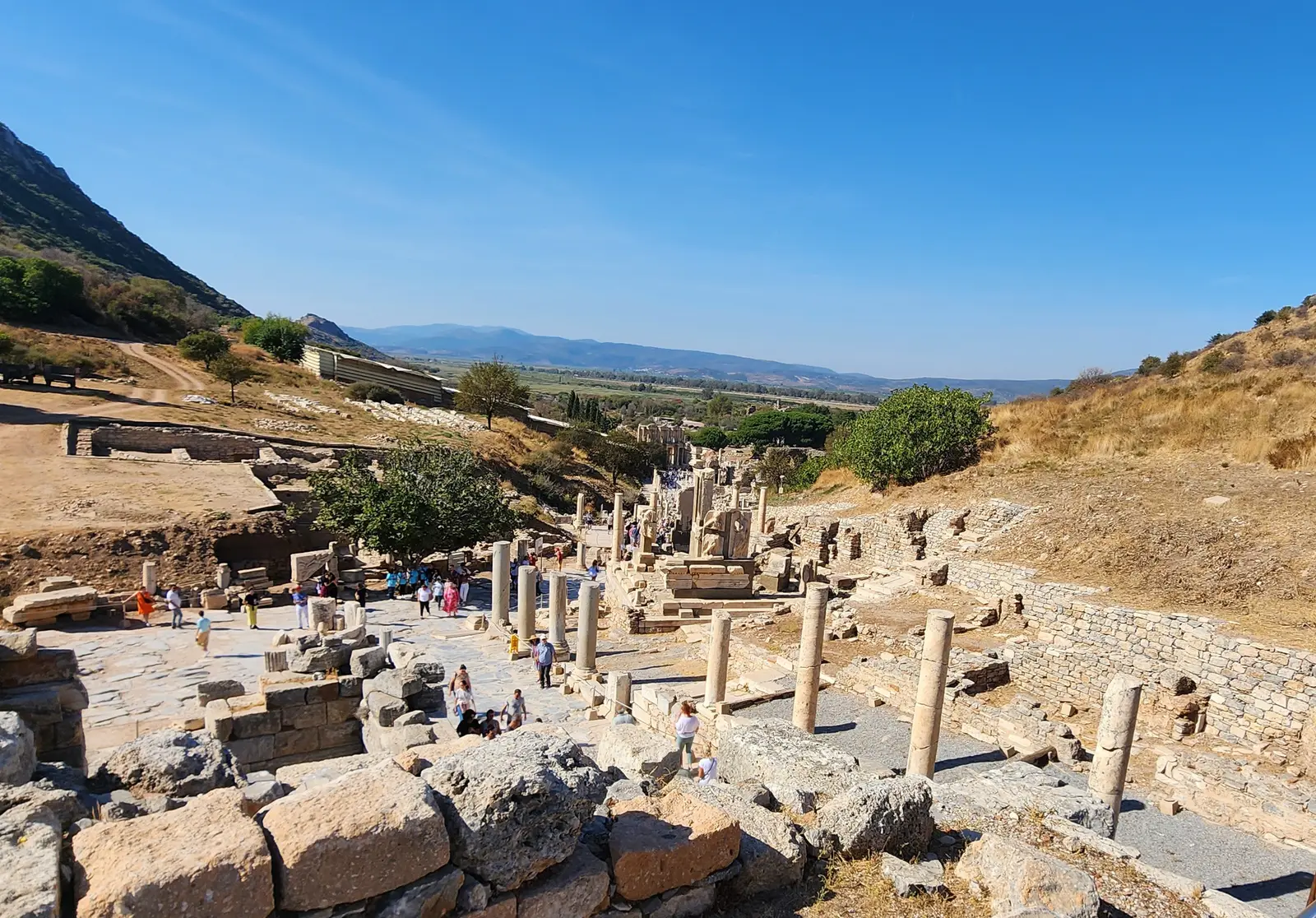
Curetes Street one of the main streets of Ephesus between the Hercules Gate and the Celsus Library. This street took its name from the priests who were called as Curetes. There were fountains, monuments, statues, and shops on the sides of the street. Some of the shops were two storied.
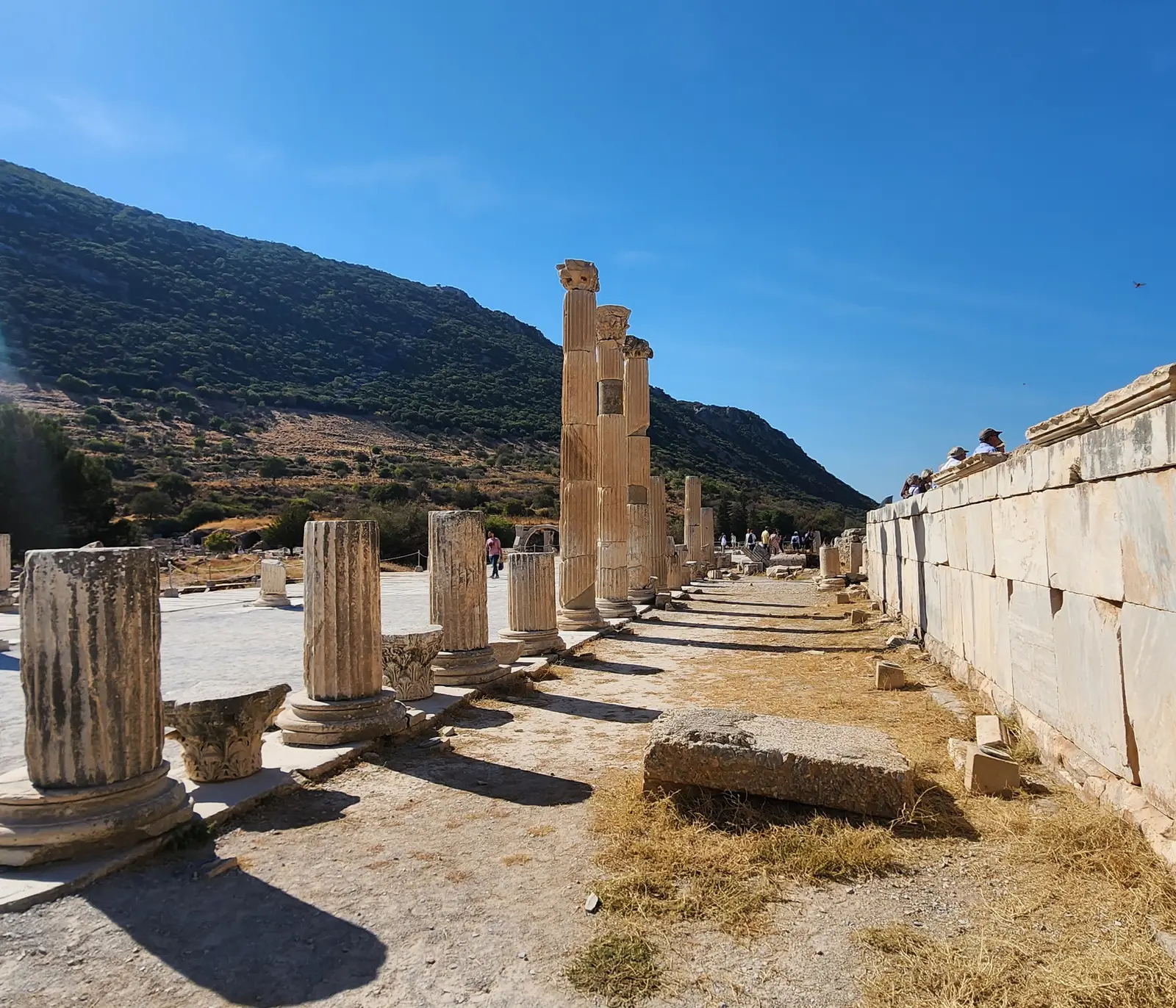
Pillars along Curetes Street.
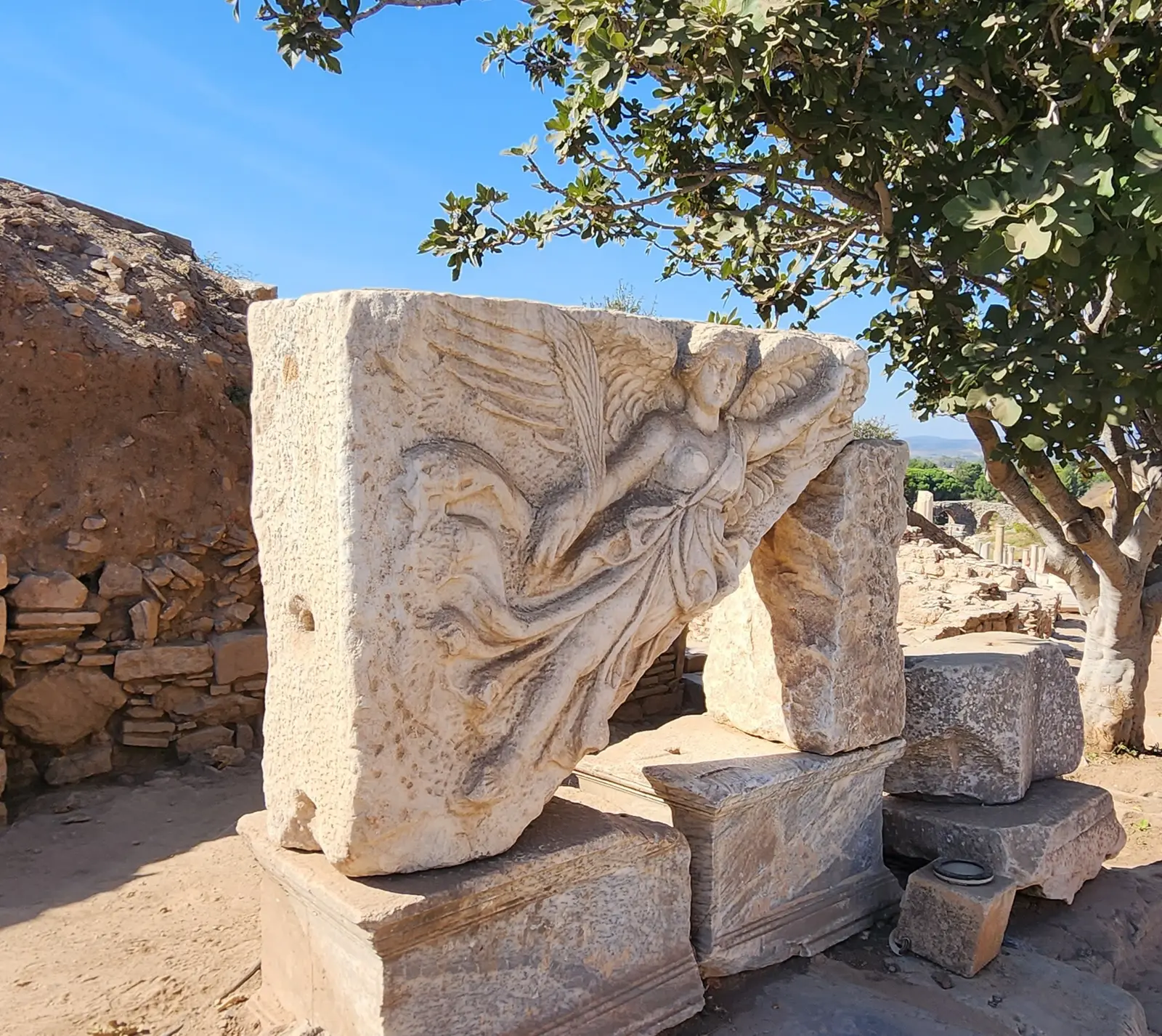
Stone carving of the goddess Nike.