Gude Adventures | Travel Blog - to 628 Destinations in 64 Nations that we visited
What to see and do at Topkapi Palace, Istanbul, Turkey
Booking through these agencies from here will help support this site at no extra cost to you.
Topkapi Palace is a historical palace and fortress complex located in Istanbul, Turkey.
It served as the primary residence and administrative headquarters of the Ottoman sultans from the 15th to the 19th century. Today, it is one of the most popular tourist attractions in Istanbul and a UNESCO World Heritage site.
We visited Topkapi Palace on 10/8/2022. While there, we toured many of the buildings and the four courtyards of the palace complex.
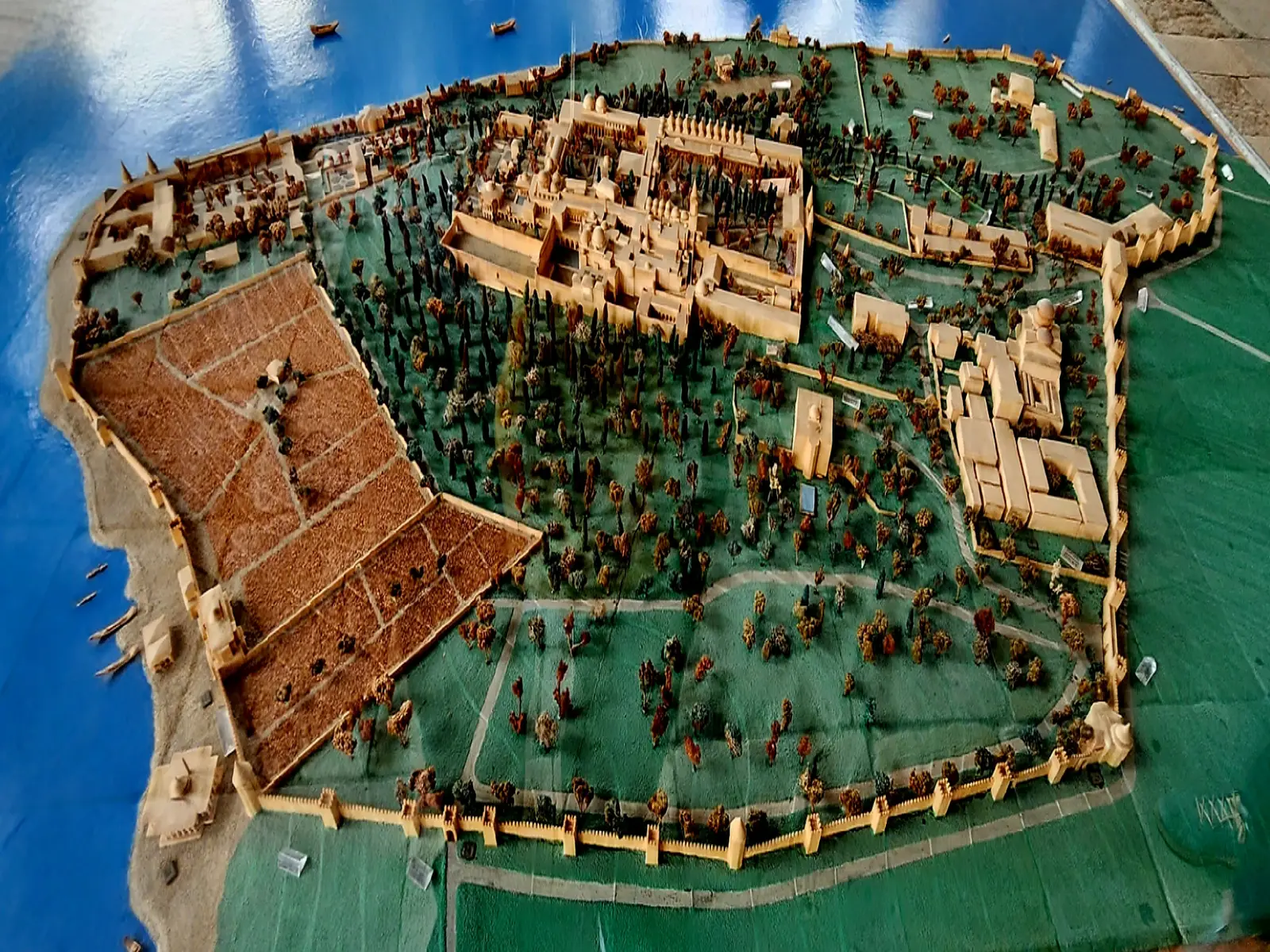
Construction of the palace began in 1459, six years after the conquest of Constantinople. It was the main residence of its sultans until the 17th century. The palace complex consists of four main courtyards and many smaller buildings containing hundreds of rooms and chambers.
The palace complex is located on Seraglio Point, overlooking the Golden Horn, where the Bosphorus Strait meets the Marmara Sea.
Overall, Topkapi Palace is a fascinating glimpse into the history of the Ottoman Empire and a must-visit destination for anyone traveling to Istanbul.
Looking for things to do? Viator offers numerous tours in the Istanbul area. Click here for details.
Pictures from Topkapi Palace
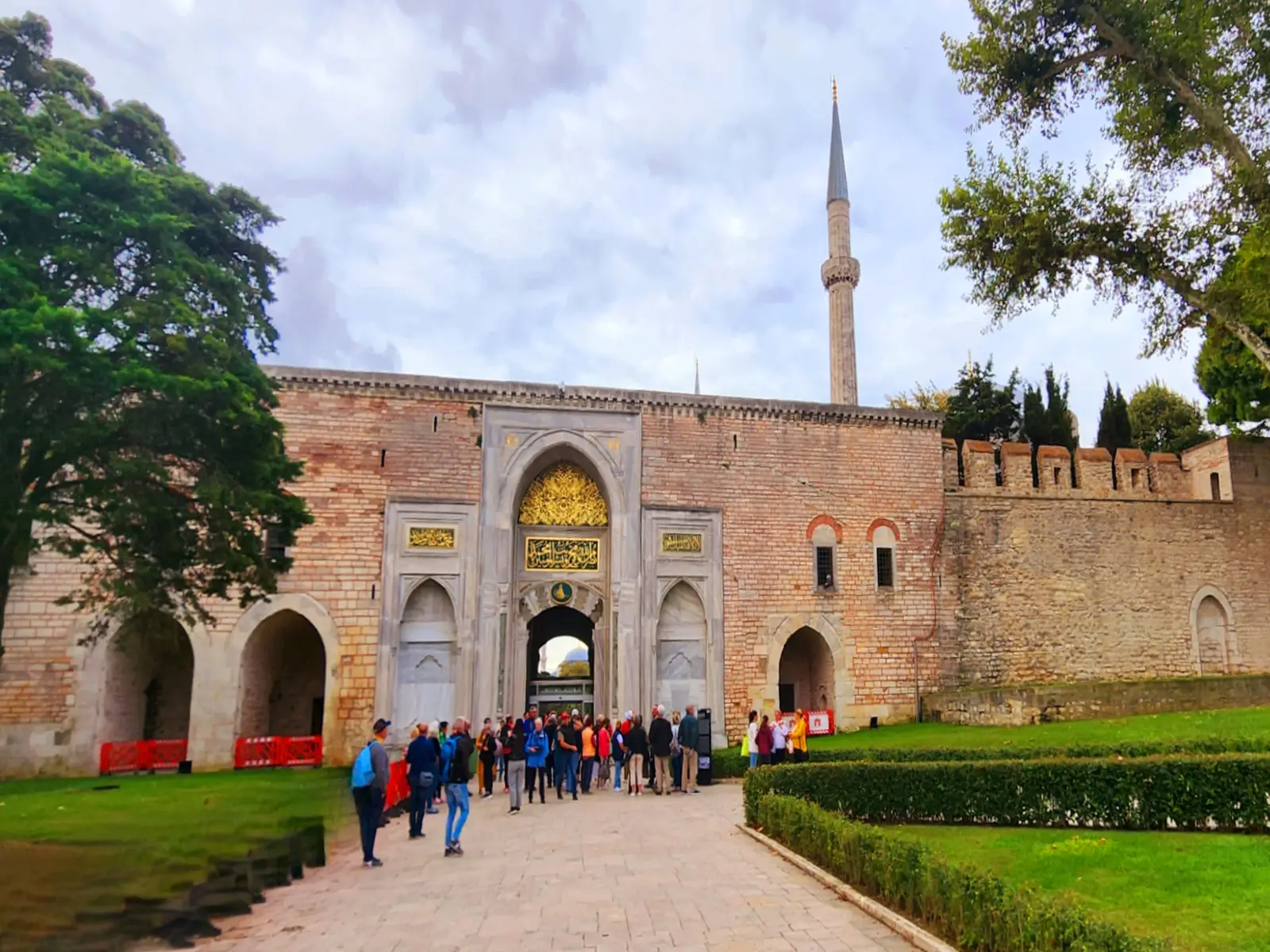
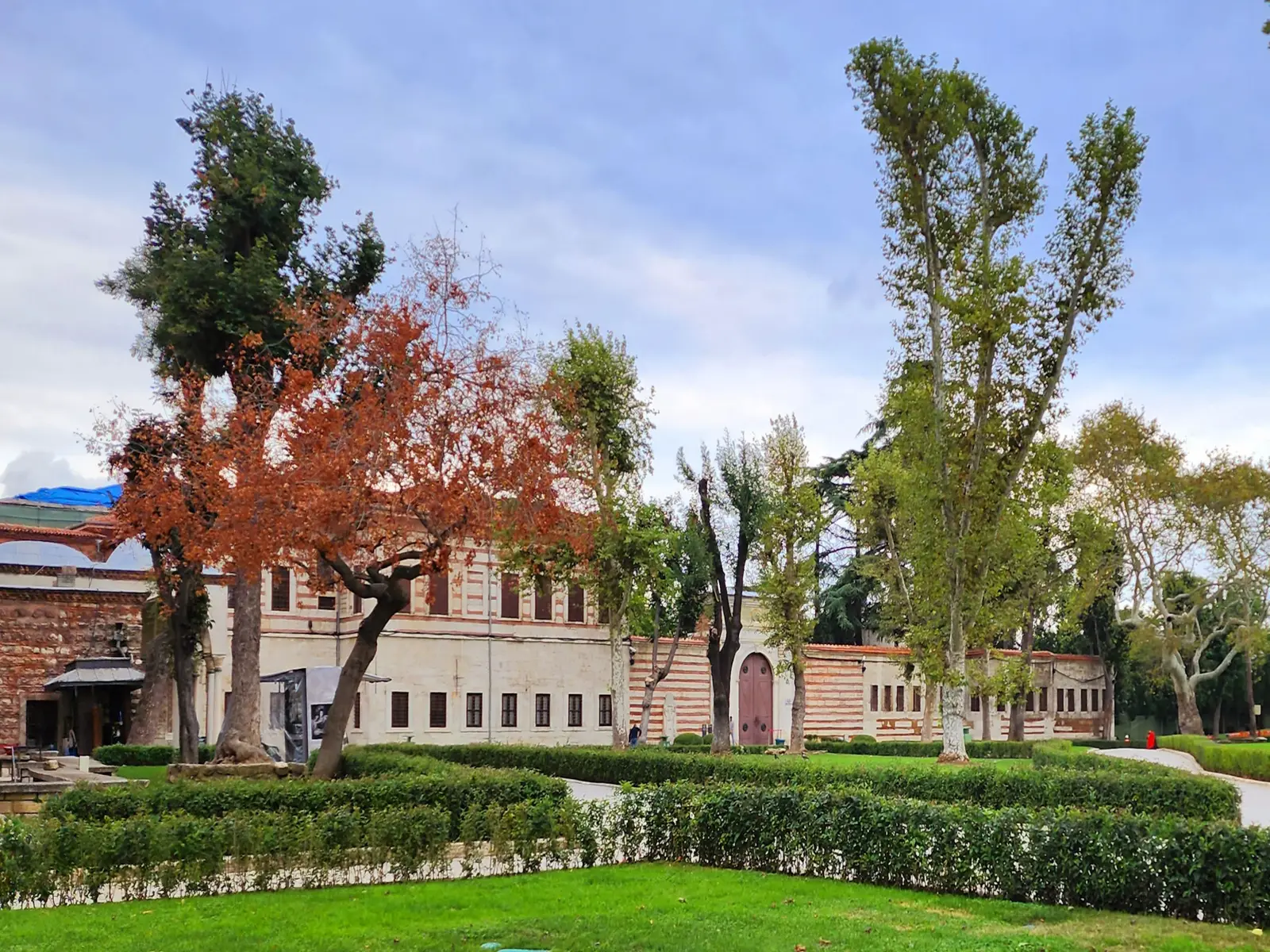
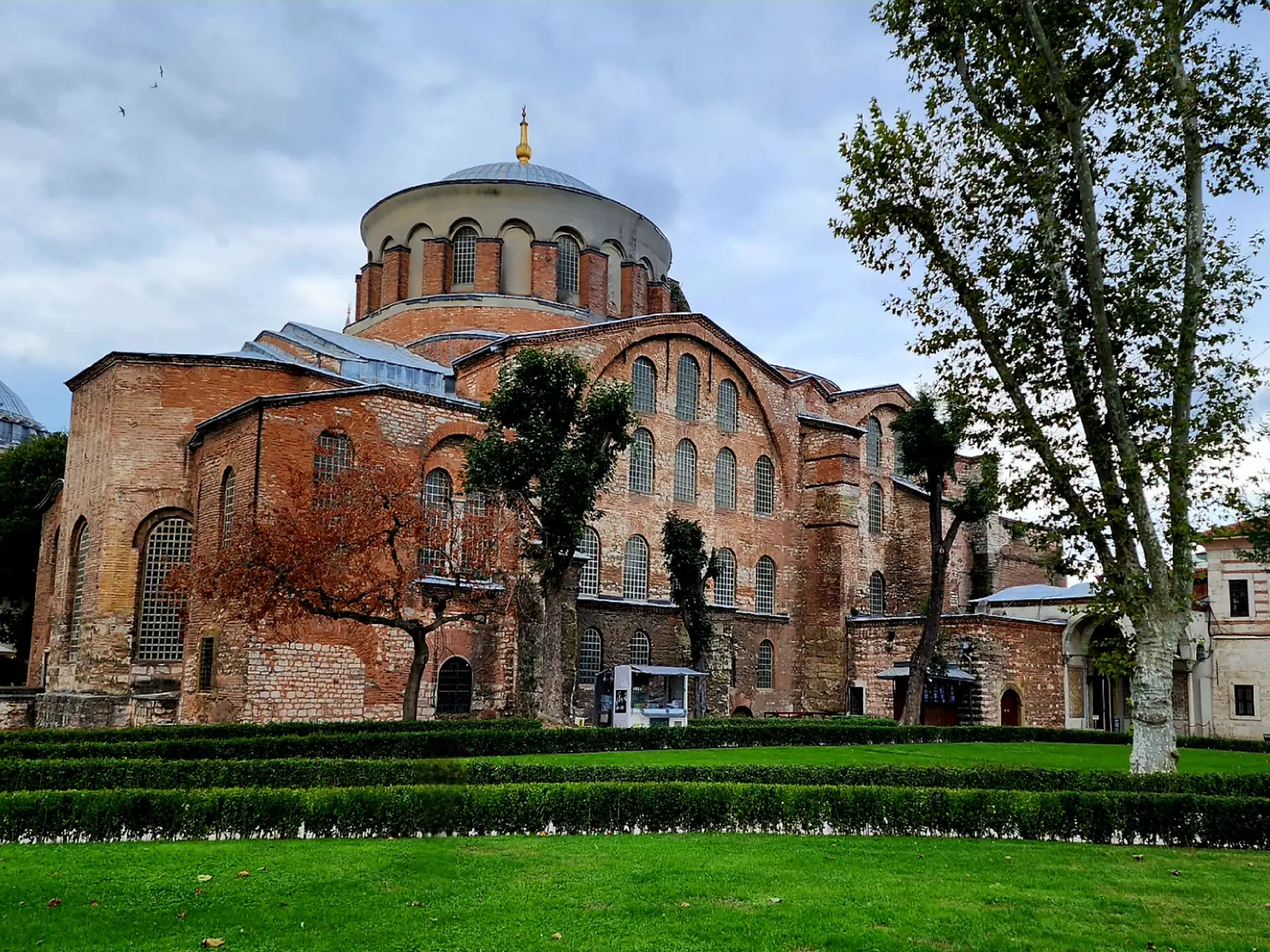
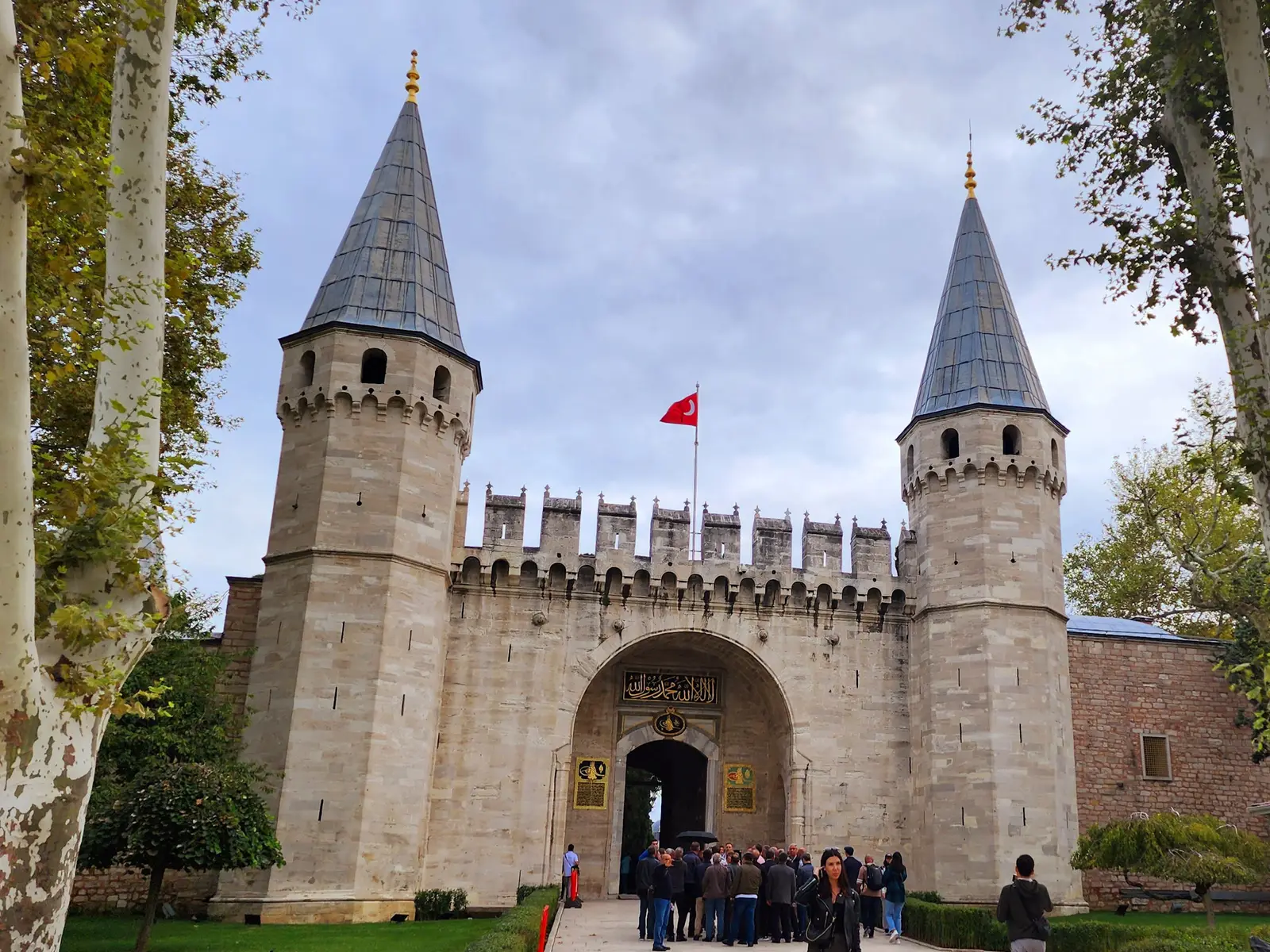
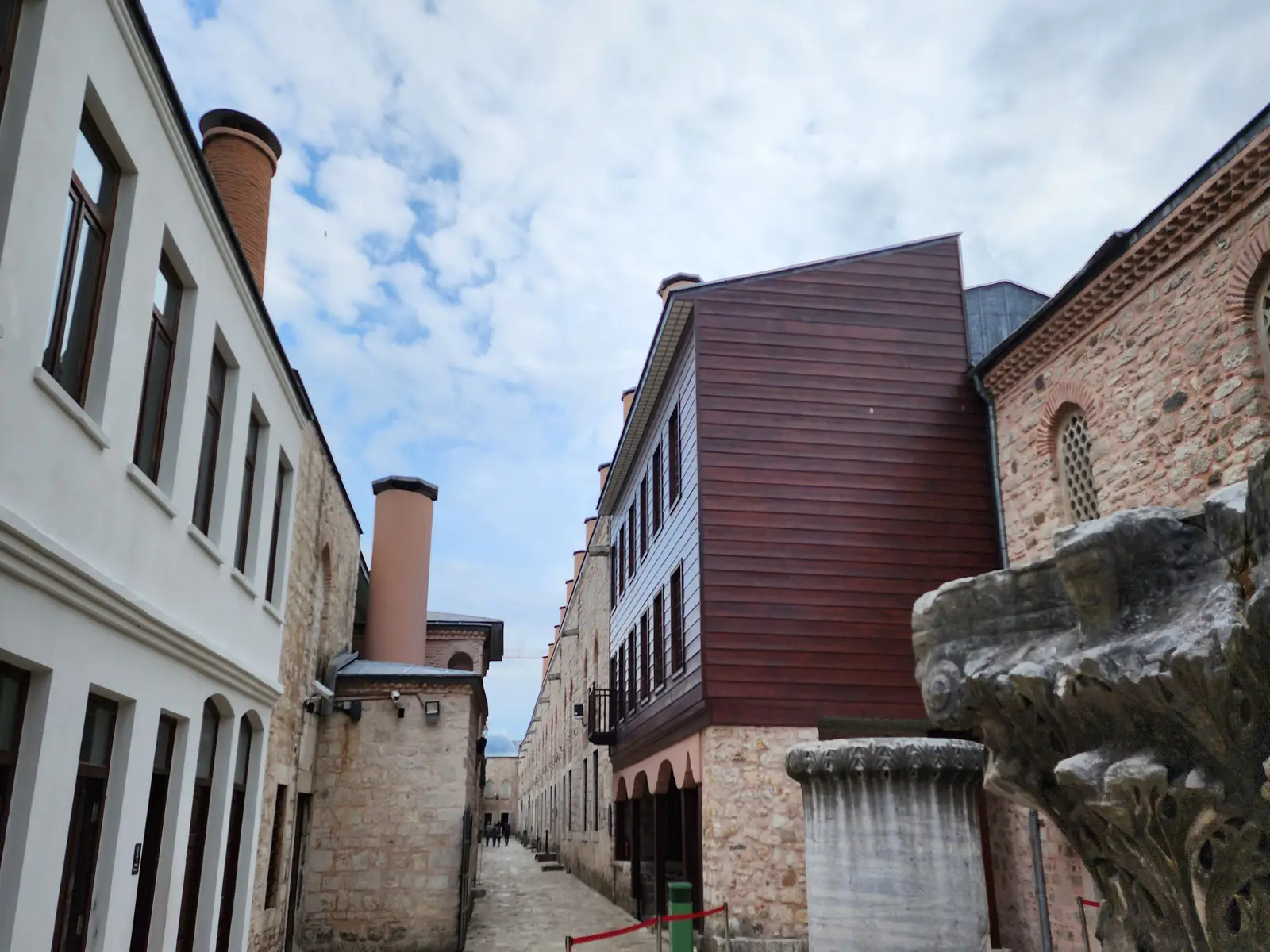
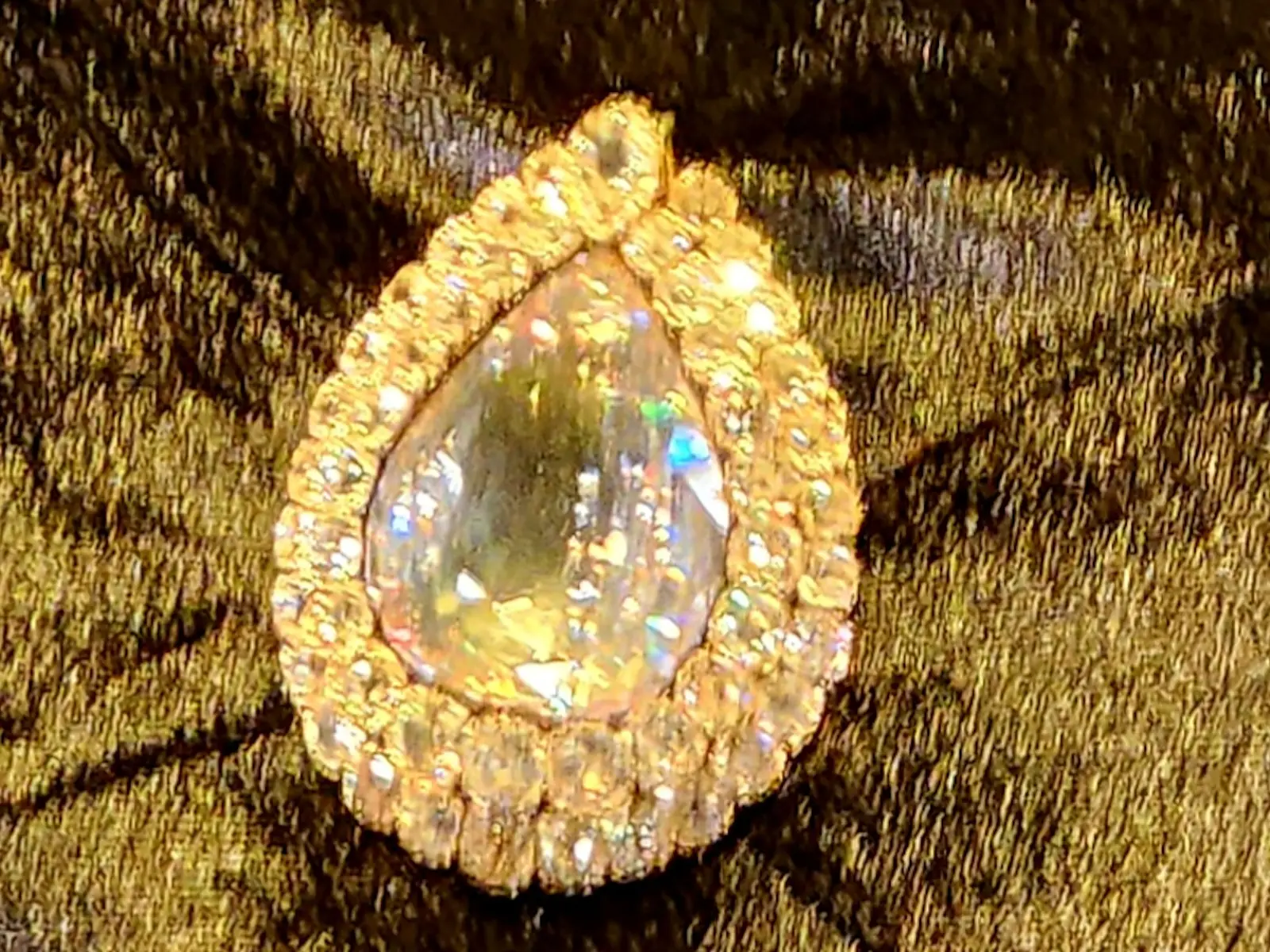
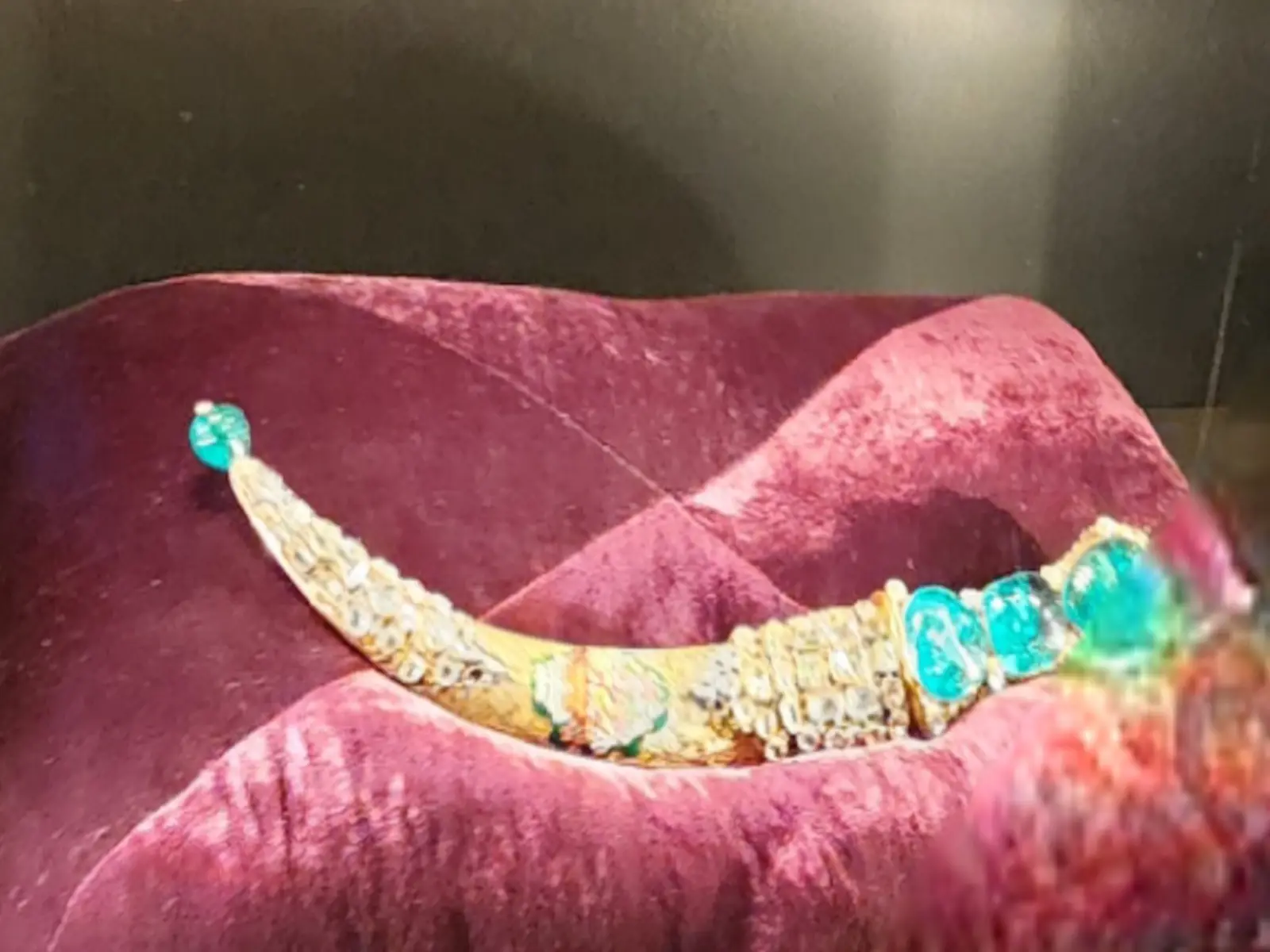
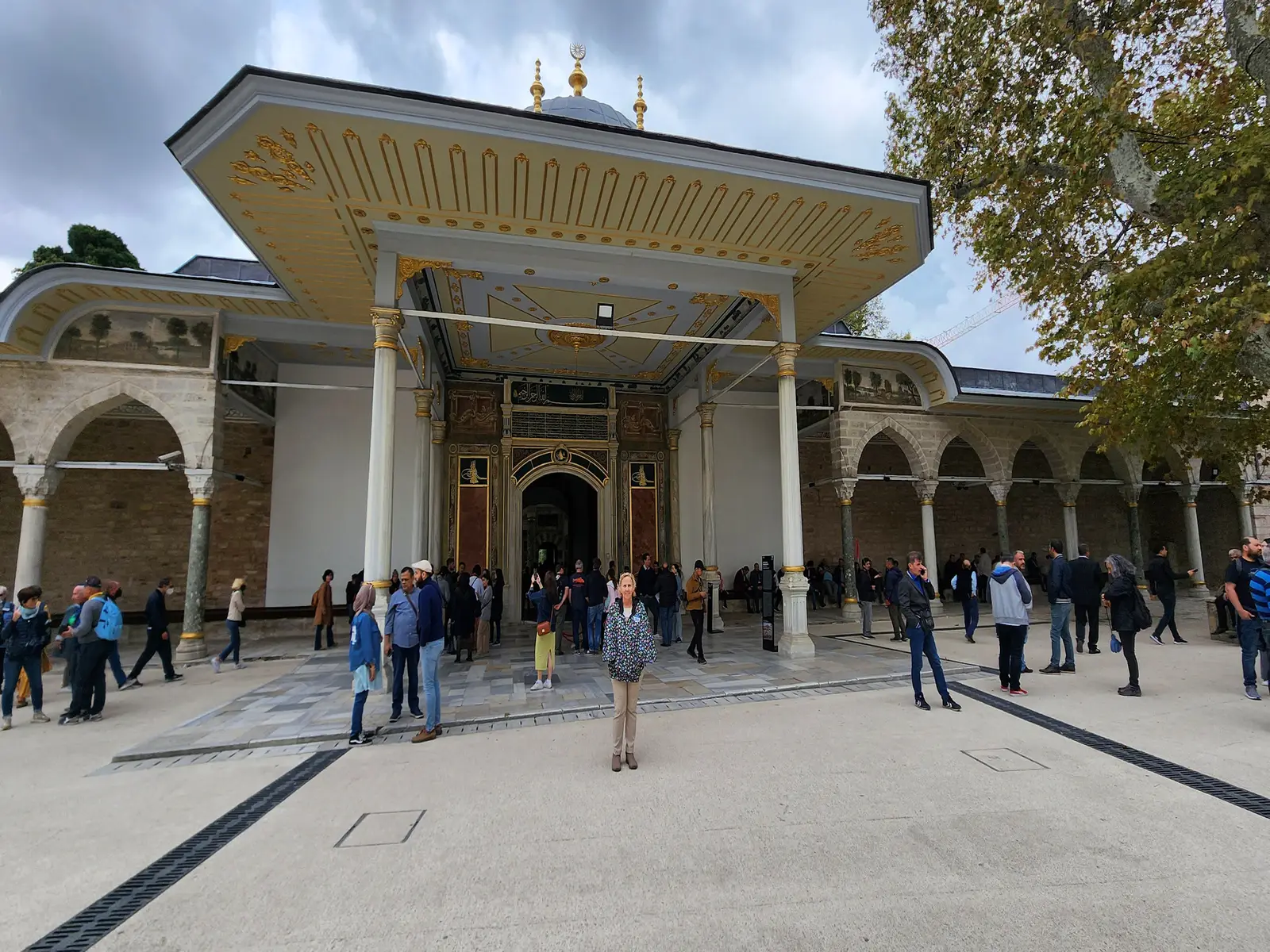
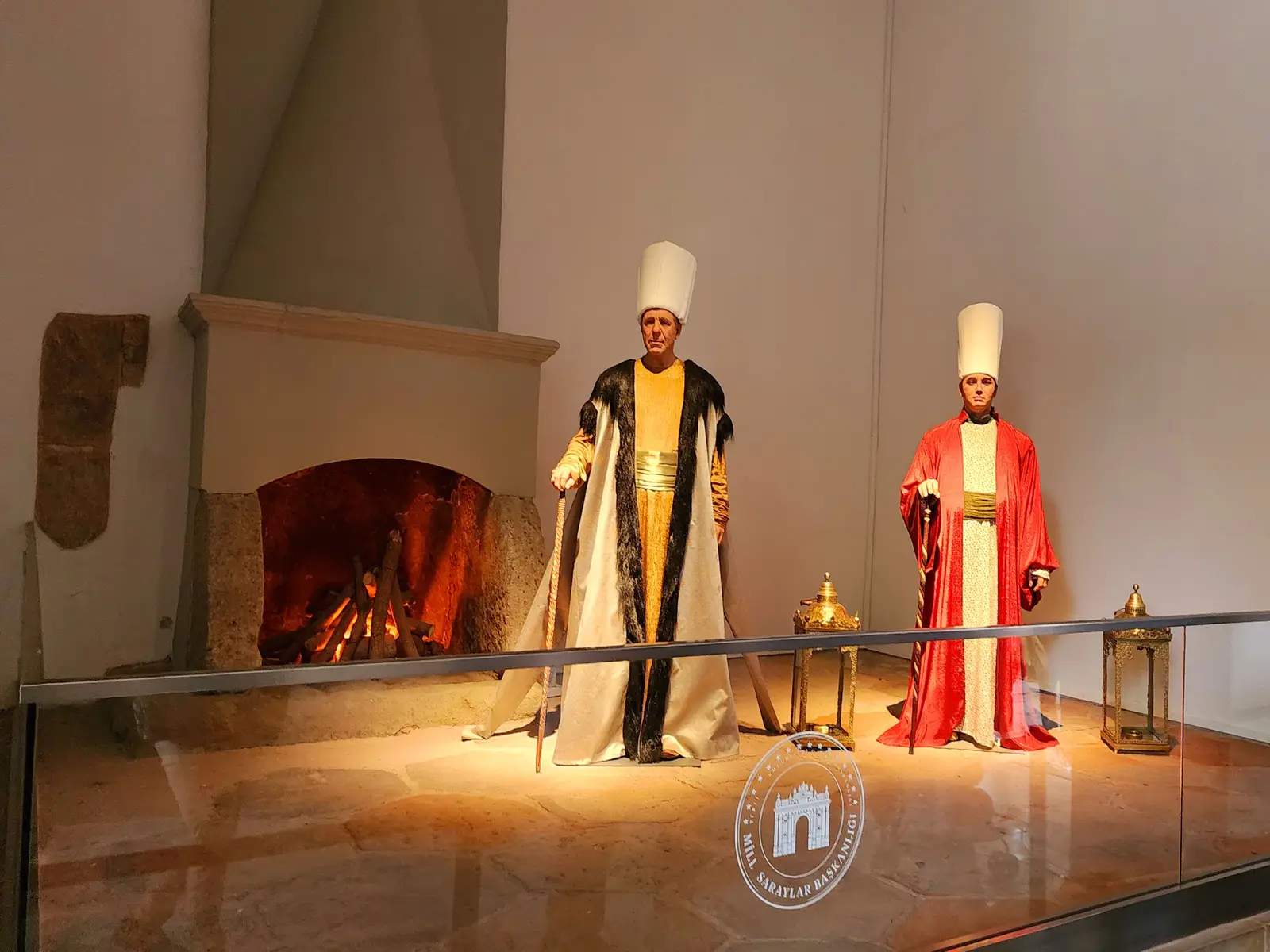
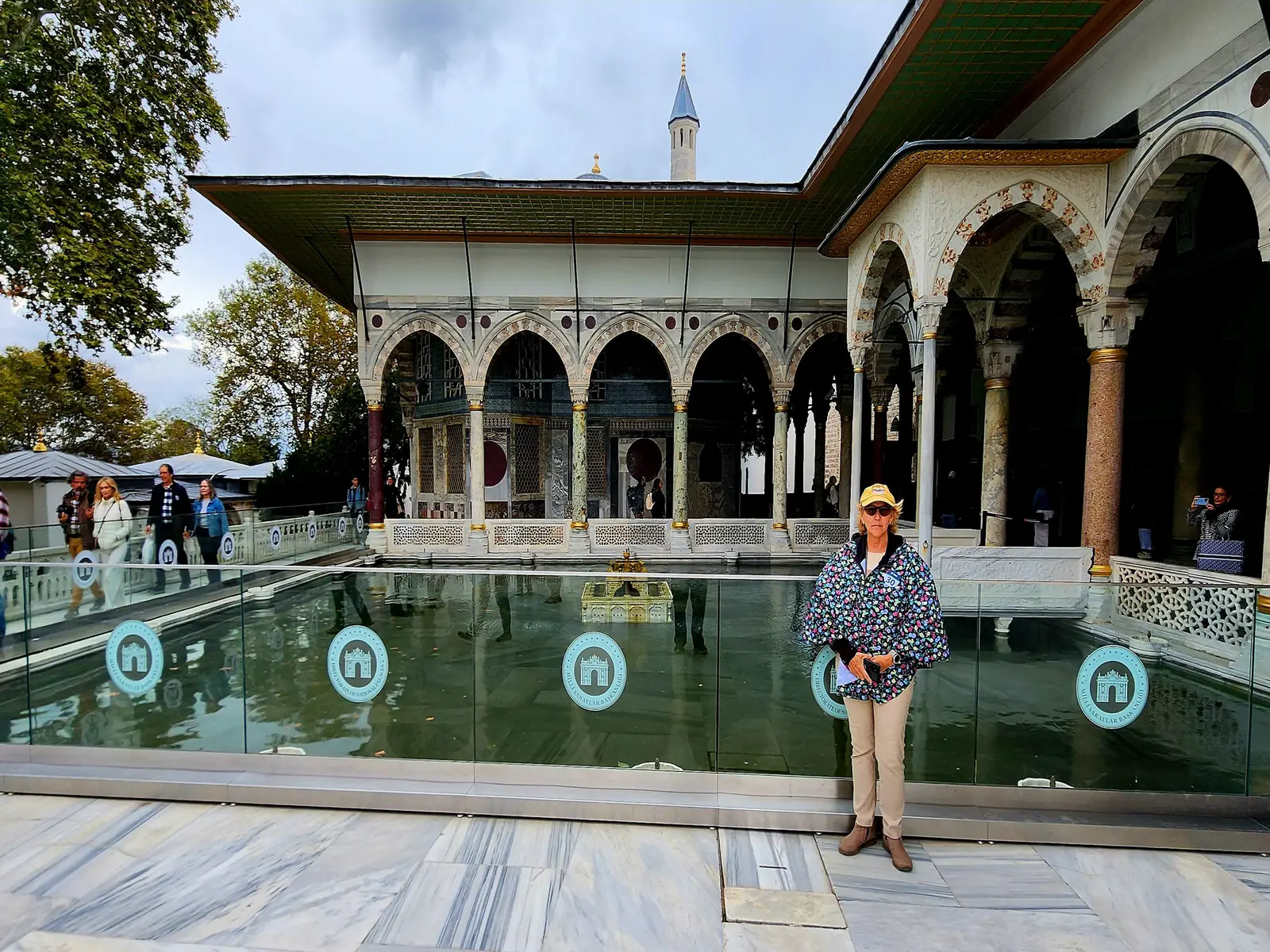
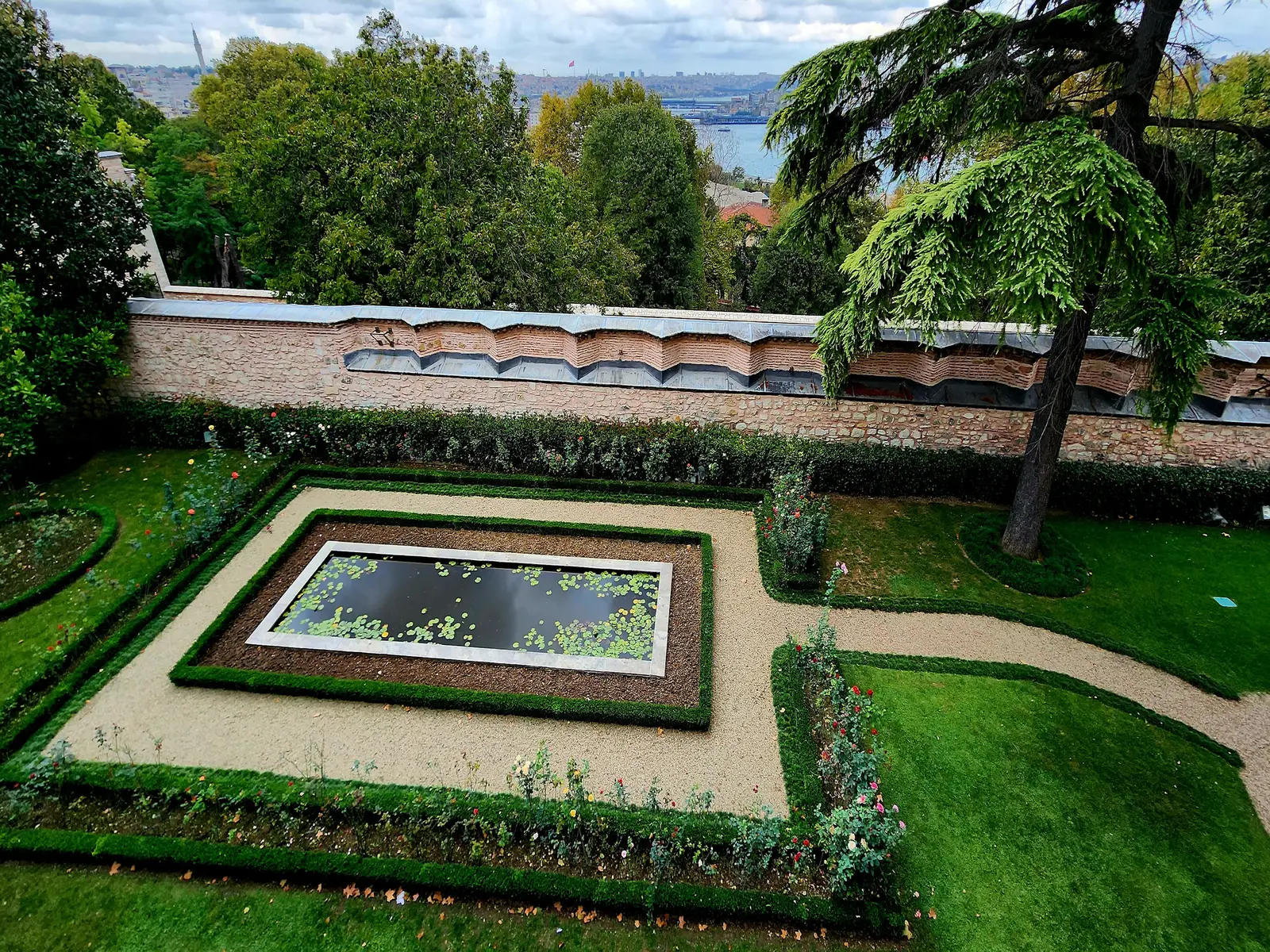
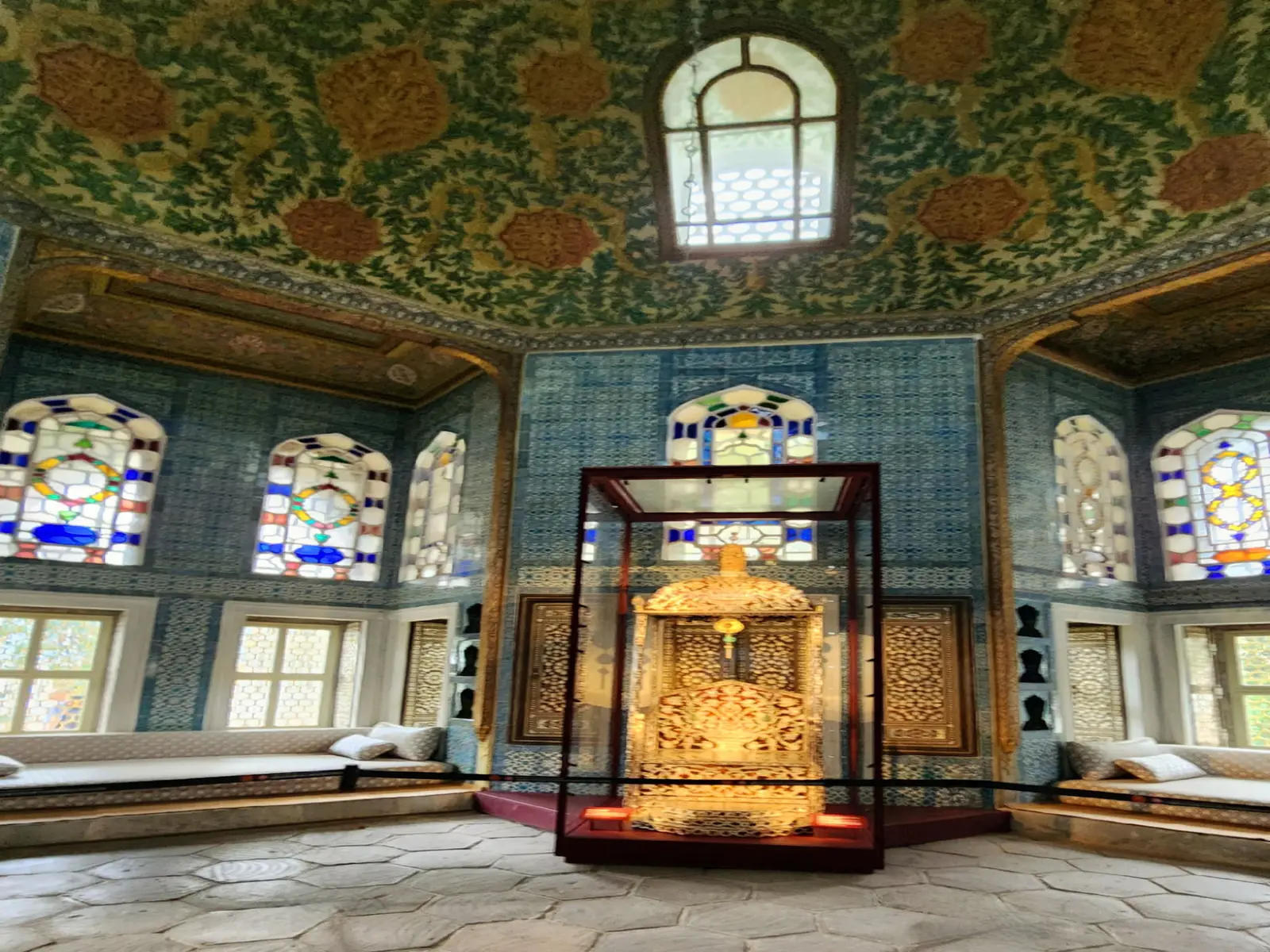
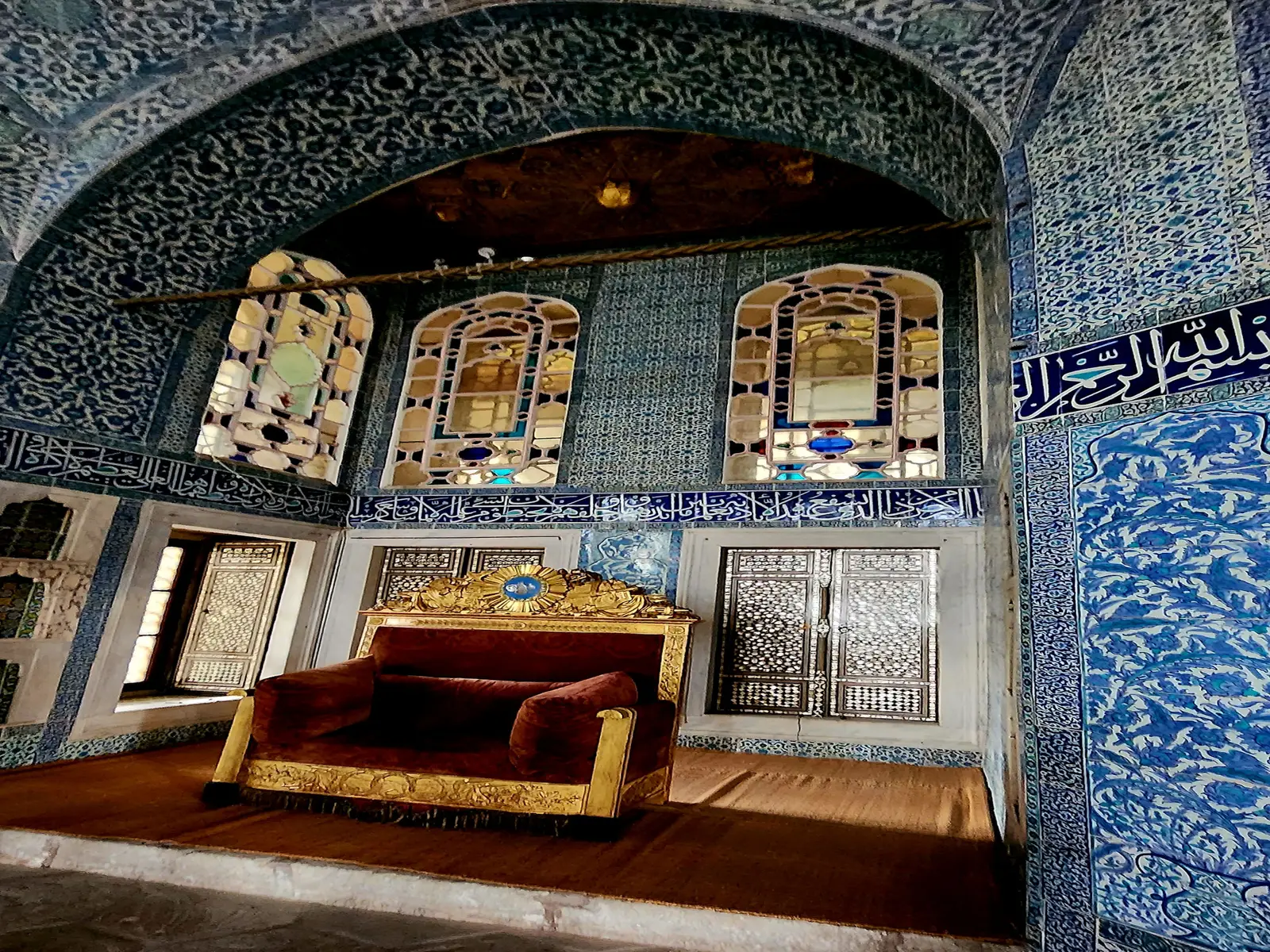
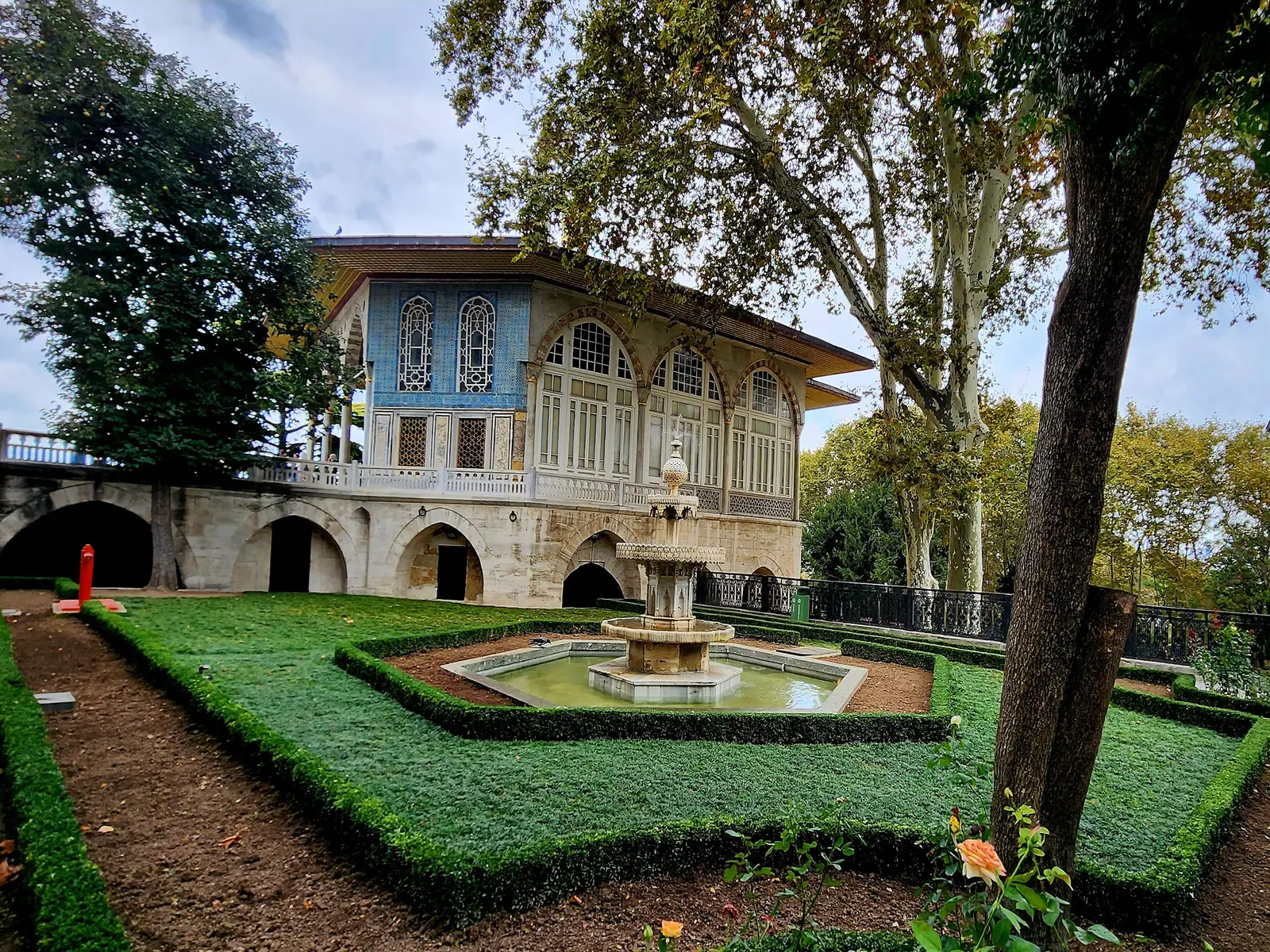
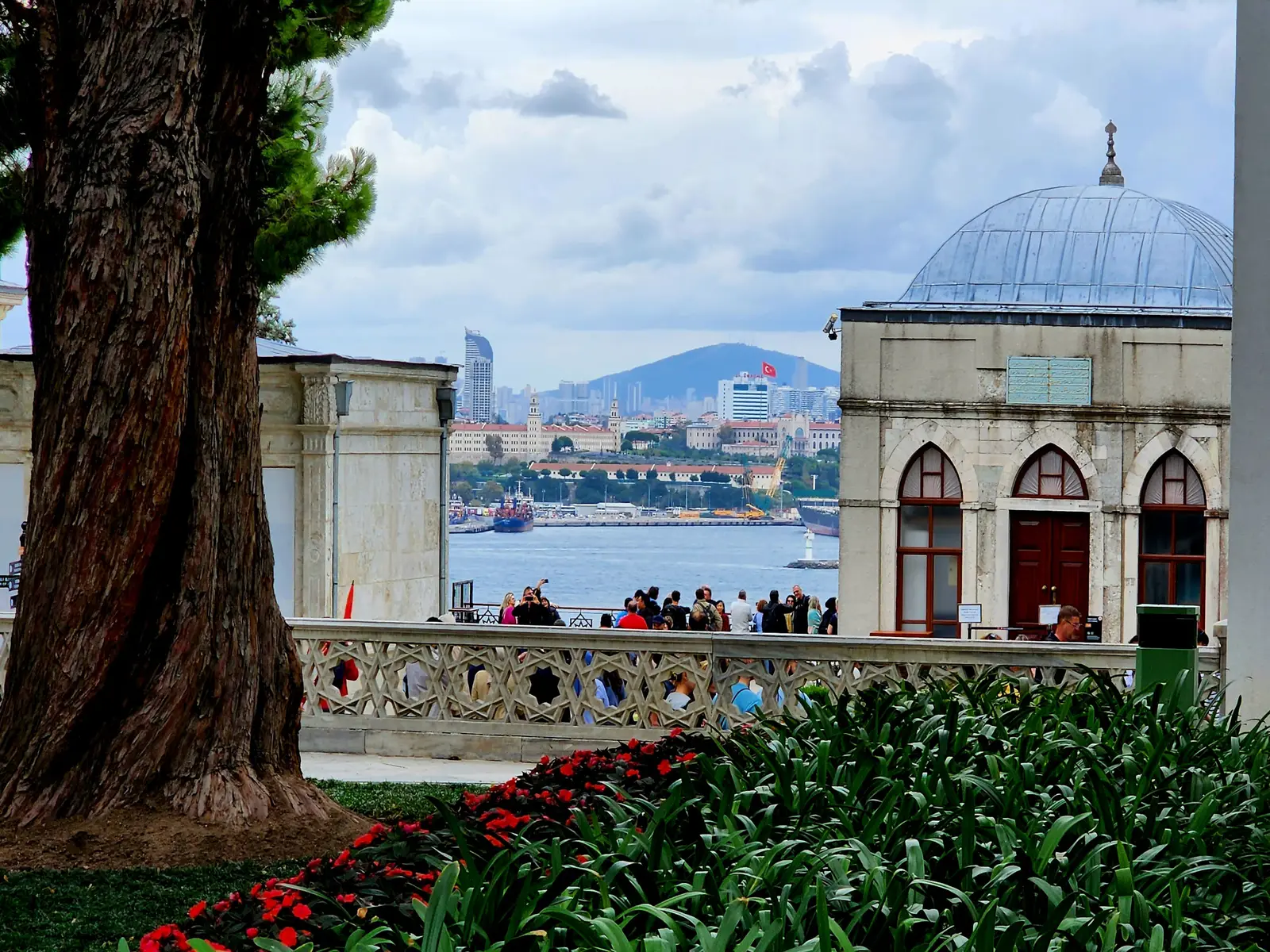
The Imperial Gate is the entrance into the First Courtyard. The sultan would enter the palace through this entrance. This massive gate, originally dating from 1478, is now covered in 19th-century marble. Its central arch leads to a high-domed passage.The Imperial Mint.Surrounded by high walls, the First Courtyard functioned as an outer park and is the largest of all the courtyards of the palace. The steep slopes leading towards the sea had already been terraced under Byzantine rule. The historical structures that remain are the former Imperial Mint constructed in 1727, the church of Hagia Irene, and several fountains. The Gate of Salutation, also known as the Middle Gate, leads into the palace and the Second Courtyard. The gate dates back to 1542 and is richly decorated with religious inscriptions and monograms of sultans.The palace kitchens were built when the palace was first constructed in the 15th century and expanded during the reign of Suleyman the Magnificent. kitchens consist of 10 domed buildings with 20 chimneys which prepared food for about 4,000 people and had a staff of more than 800 people. The kitchens included dormitories, baths and a mosque for the staff. The Imperial Treasury is a hall built with eight domes. Presents to the viziers, ambassadors and residents of the palace and the sultan and other valuable objects were stored here. The Spoonmaker's Diamond is an 86 carat pear-shaped diamond in the Imperial Treasury is its most valuable single exhibit. It is considered the fourth largest diamond of its kind in the world. The treasury also houses the Topkapı Dagger. The golden hilt is ornamented with three large emeralds, topped by a golden watch with an emerald lid. The golden scabbard is covered with diamonds and enamel.The Gate of Felicity is the entrance into the Inner Court. The Third Courtyard contains the private and residential areas of the palace. No one could pass this gate without the authority of the Sultan. The reception area inside the Gate of Felicity where guests were greeted.. The gilded İftar Pavilion overlooks the Golden Horn. Its ridged cradle vault with the gilded roof was a first in Ottoman architecture with echoes of China and India. The İftar Pavilion gardens.The Baghdad Kiosk was built to commemorate the Baghdad Campaign of Murad IV after 1638.The throne in the Baghdad Kiosk.The gardens of the fourth courtyard.Surrounding the whole complex of the First to the Fourth Courtyard are the outer palace gardens. A part of this area that is facing the sea is also known as the Fifth Palace.The view of the straits and Istanbul from the Fifth Palace.