Gude Adventures | Travel Blog - to 628 Destinations in 64 Nations that we visited
What to see and do at the Hagia Sophia, Istanbul, Turkey
Booking through these agencies from here will help support this site at no extra cost to you.
Hagia Sophia was the largest cathedral in the world for nearly a thousand years.
It was originally called the Church of the Holy Wisdom. The cathedral was originally built by the eastern Roman emperor Justinian I in 537 AD until the conquest of Constantinople by the Ottoman Empire in 1453. It became a mosque and minarets added in the 15th and 16th centuries. In 1935, the Turkish government under President Mustafa Kemal Atatürk converted Hagia Sophia into a museum, in order to showcase its historical and architectural significance to both Christian and Muslim cultures. The museum was a popular tourist destination and a symbol of the secular and inclusive ideals of the Turkish republic. However, in 2020, the Turkish government converted Hagia Sophia back into a mosque.
We visited the Hagia Sophia on 10/7/2022. While there, we were able to enter into the mosque and view the details of the interior of the building.
Today, visitors can still visit Hagia Sophia to marvel at its stunning architecture and learn about its rich history, although access to it may be limited due to its current status as a mosque.
Looking for things to do? Viator offers numerous tours in the Istanbul area. Click here for details.
Pictures from Hagia Sophia
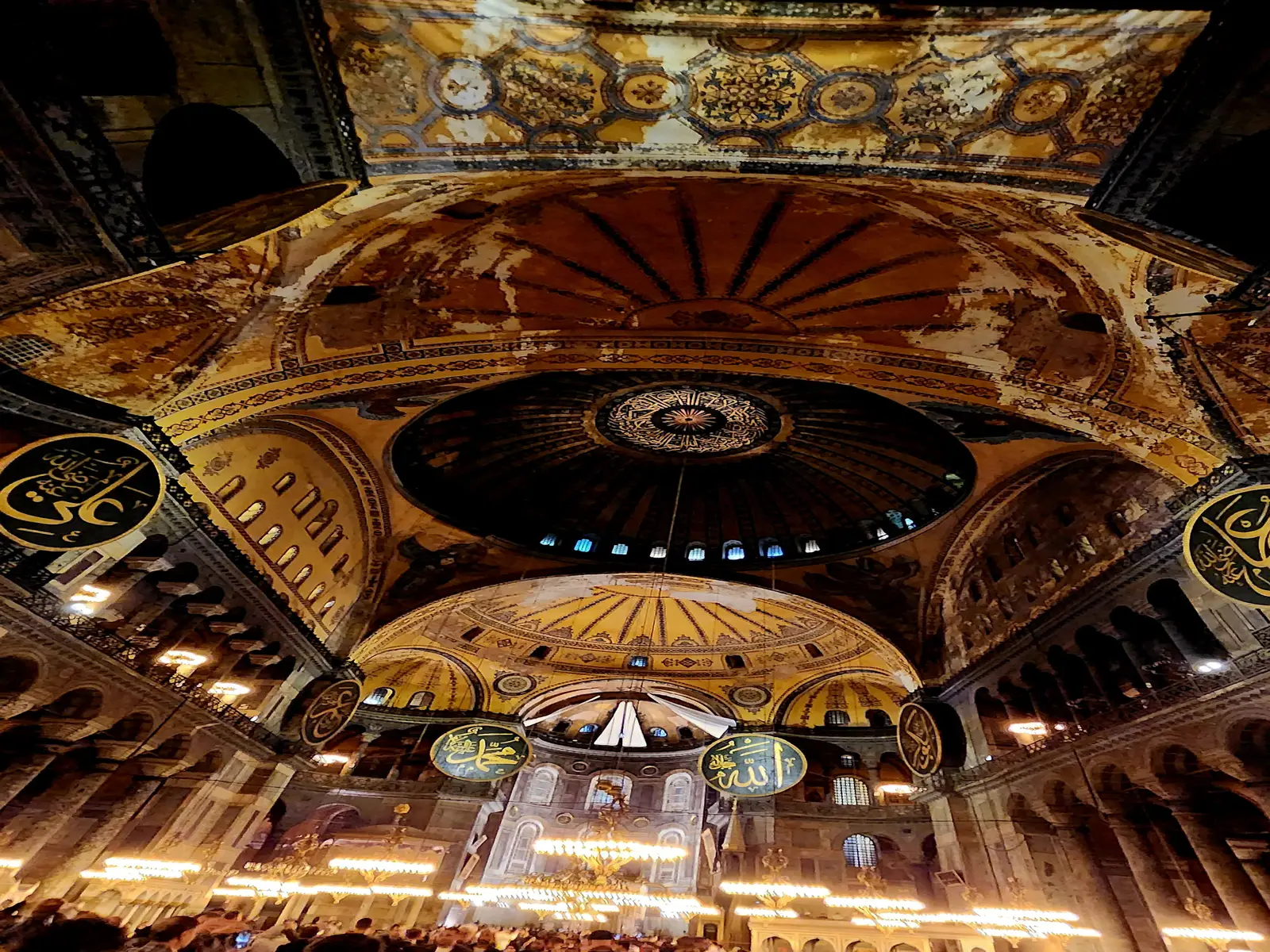
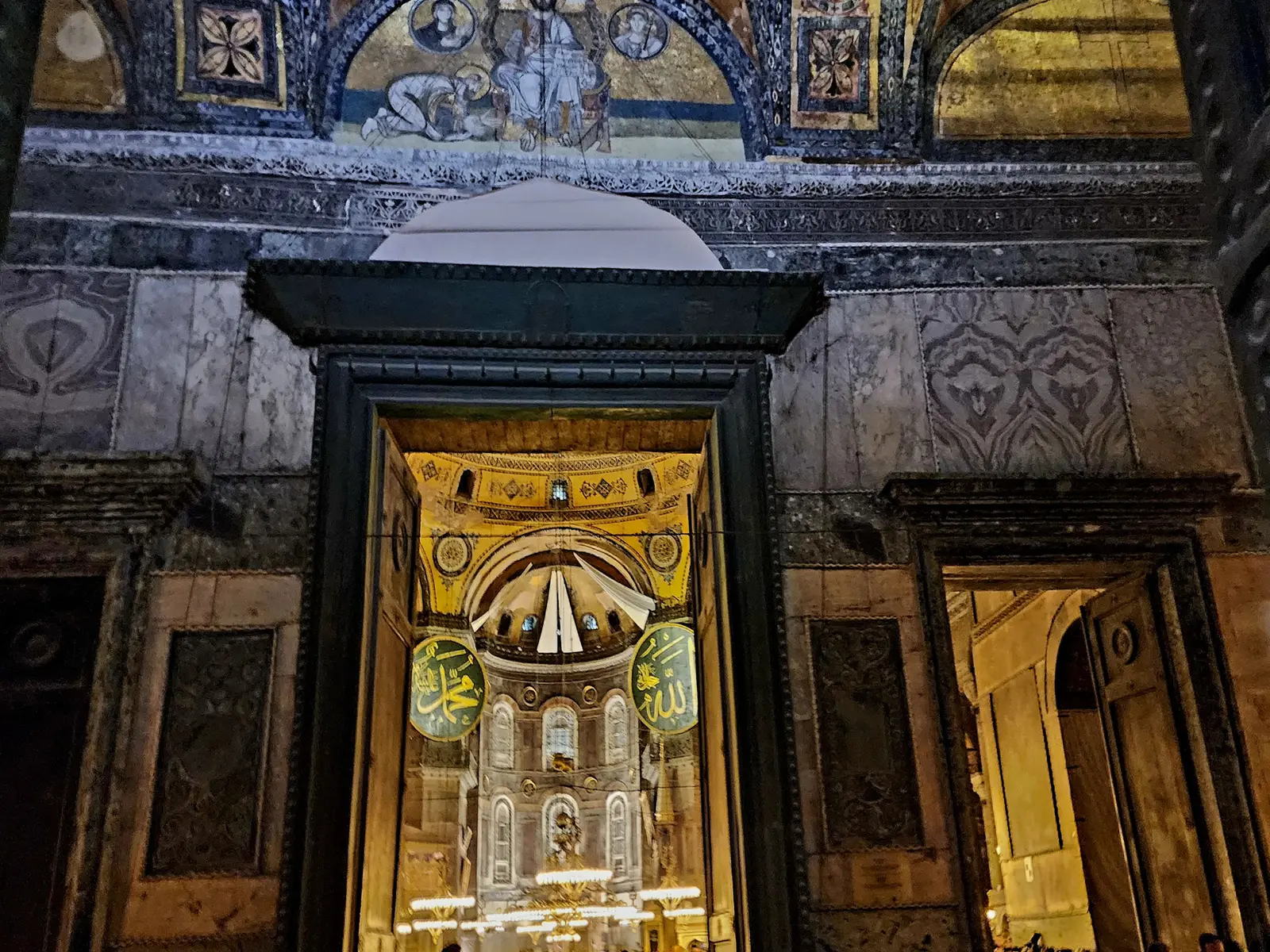
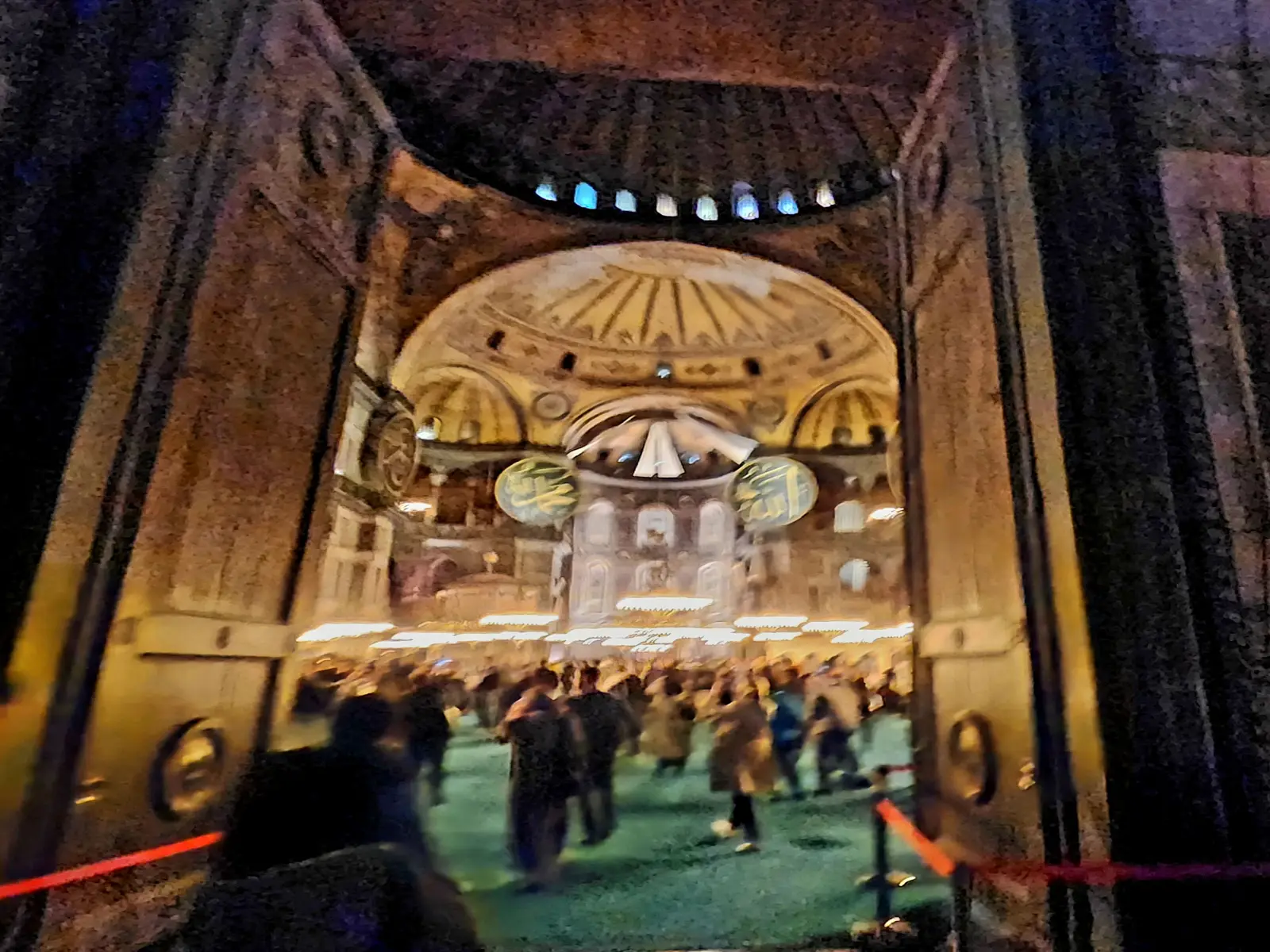
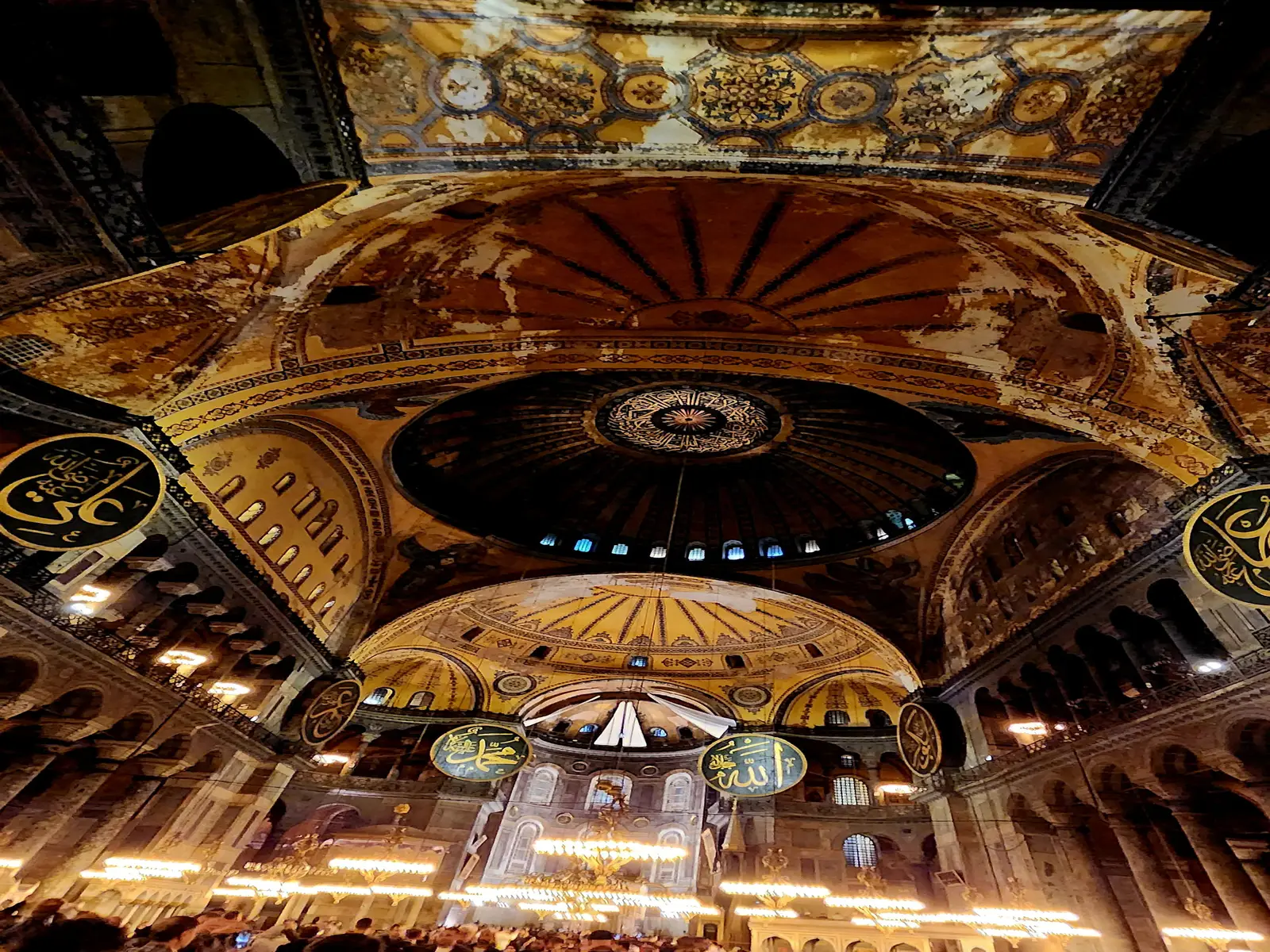
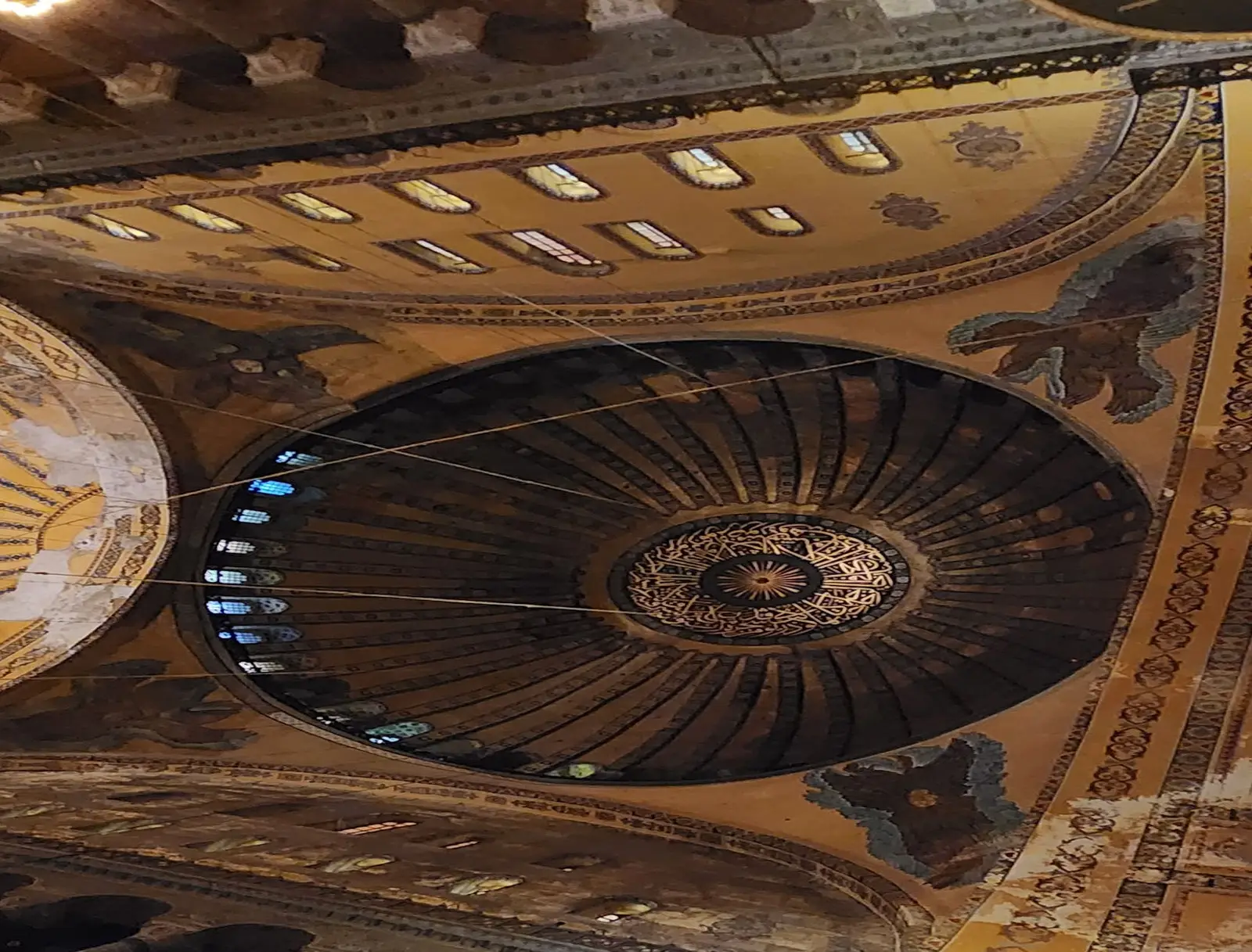
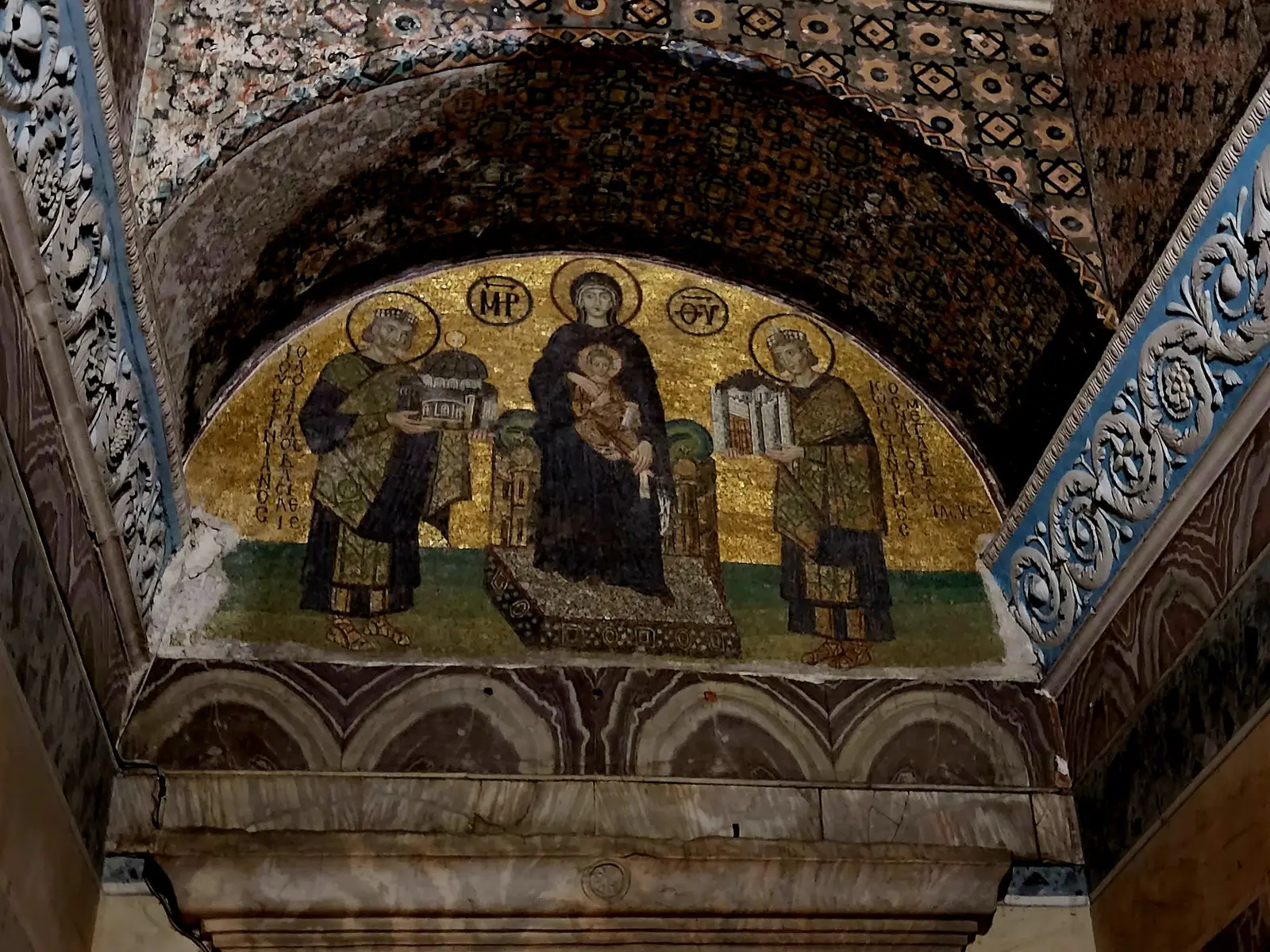
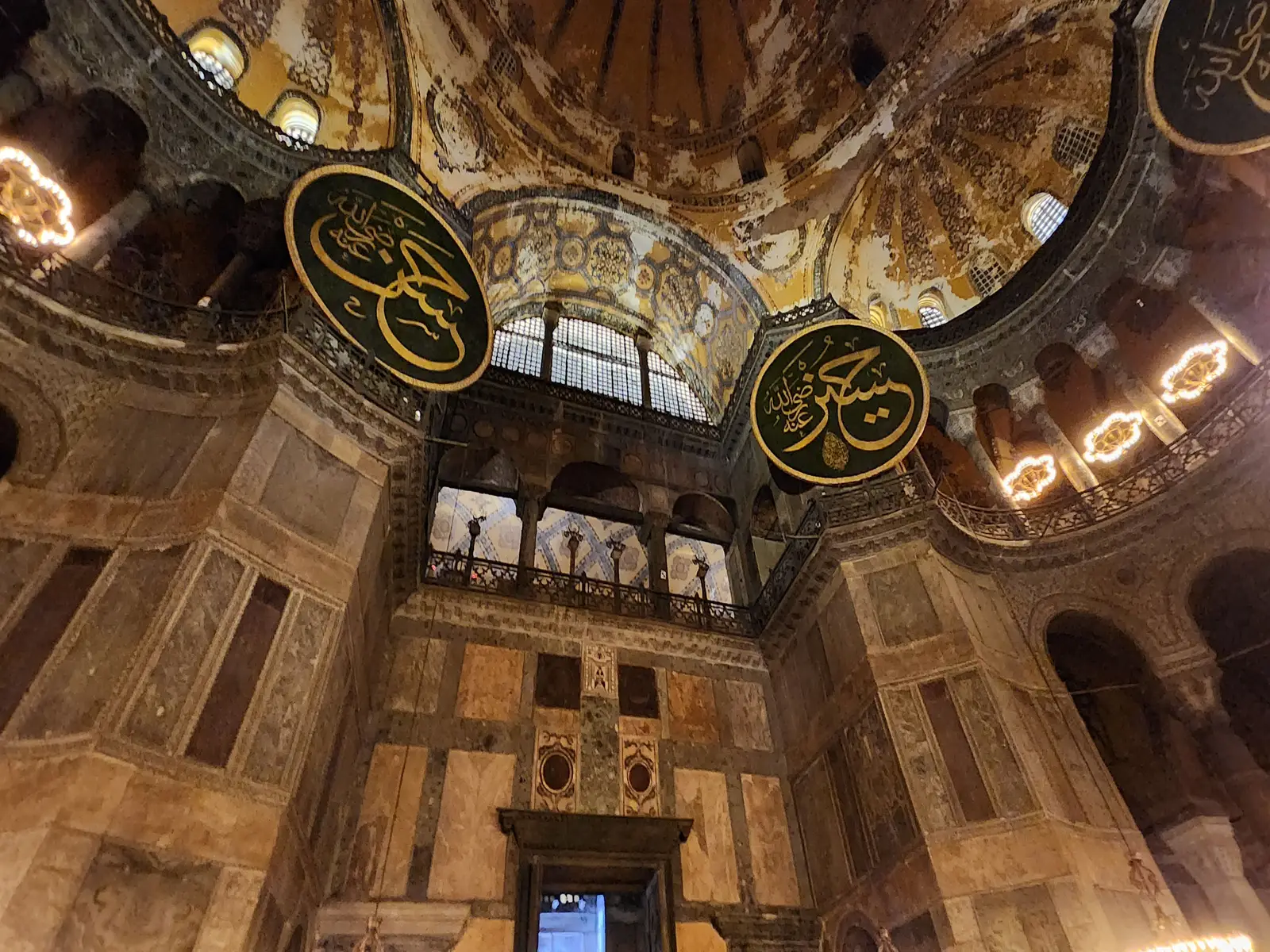
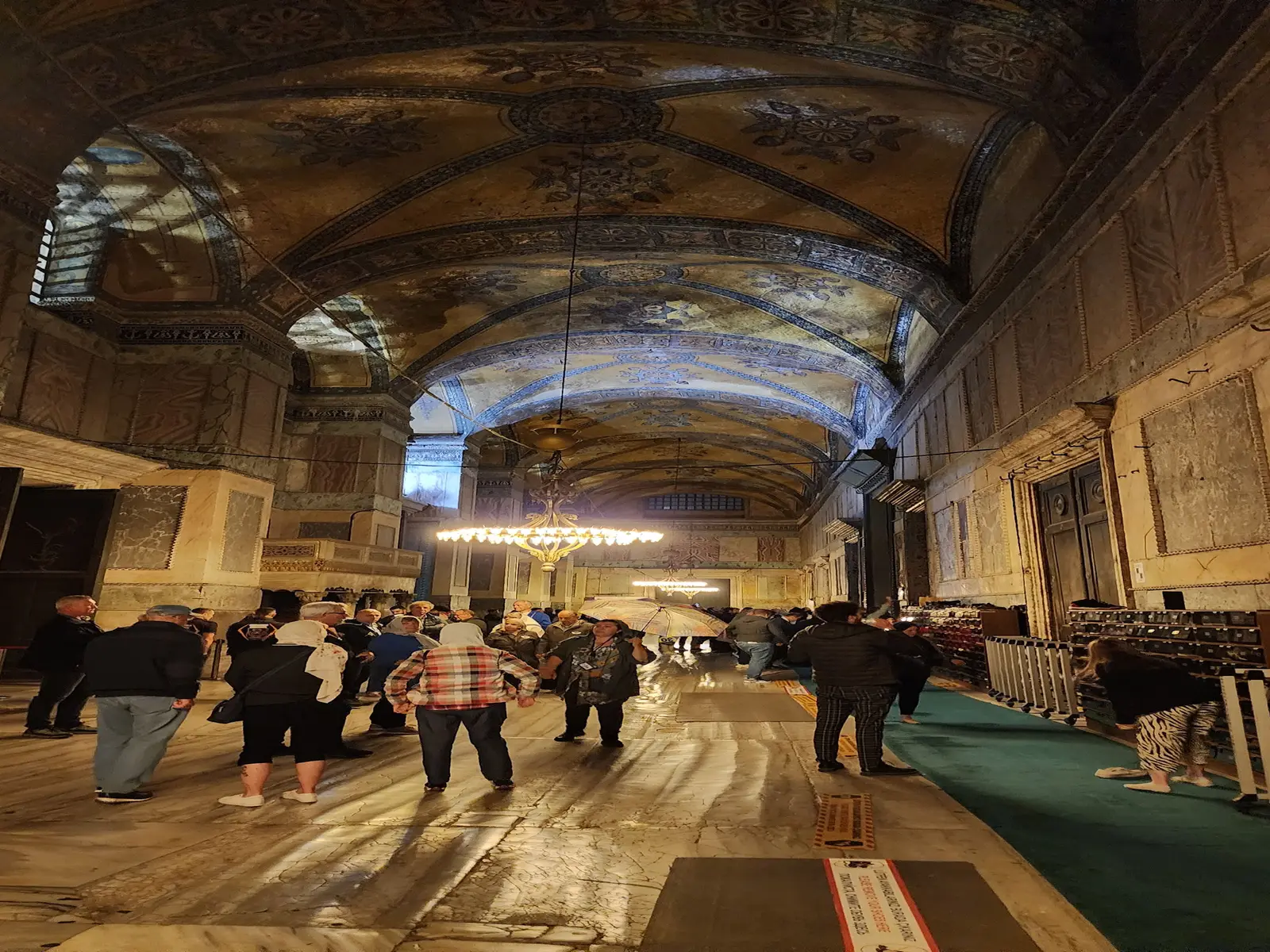
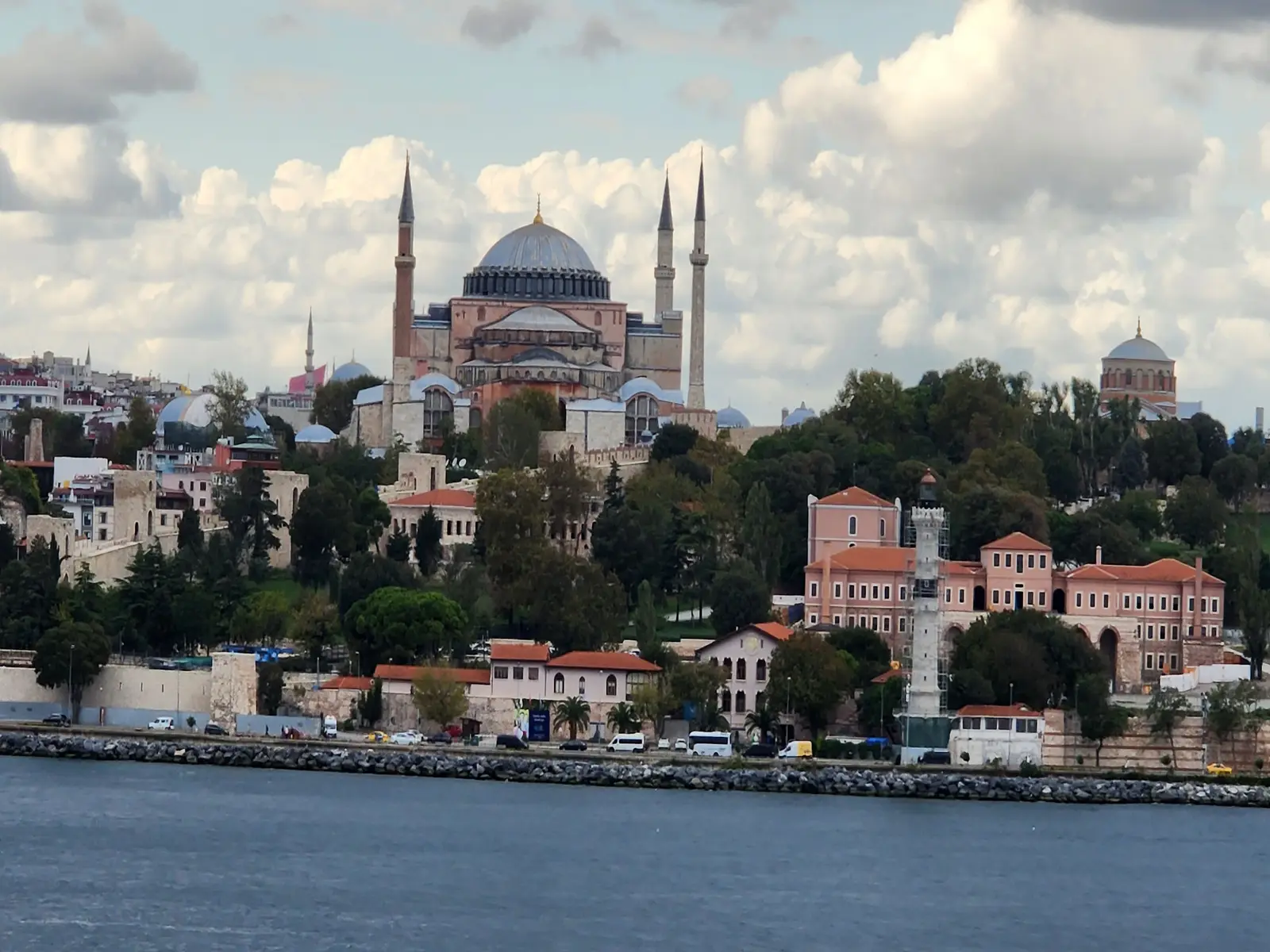
The Imperial Gate was used only by the emperors when entering the church. Above the door, the emperor is bowing down. Christ is seated on a jeweled throne, giving his blessing and holding in his left hand an open book. On each side of Christ's shoulders is a circular medallion with busts: on his left the Archangel Gabriel, holding a staff, on his right his mother Mary.The Nice Door is the oldest architectural element found in the Hagia Sophia dating back to the 2nd century BC. It was added to the building by Emperor Theophilos in 838 AD.The great dome at the Hagia Sophia is 107 feet in diameter and reaches a height of 182 feet above the floor. It was the largest pendentive dome in the world until the completion of St Peter's Basilica.The dome was decorated with four non-identical figures of the six-winged (hexapterygon) angels which protect the Throne of God. The face of one of the angels was discovered and uncovered in 2009.In the apse of the building is a depiction of the Virgin Mary holding Jesus, between the apostles Peter and Paul. This was added in 994 AD.Gigantic circular-framed discs or medallions were hung from the cornice, on each of the four piers and at either side of the apse and the west doors in 1847. They are painted with the names of Allah, Muhammad, the Rashidun: Abu Bakr, Umar, Uthman and Ali, and the two grandsons of Muhammad: Hasan and Husayn, who were the sons of Ali.One of the narthex in the building. The narthex is a large enclosed area along the entire width of the church at it's entrance.View of the Hagia Sophia from the sea.