
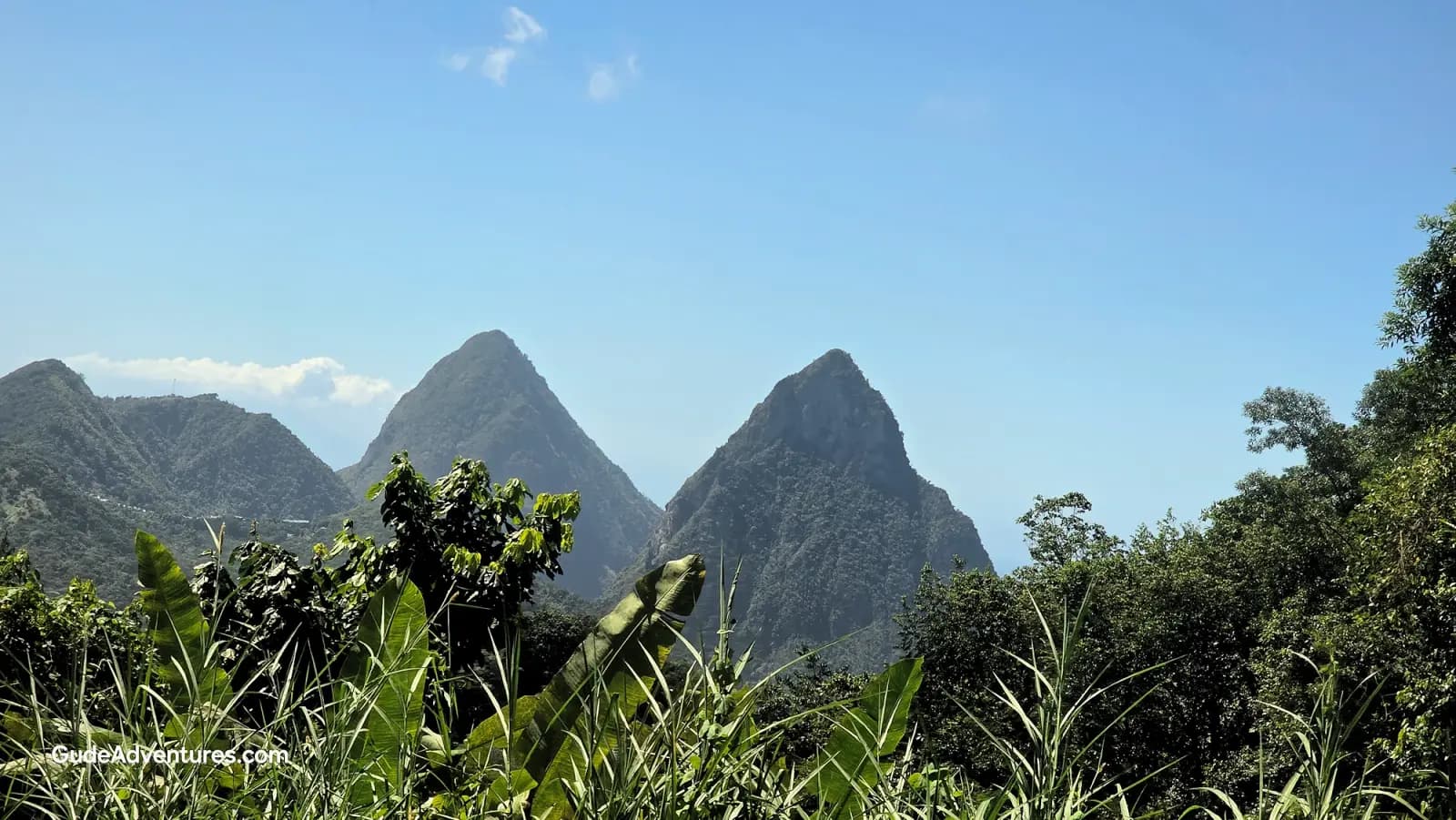

Things to Do in Soufrière, St Lucia

Soufrière, St. Lucia: The Pitons, Sulphur Springs, and Rainforest
St. Lucia is known for its natural beauty, including the iconic twin Piton peaks, rainforests, waterfalls, and sandy beaches. St. Lucia is a Caribbean island nation located in the eastern Caribbean Sea. It is part of the Lesser Antilles and is located southeast of Martinique and northwest of Barbados. St. Lucia's capital and largest city is Castries. The official language is English, but French patois is also widely spoken.
When we first visited the island on 11/30/2016, it was a rainy day. We made arrangements for a private tour from the port at Castries along the west coast down to Soufrière and then back.
On our second visit on 2/17/2025, we took a group tour from Castries along the west coast down to Soufrière stopping at Marigot Bay, Maranatha Gardens, and the sulphur springs in the Soufrière caldera.
The Pitons and the Drive-In Volcano
Soufrière sits at the foot of the Pitons, the twin volcanic peaks that are a UNESCO World Heritage Site and the symbol of St. Lucia. Nearby, the Sulphur Springs are often called the world’s only drive-in volcano, where visitors can see bubbling pools and bathe in warm mud baths.
Waterfalls and Gardens
The Diamond Falls Botanical Gardens, just outside town, have a colorful, mineral-stained waterfall and old mineral baths first built in the 1780s for the troops of King Louis XVI. Toraille Waterfall is another easy stop on the road to the Pitons.
Adventure, Culture, and Festivals
It is a popular tourist destination and is known for its luxury resorts, diving sites, and adventure sports such as hiking, sailing, and zip-lining.
St. Lucia has a rich cultural heritage, with influences from Africa, Europe, and the indigenous Carib people. The island celebrates a number of festivals and events throughout the year, including the Saint Lucia Jazz Festival, which attracts musicians and visitors from all over the world.
St. Lucia’s Economy
St. Lucia's economy is based on tourism, agriculture, and manufacturing. Its main exports include bananas, cocoa, and coconuts. The island is also known for its spices, including nutmeg and cinnamon.
Why Visit Soufrière?
The drive from Castries to Soufrière, past banana plantations, fishing villages, and Marigot Bay, is one of the most scenic in the Caribbean, and the Pitons rising above the town are an unforgettable sight.
Best time to visit Soufrière is from December to April (dry season, and outside hurricane season).
How to get there: Click here for options.
Looking for a place to stay? Click here for options.
Looking for things to do? Viator offers numerous tours in St Lucia. Click here for details.
Passport/Visa Requirements for Soufrière, St Lucia
Click here to view the location on the map.
Pictures from Soufrière
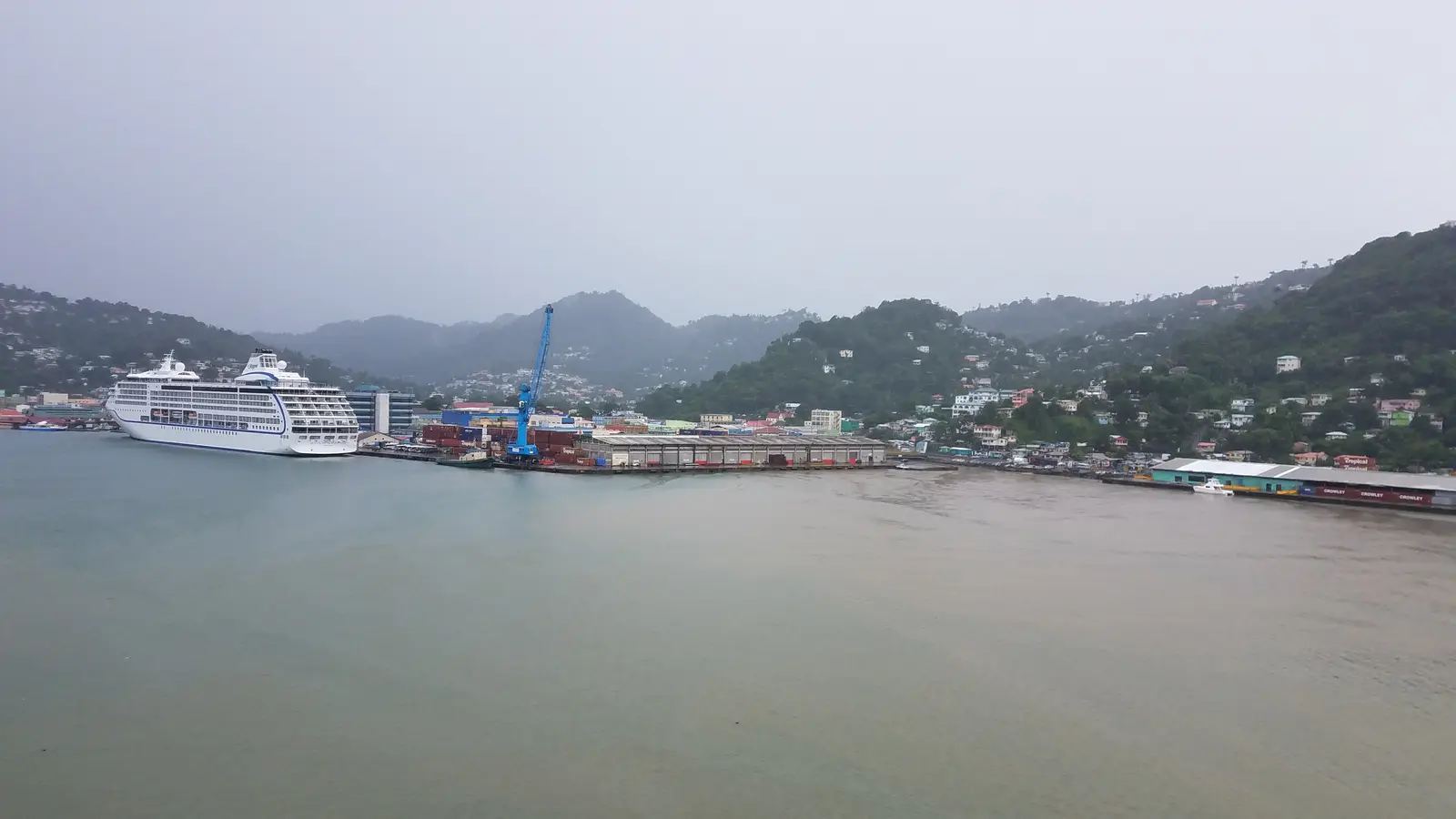
Castries, St Lucia.
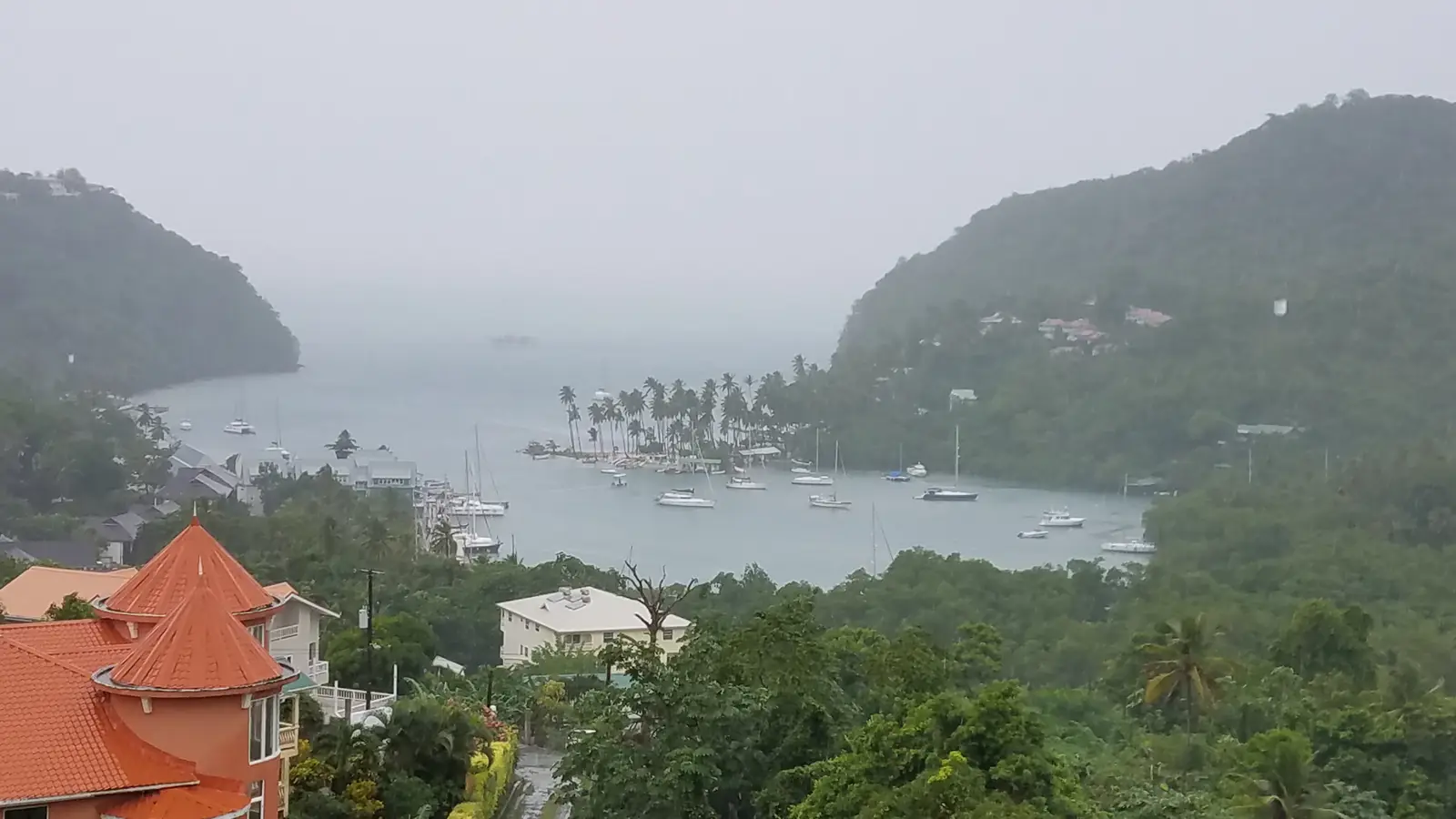
Marigot Bay.
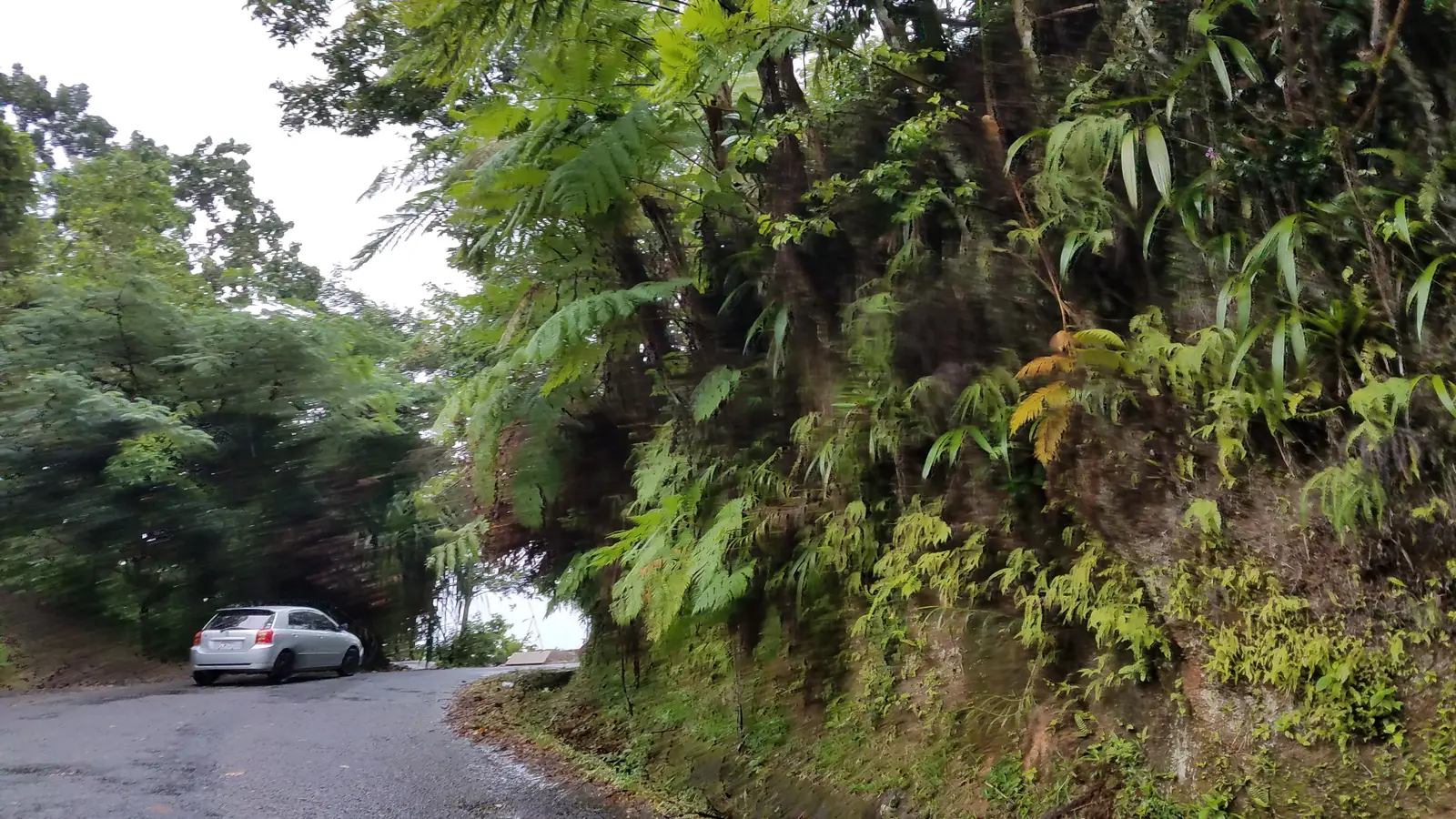
The road to Soufriere.
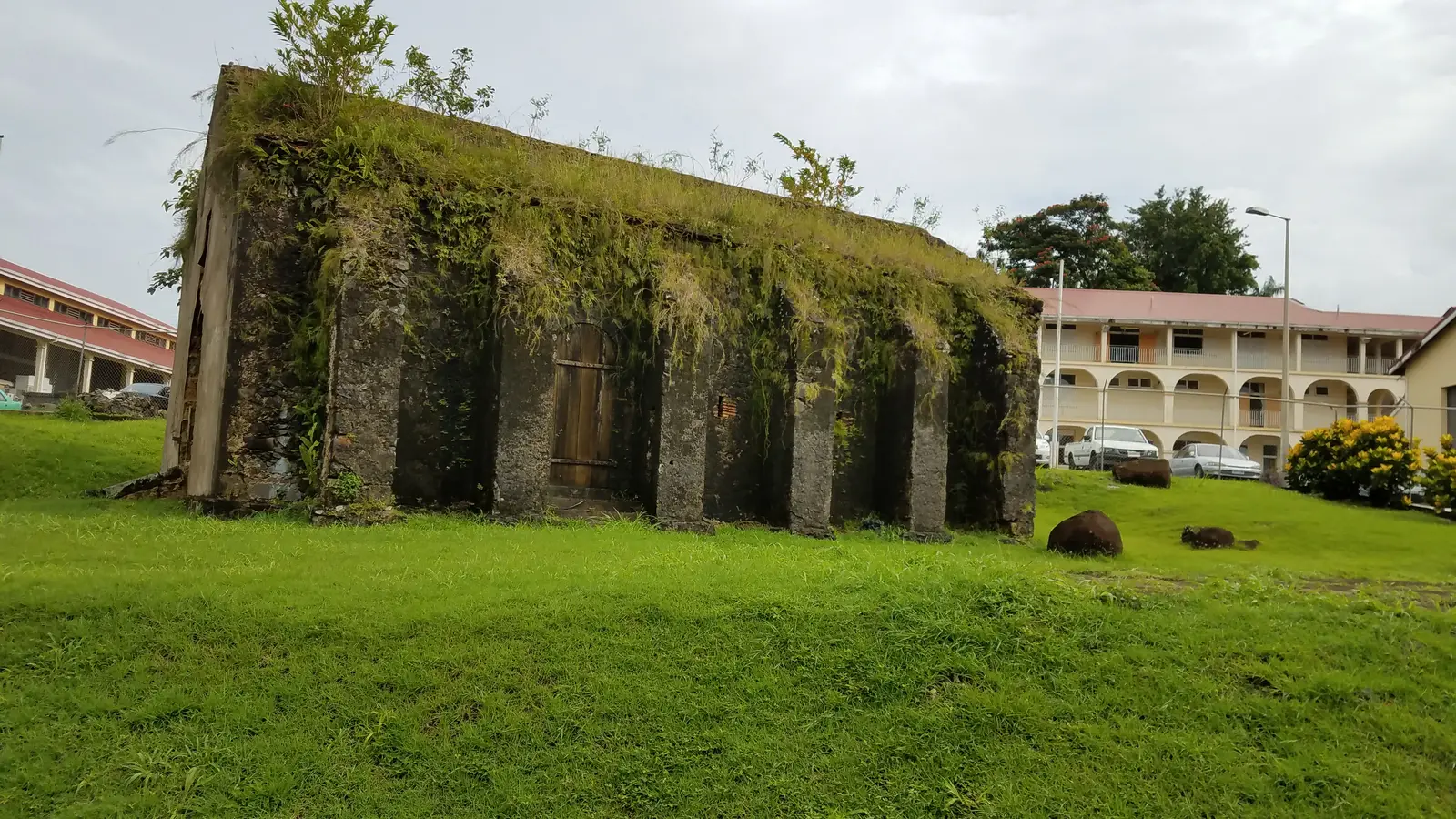
Morne.
Second Trip to St Lucia
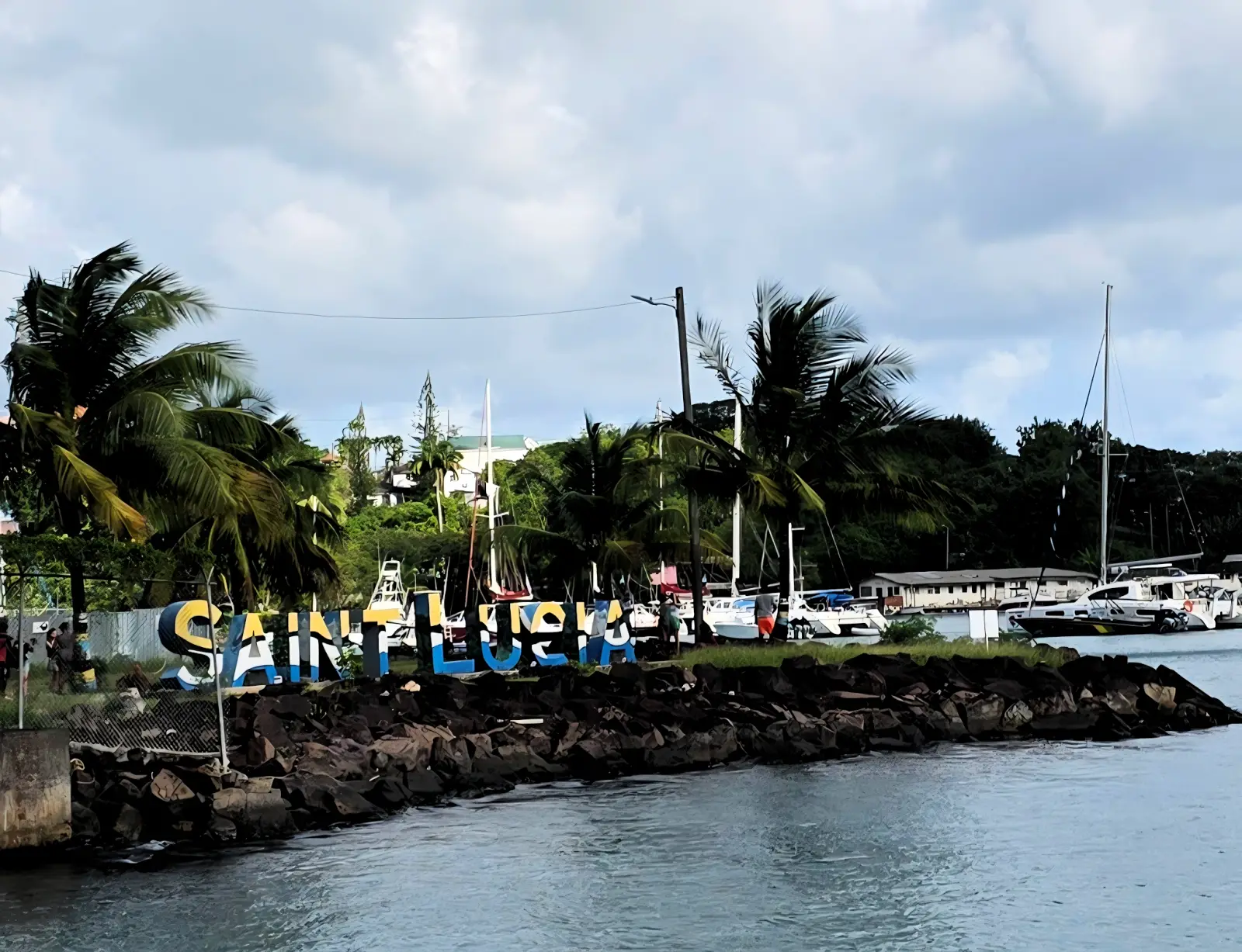
St Lucia sign.
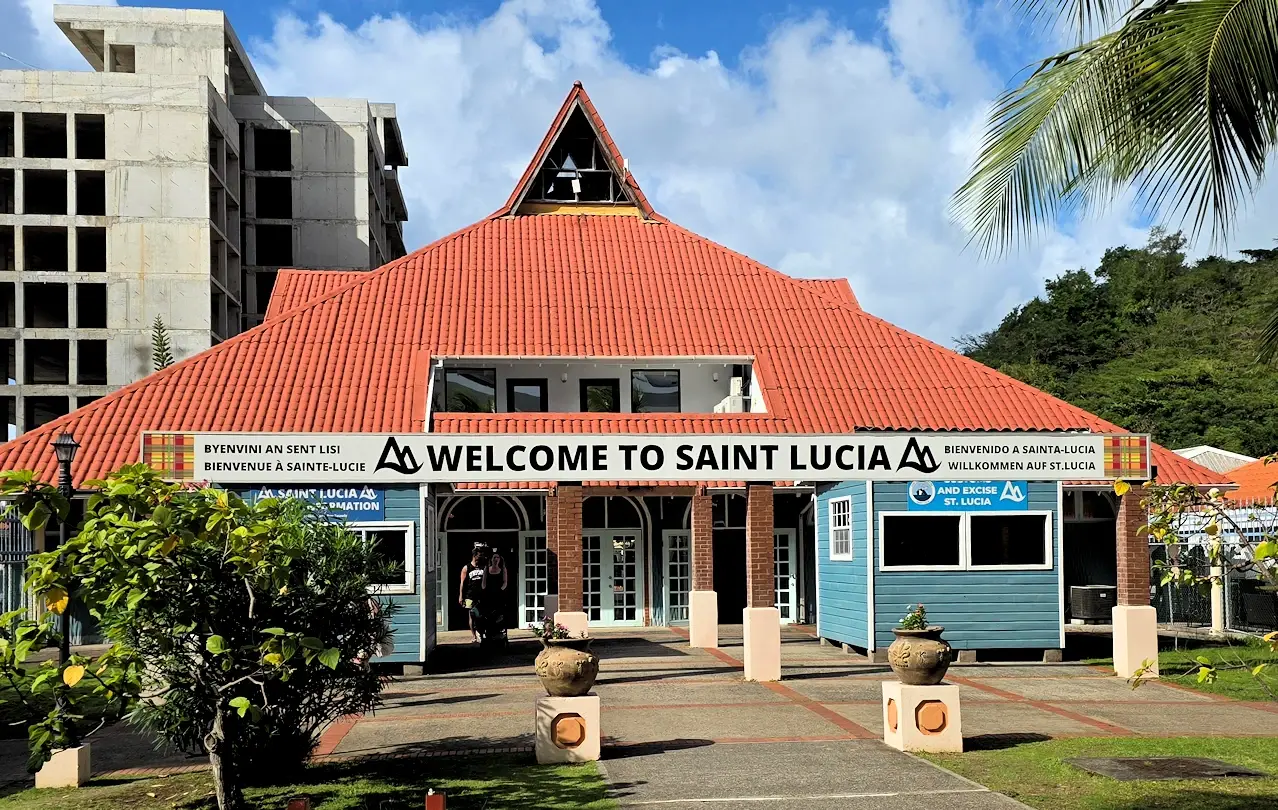
Entrance to the port at Castries, St Lucia.
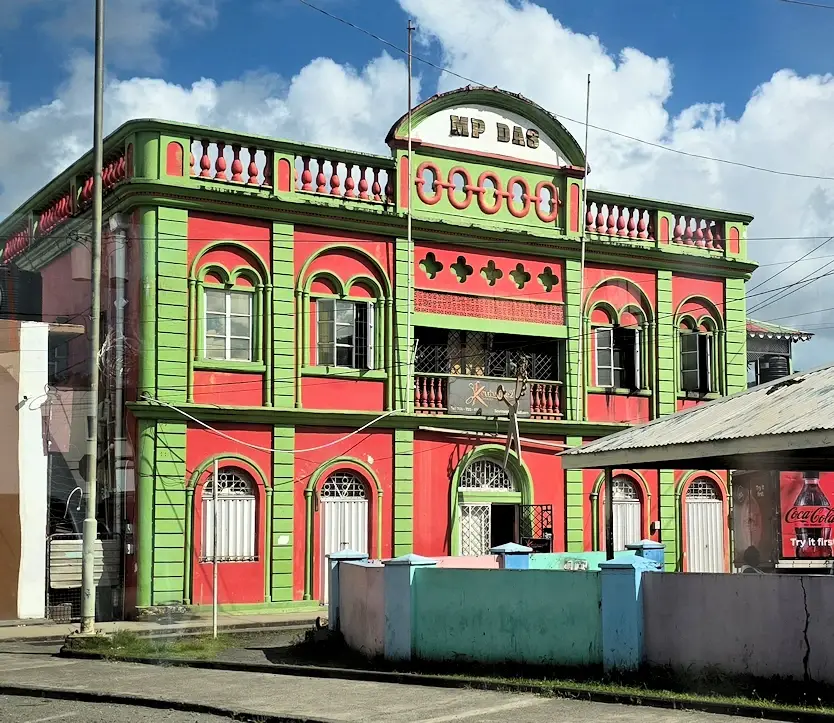
Castries, St Lucia.
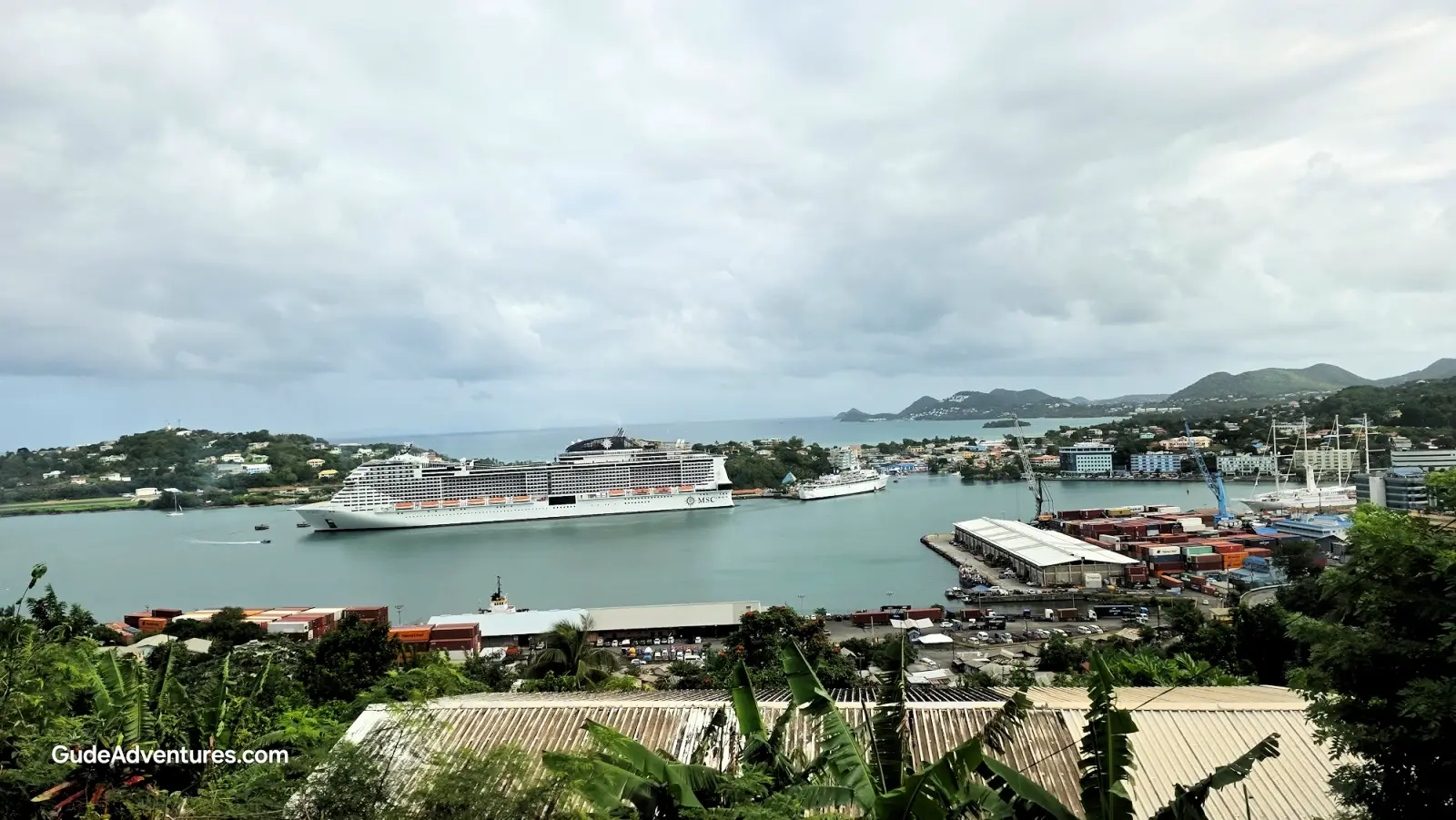
Castries city viewpoint in St Lucia.
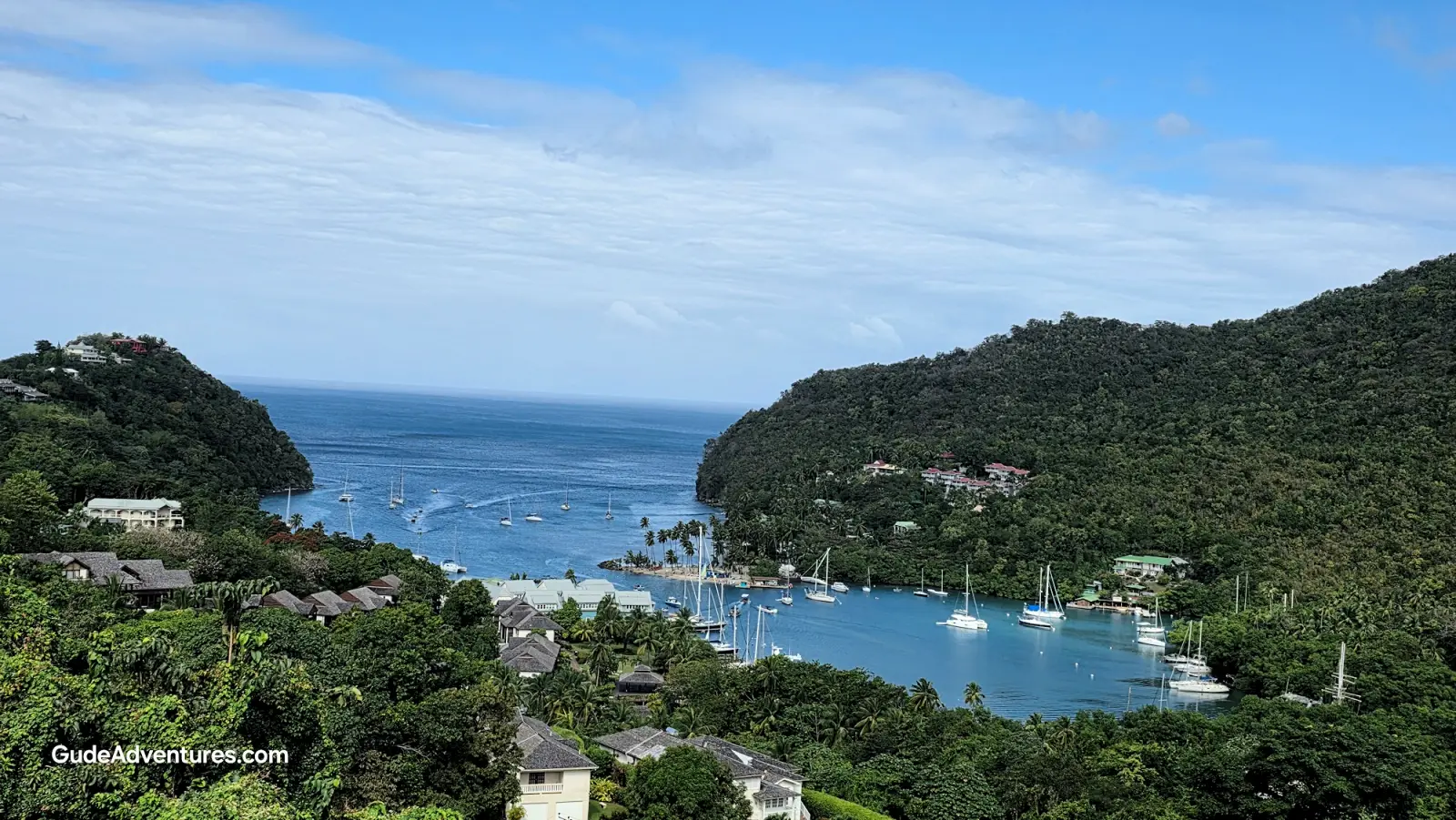
Marigot Bay.
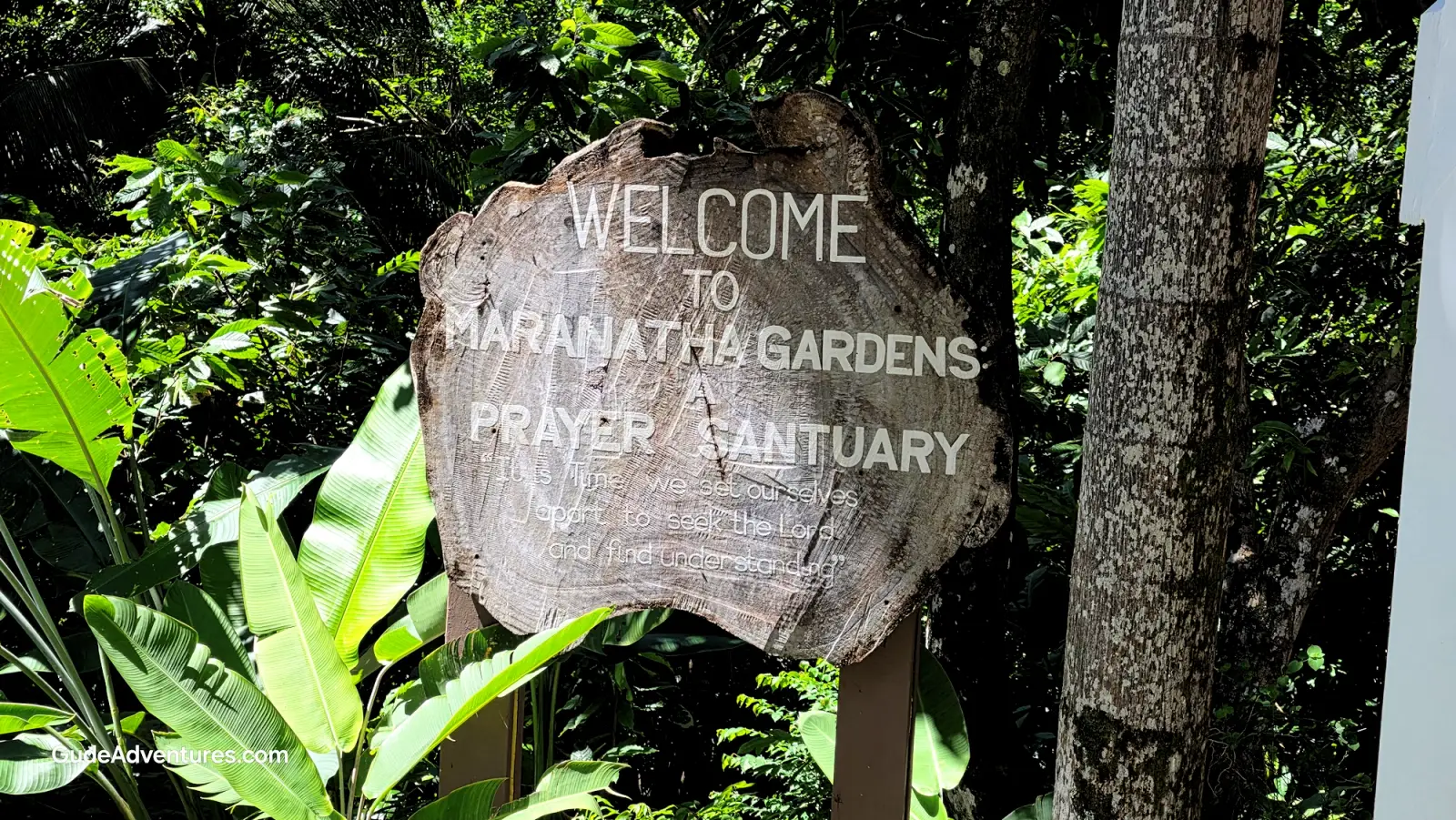
Maranatha Gardens sign.
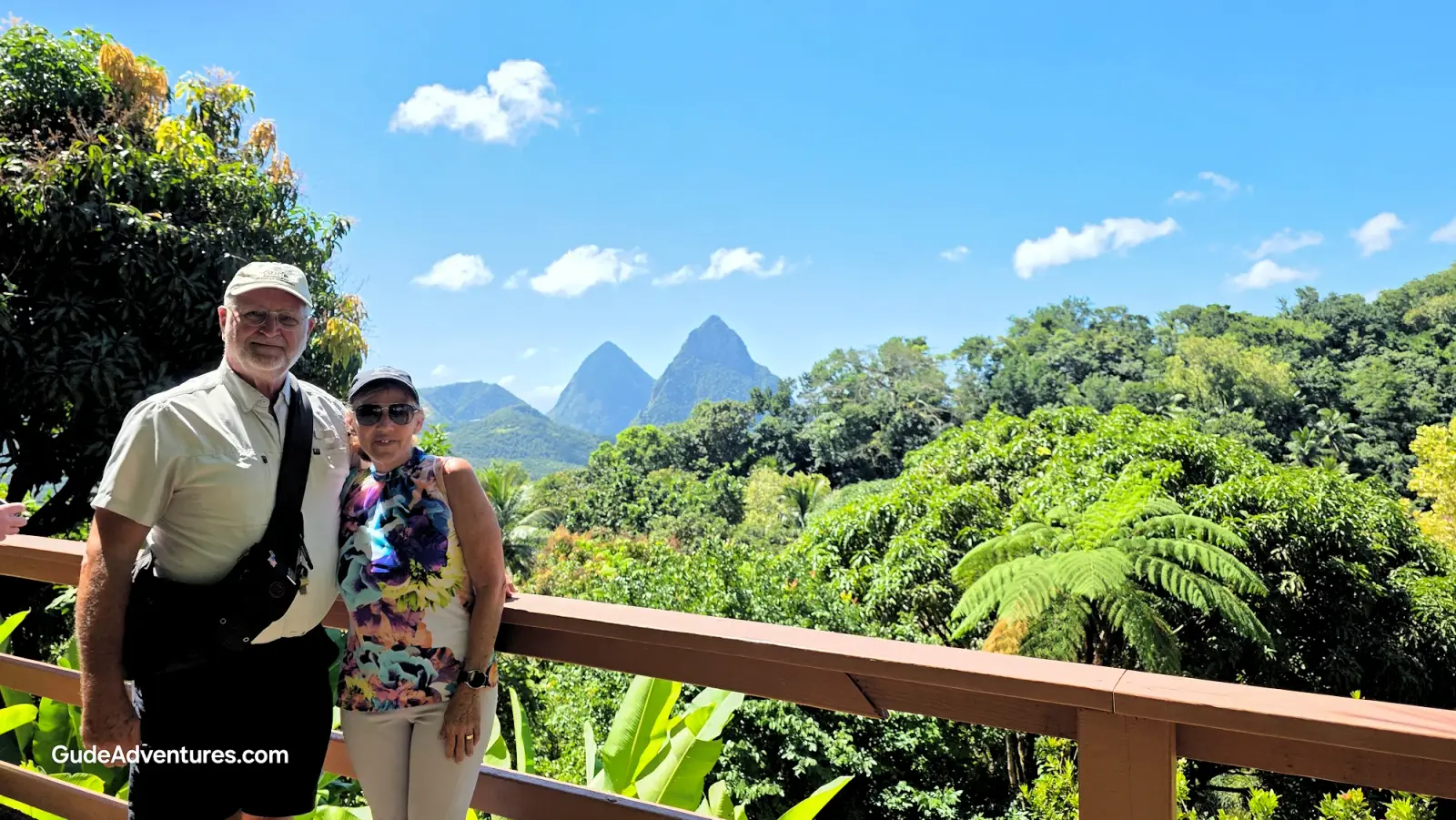
View of the Pitons from Maranatha Gardens.
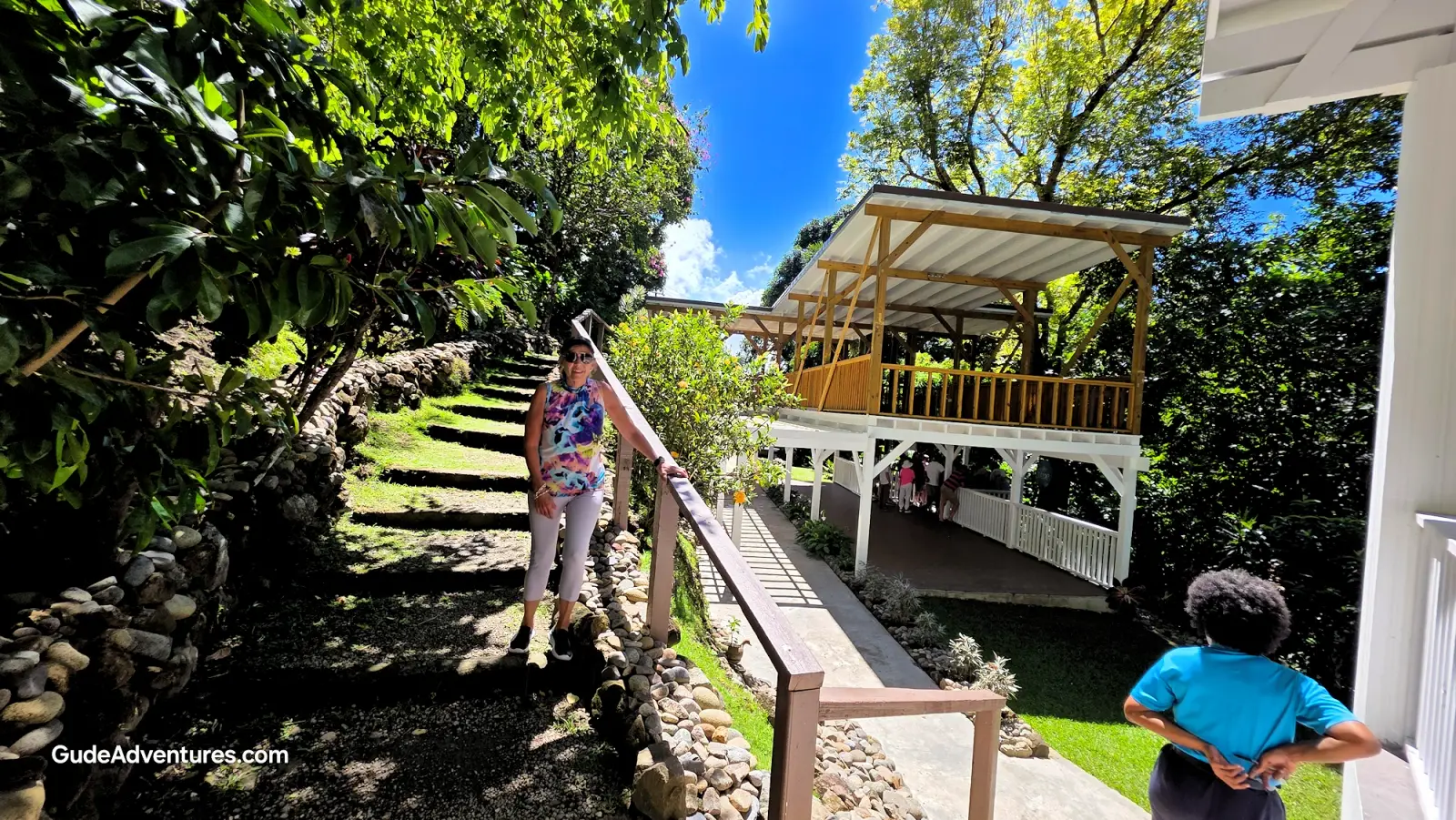
Maranatha Gardens.
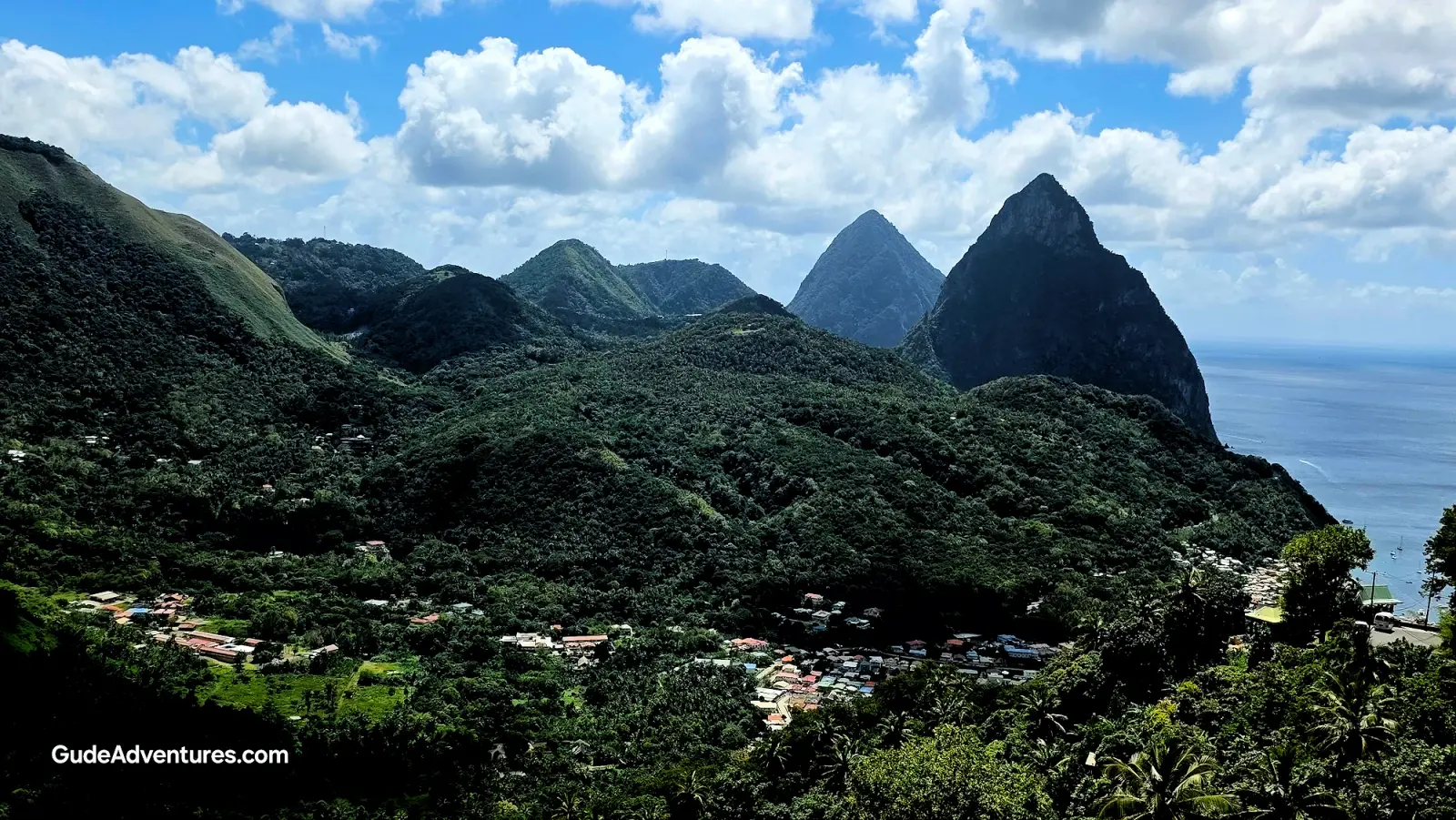
The Pitons at Soufriere.
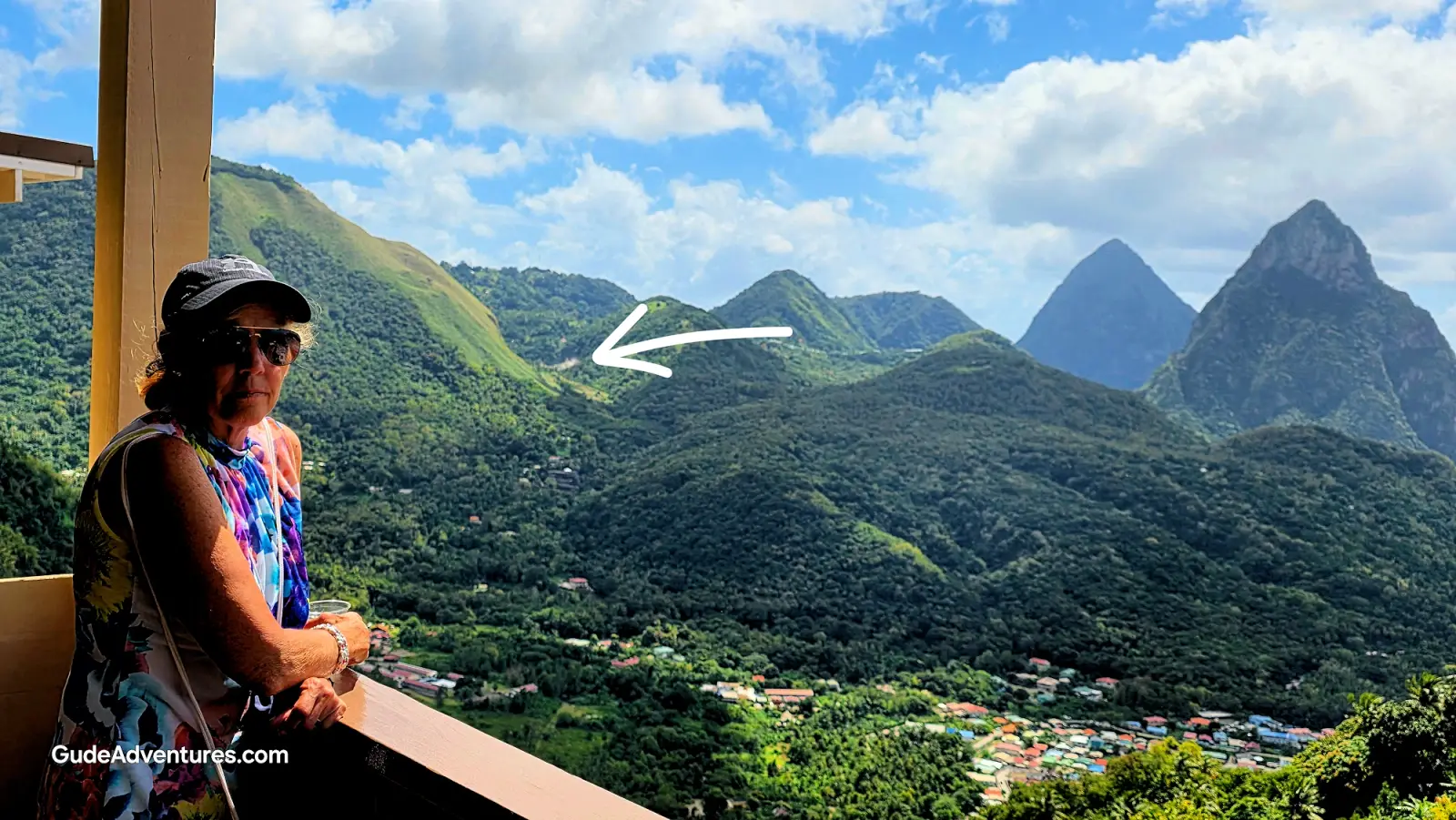
View of the caldera and Pitons at Soufriere from the Beacon Restaurant.
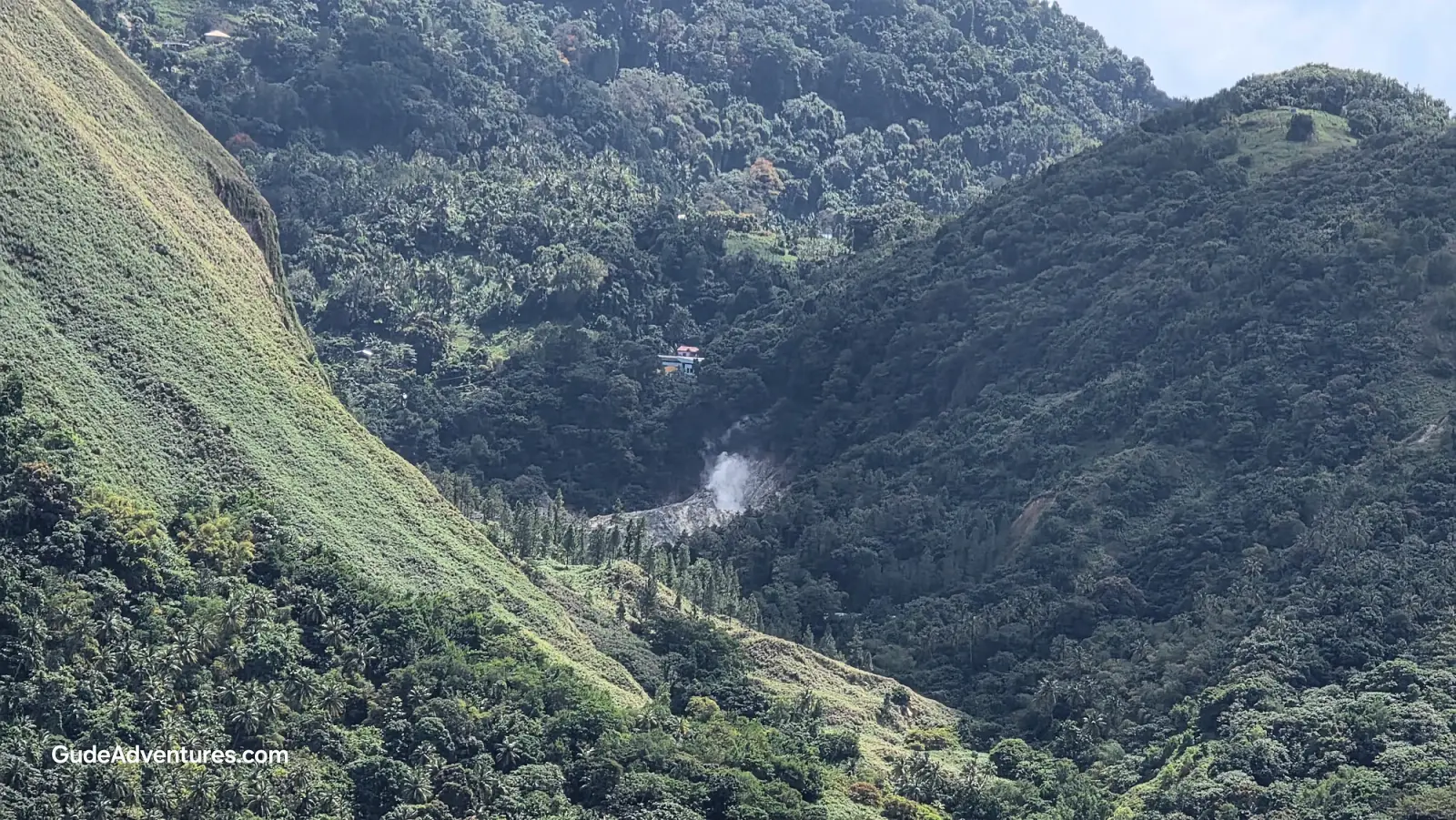
View of the sulphur spring in the Soufriere caldera from the Beacon Restaurant.
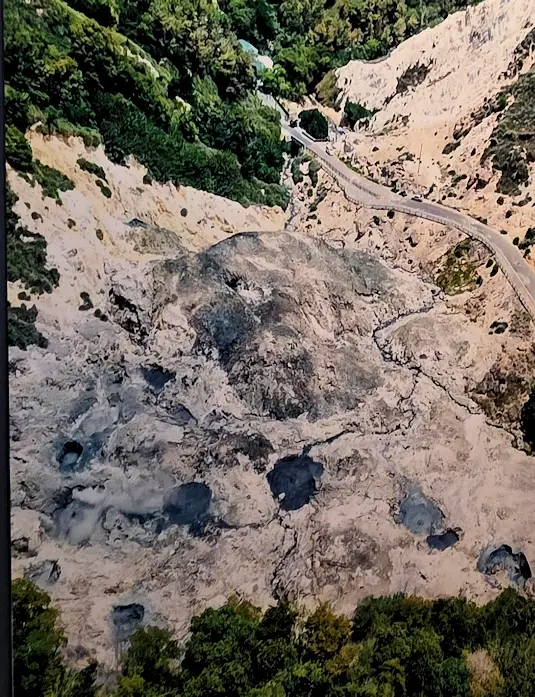
Aerial view of the sulphur spring in the Soufriere caldera.
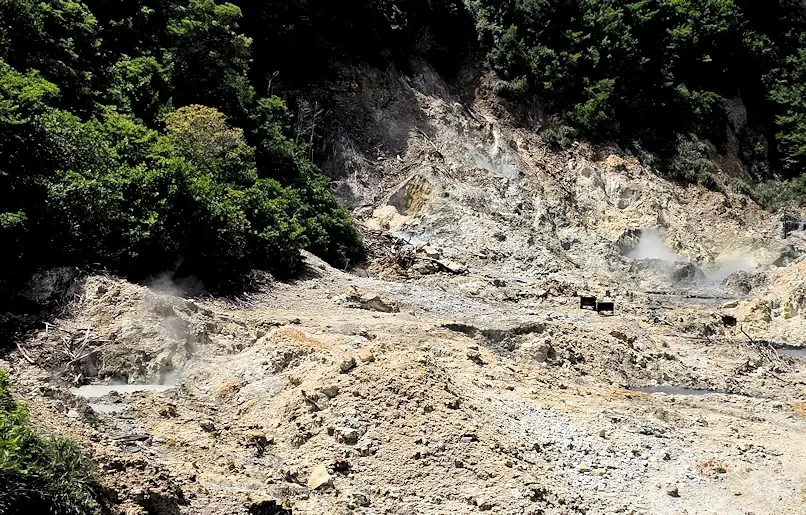
The sulphur spring in the Soufriere caldera.
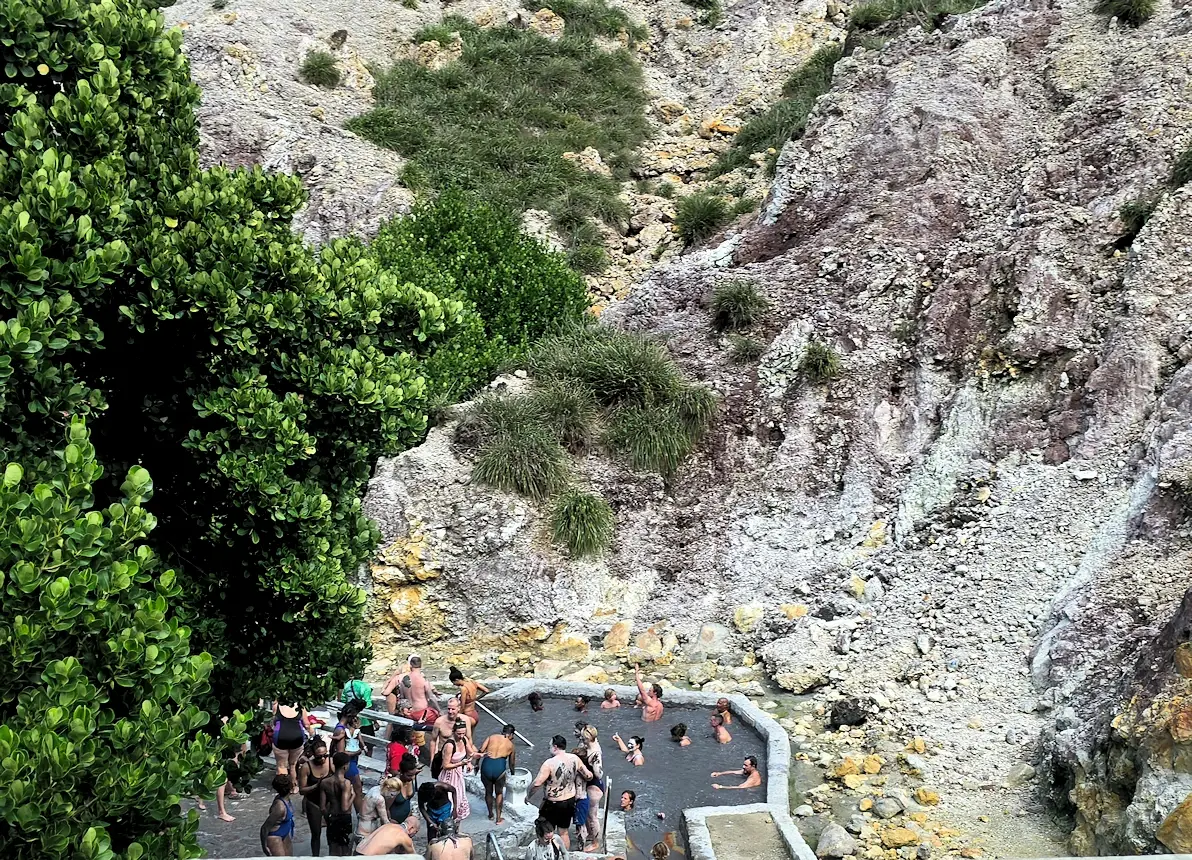
St Lucia Sulphur Springs.
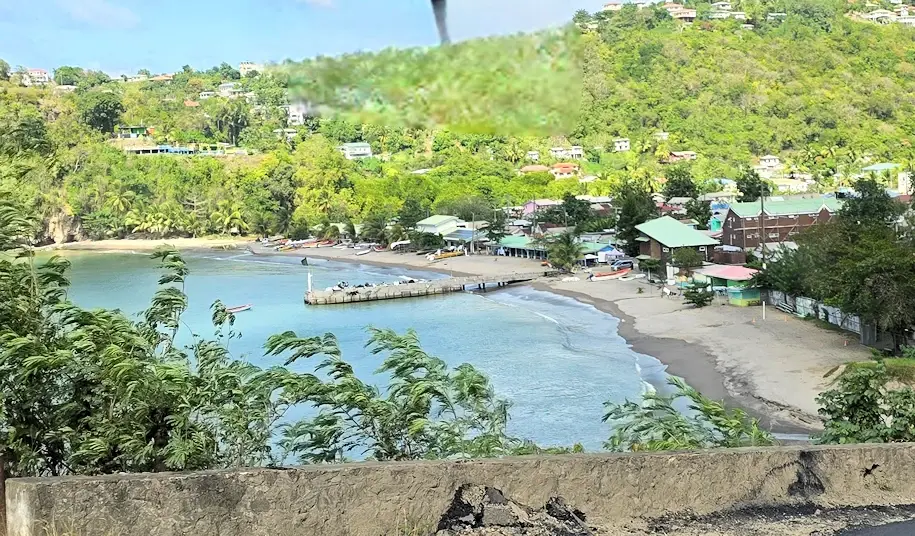
L'Anse la Raye beach.
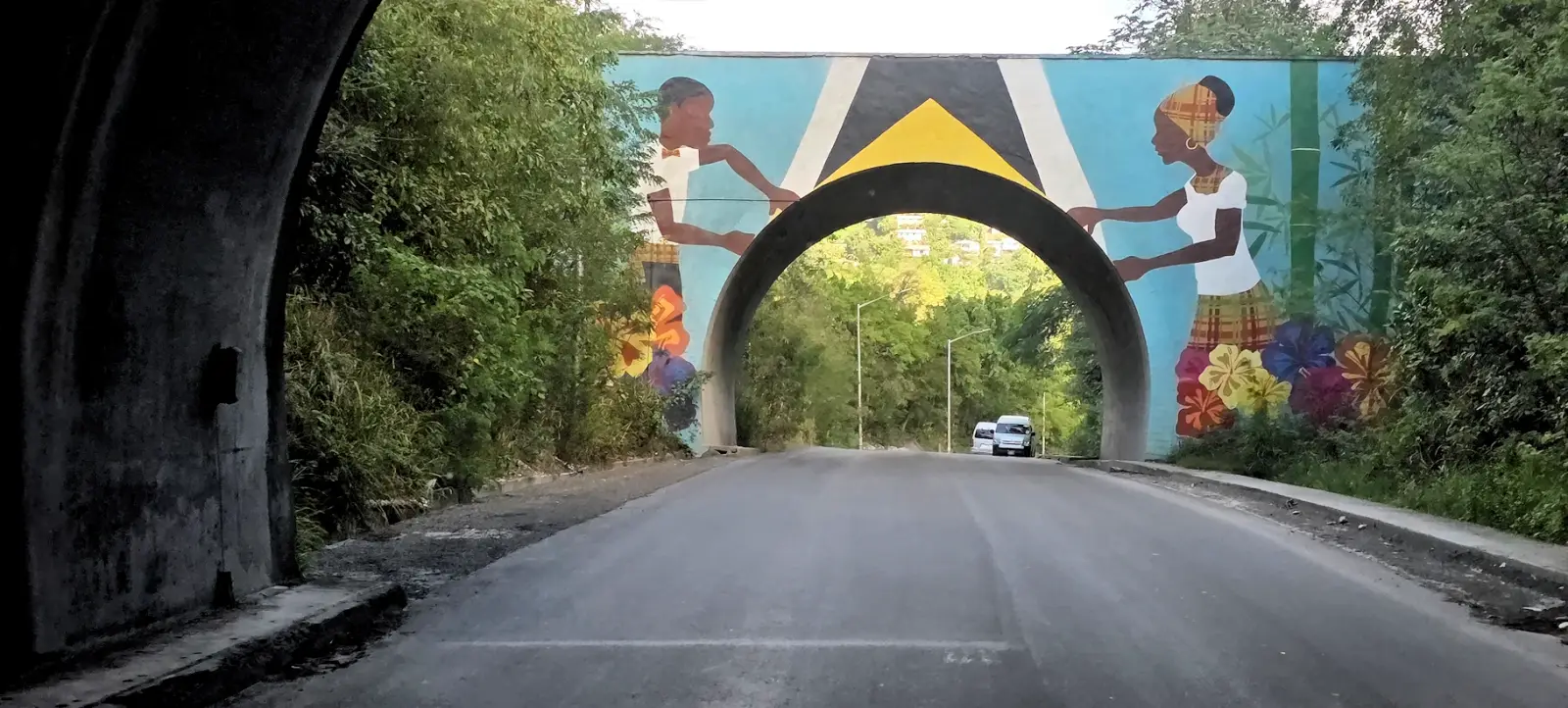
Overpass on the road to Soufriere.
Nearby places we have visited
- St Vincent & Grenadines — 43 miles
- Martinique — 53 miles
- Roseau, Dominica — 103 miles
- Barbados — 112 miles
- St Georges, Grenada — 134 miles
- Guadeloupe — 170 miles