
Things to Do at Gullfoss Waterfall

Gullfoss (Golden Falls) is an Iconic Multi-tiered Waterfall on a Glacial River in Iceland
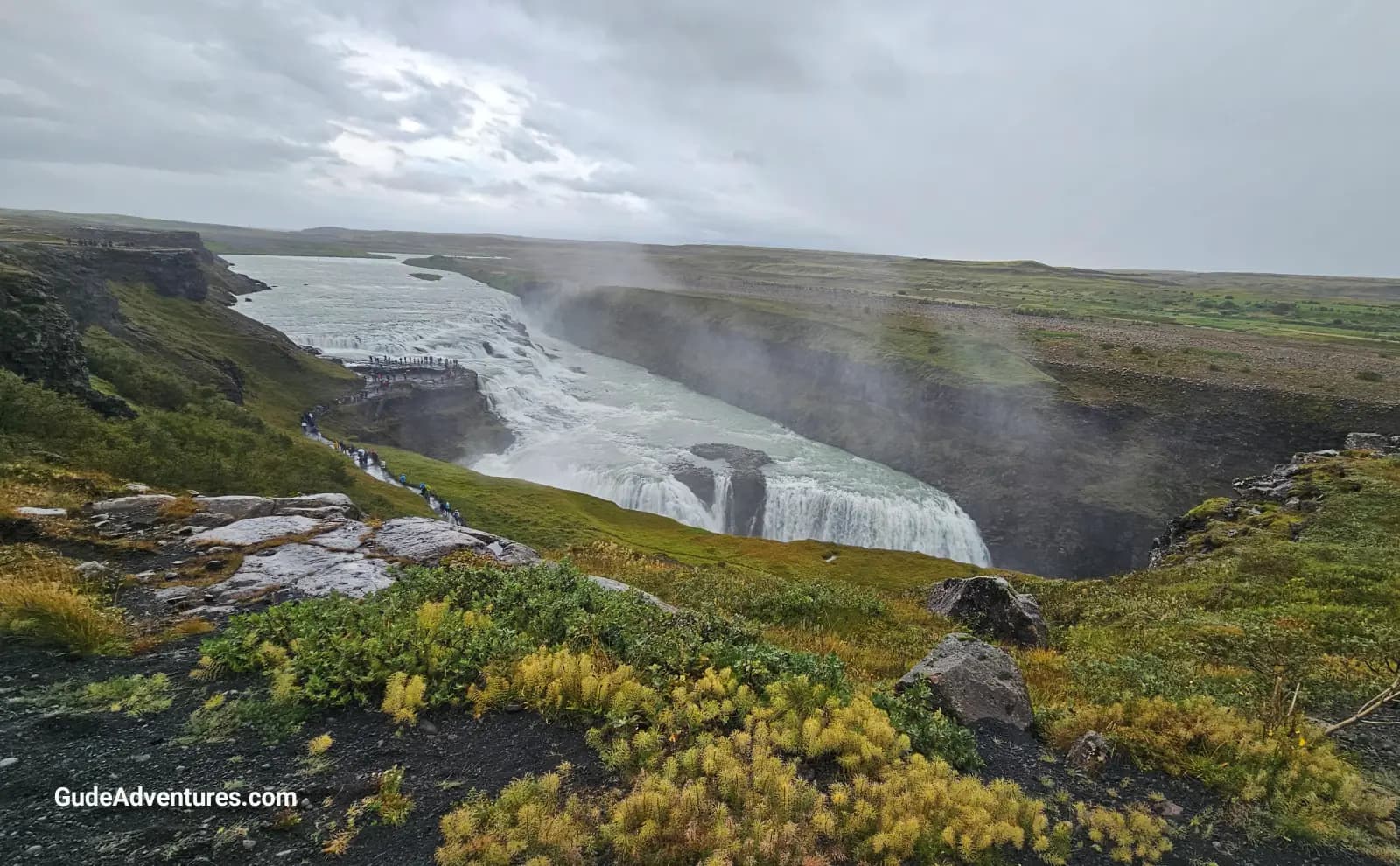
Gullfoss Waterfalls are one of Iceland’s most iconic and breathtaking natural landmarks. It is located 75 miles northeast of Reykjavík in the southwest of the country and is part of the famous Golden Circle, a popular tourist route that also includes Geysir, Kerid Crater, Secret Lagoon, and Þingvellir National Park. Known for its immense beauty and power, Gullfoss is a multi-tiered waterfall on the Hvítá River, a glacial river fed by the Langjökull Glacier.
The waterfalls are situated on the Hvítá River (meaning “White River”), which originates from the Langjökull Glacier, Iceland’s second-largest glacier. The glacial meltwater gives the river its milky-white color.
We visited the Gullfoss Waterfalls on 8/31/2024 as part of our Golden Circle tour. While there, we walked down several of the trails along the river which provided great views of the waterfall.
Two Tiers and a Deep Canyon
Gullfoss is unique because of its two-tiered drop. The upper tier has a drop of 36 feet, while the lower tier plunges 69 feet into a deep narrow canyon. This rugged canyon is 65 feet wide and up to 230 feet deep. The Hvítá River continues through this canyon, cutting through the volcanic rock over millennia.
Viewpoints and Trails
There are several viewpoints around the waterfall that offer spectacular views of both the upper and lower tiers. A well-maintained trail allows visitors to get quite close to the waterfall. The vantage points provide excellent opportunities for photography and viewing the falls from different perspectives. The canyon into which Gullfoss flows was formed by a combination of volcanic activity and glacial flooding over thousands of years. The powerful forces of the Hvítá River have continued to shape the canyon, making it a dynamic part of Iceland’s volcanic landscape.
How Gullfoss Was Saved
In the early 1900s there were plans to dam the Hvítá River for hydroelectric power. Sigríður Tómasdóttir, the daughter of the farmer who owned the land, fought to protect the falls, and she is remembered today as one of Iceland’s first environmentalists. A memorial to her stands near the falls.
The Name Gullfoss
The name "Gullfoss" translates to "Golden Falls." This name is thought to come from the golden hue that sometimes appears in the water during sunny days, especially when the sun hits the spray and mist created by the powerful falls. Another interpretation is related to the golden sunsets seen in the area during certain times of the year.
Why Visit Gullfoss?
In summary, Gullfoss is one of Iceland's most famous and awe-inspiring natural wonders, offering visitors a chance to witness the raw power of glacial water plunging into a deep canyon. Its historical significance, geological beauty, and easy access make it a must-see for anyone visiting the Golden Circle.
Best time to visit Gullfoss Waterfall is from June to August (midnight sun, and the roads and trails are open).
How to get there: Click here for options.
Looking for a place to stay? Click here for options.
Viator offers numerous tours in the Golden Circle area. Click here for details.
Passport/Visa Requirements for Gullfoss Waterfall
Click here to view the location on the map.
Pictures from Gullfoss Waterfall
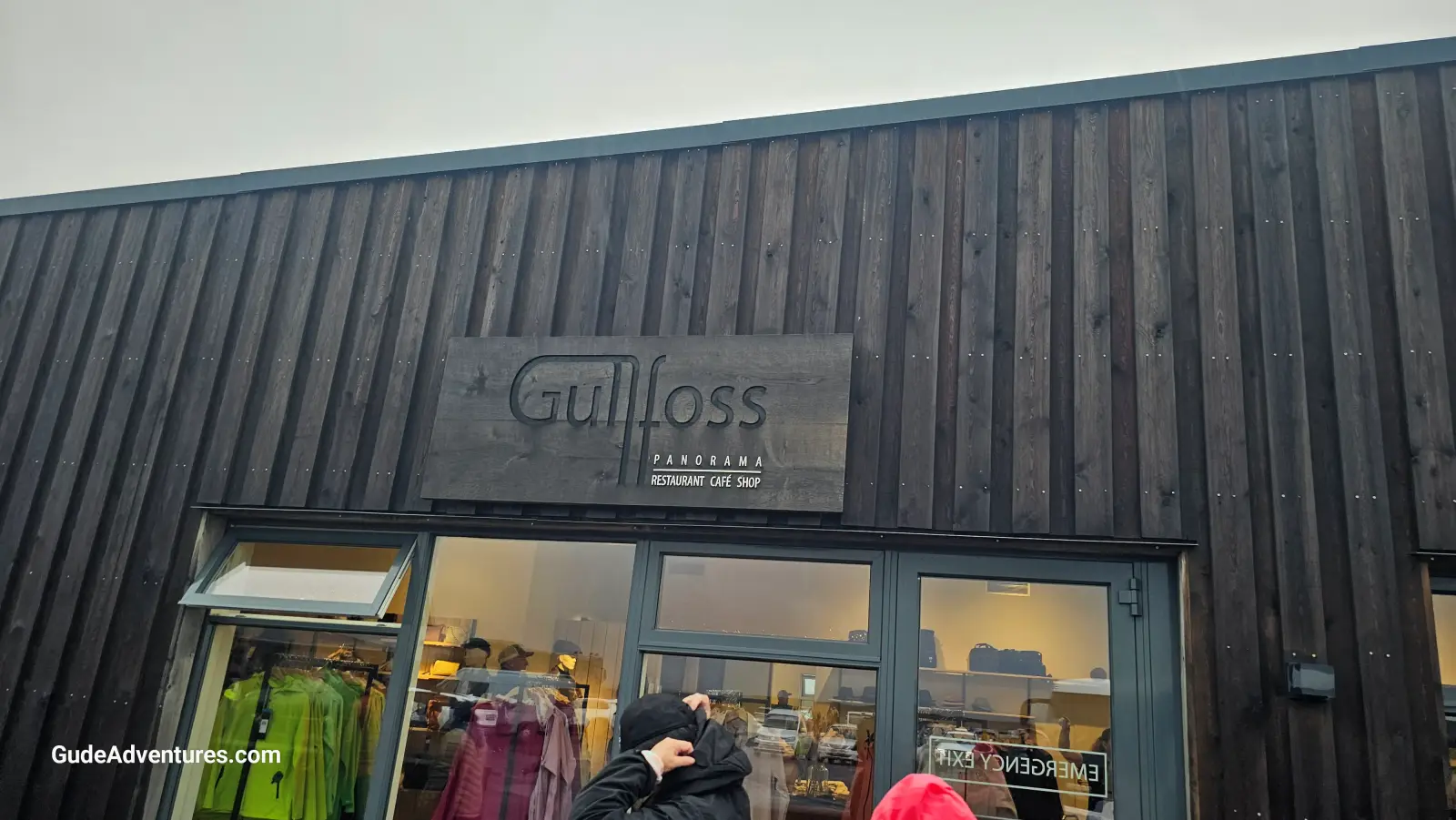
The Gullfoss Visitor Center.
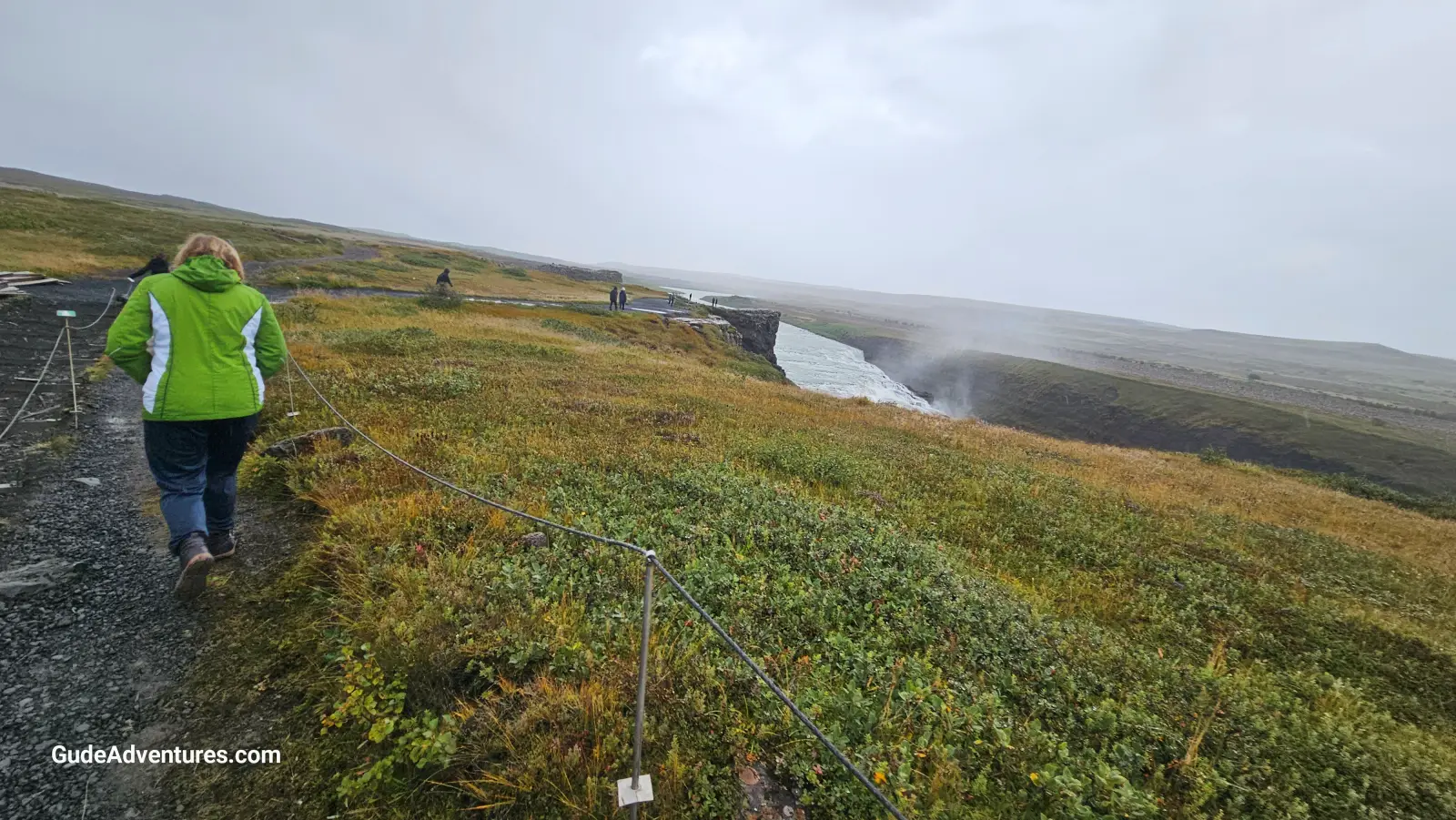
Trail to the Gullfoss waterfalls.
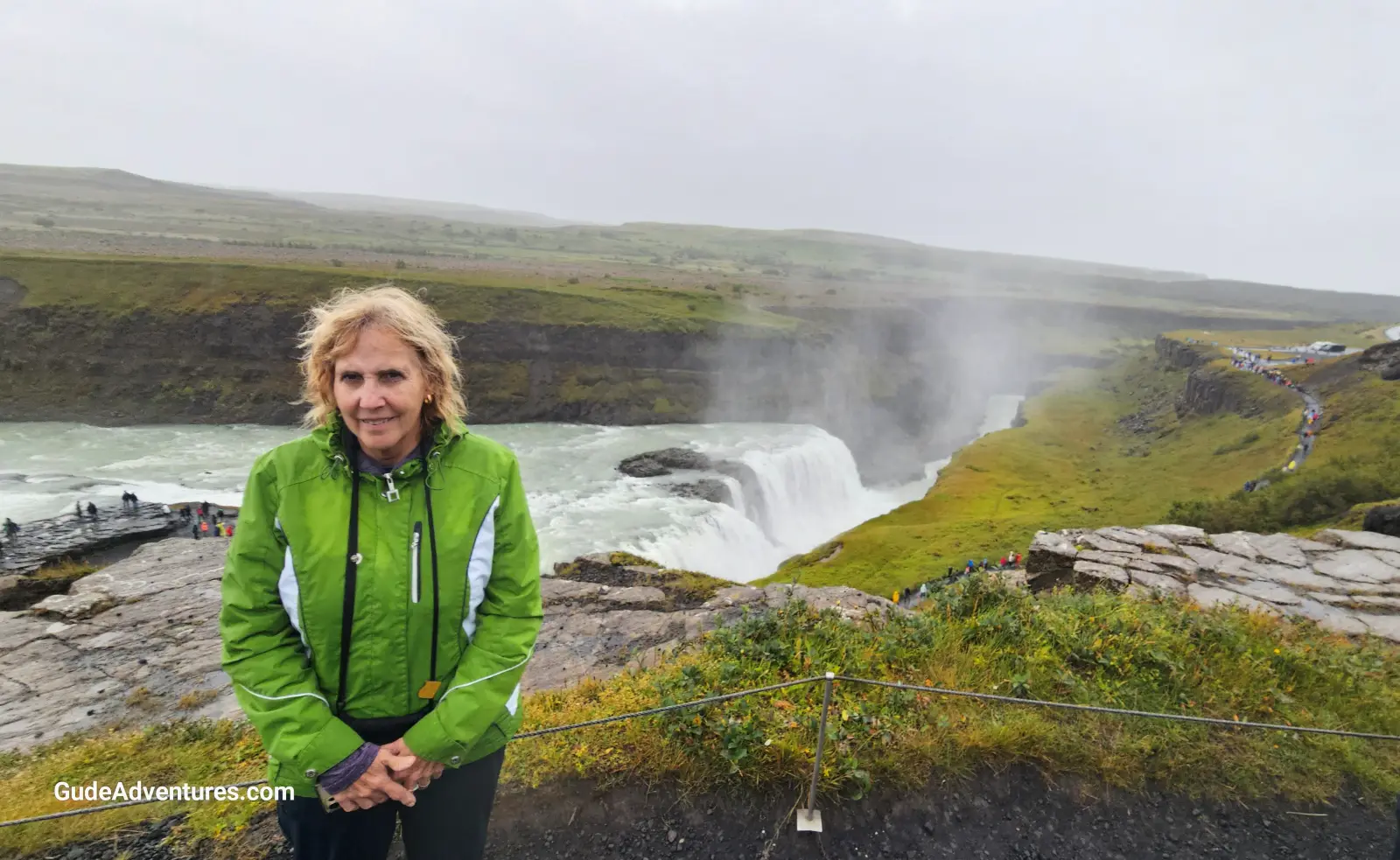
The lower Gullfoss falls drop 69 feet into a 230 feet deep canyon that is only 65 feet wide.
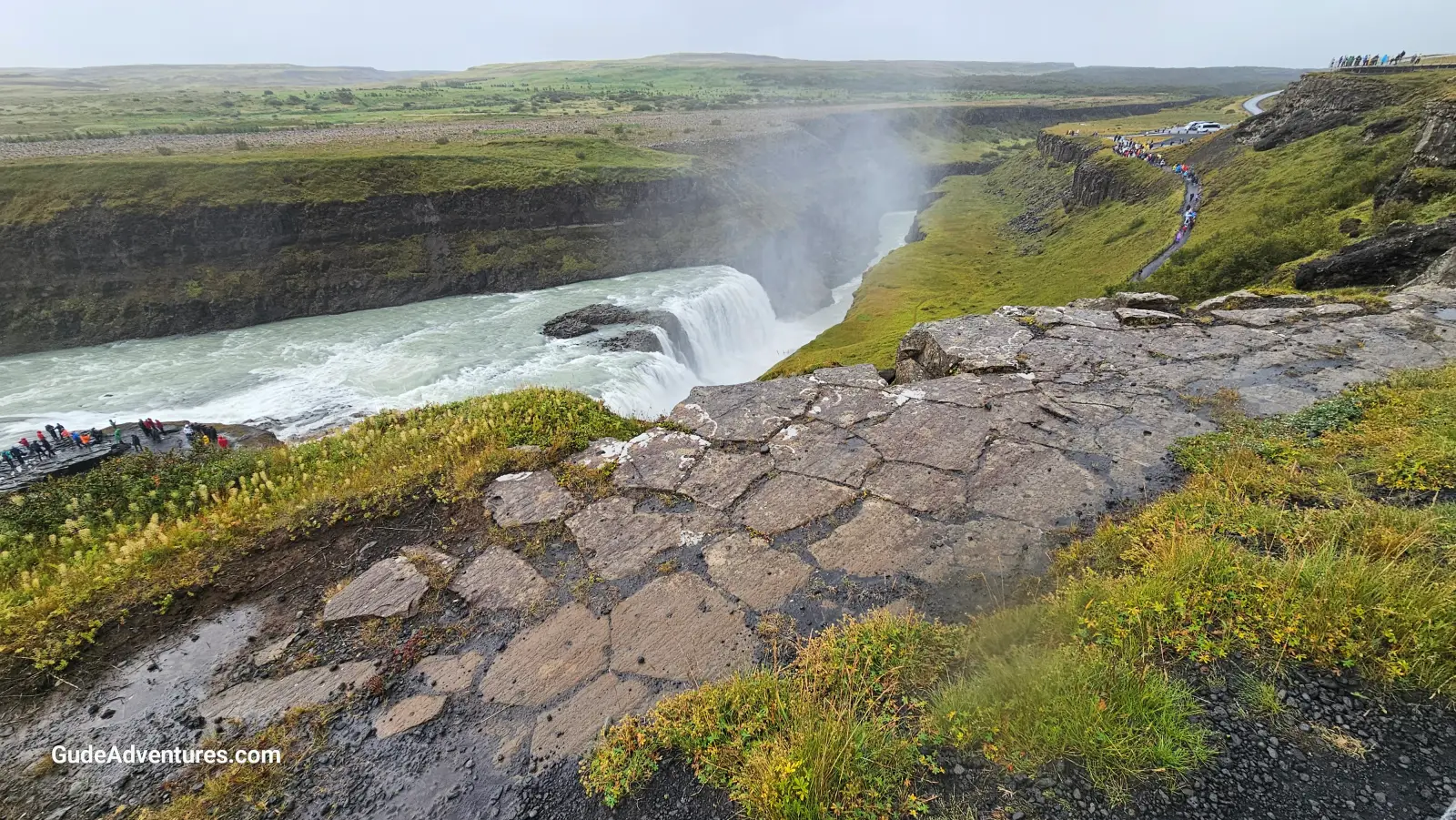
Basalt columns near the lower Gullfoss waterfall.
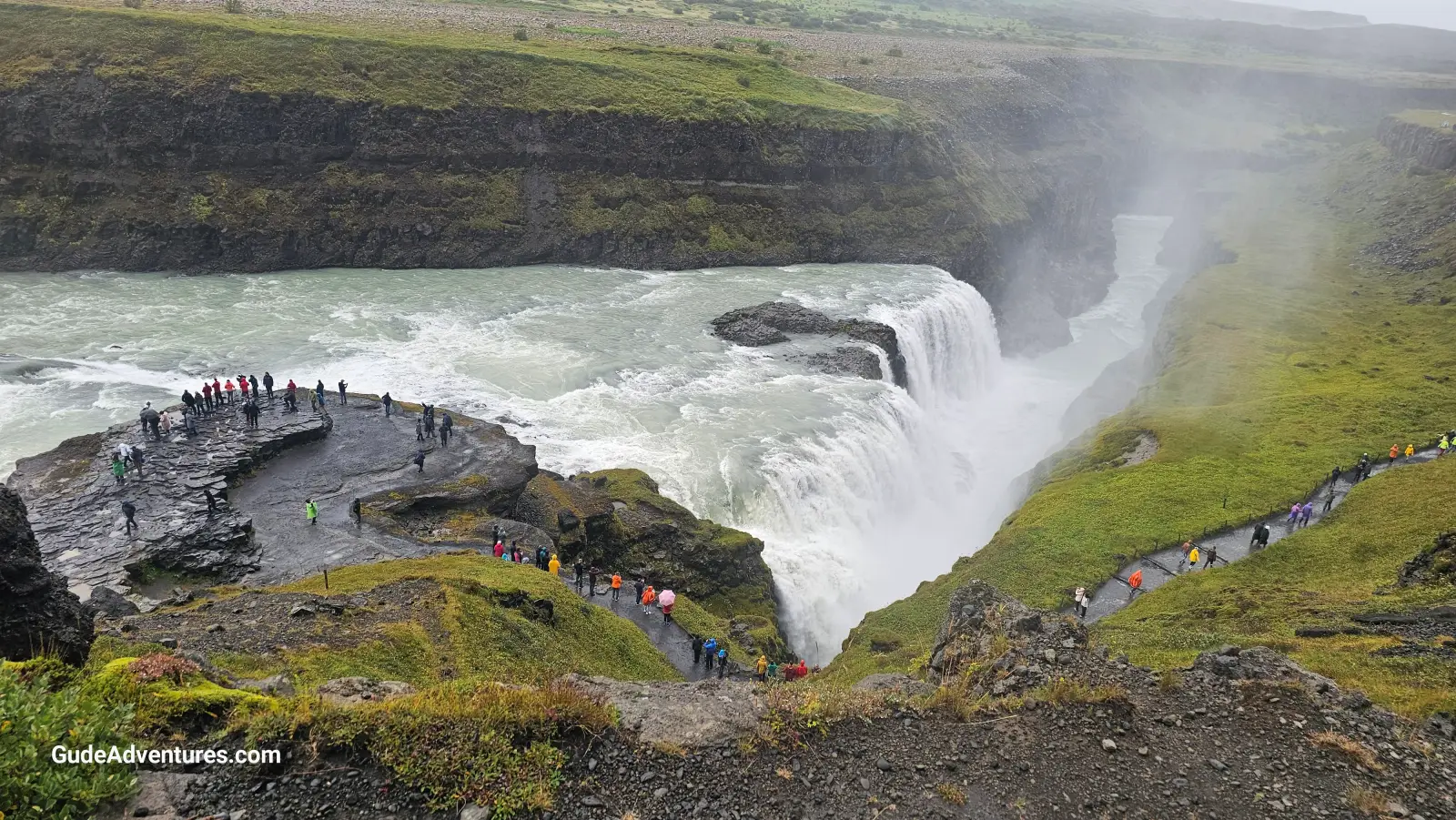
Second observation deck near the lower Gullfoss waterfall.
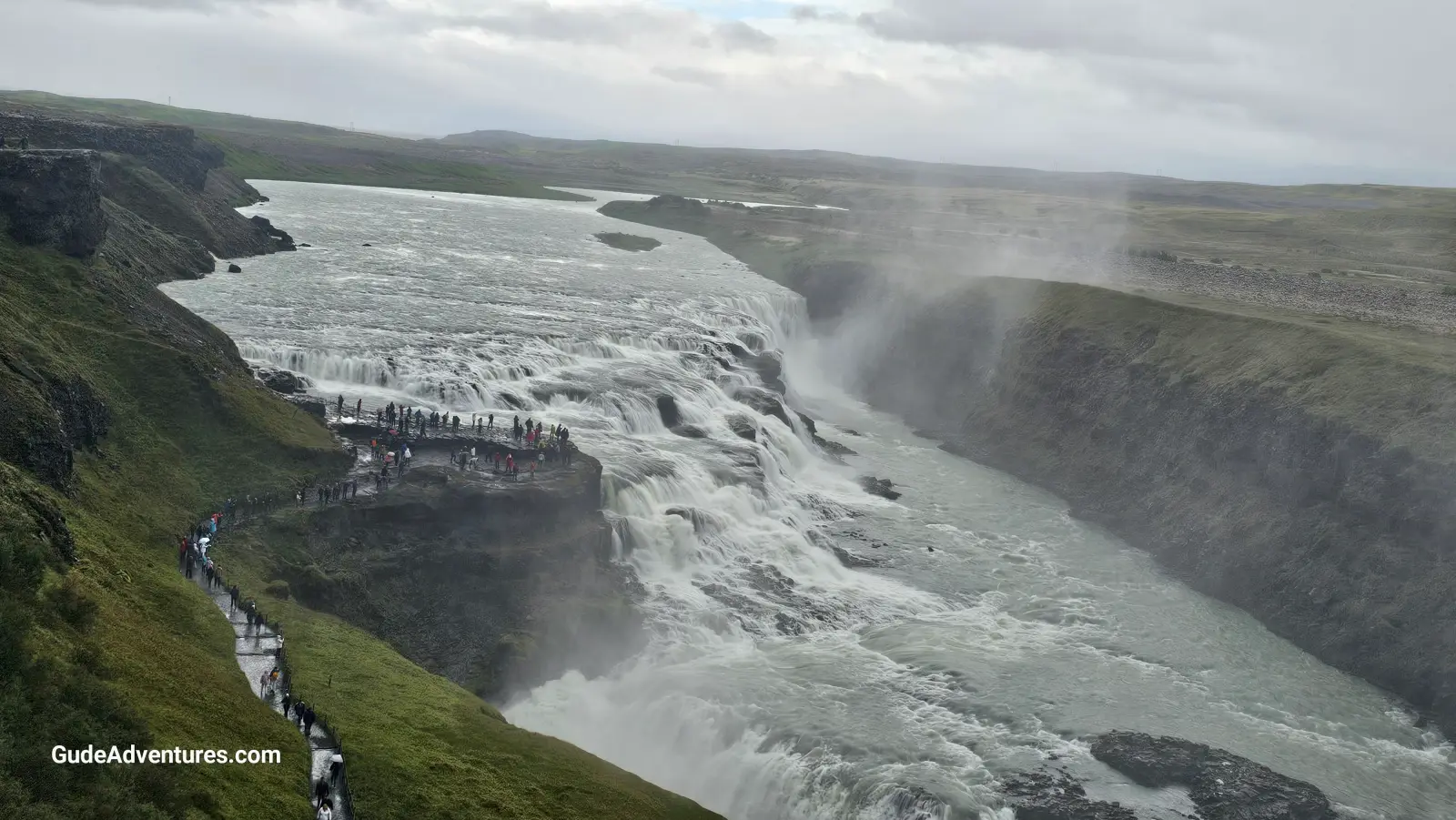
The upper Gullfoss waterfall drops 36 feet.
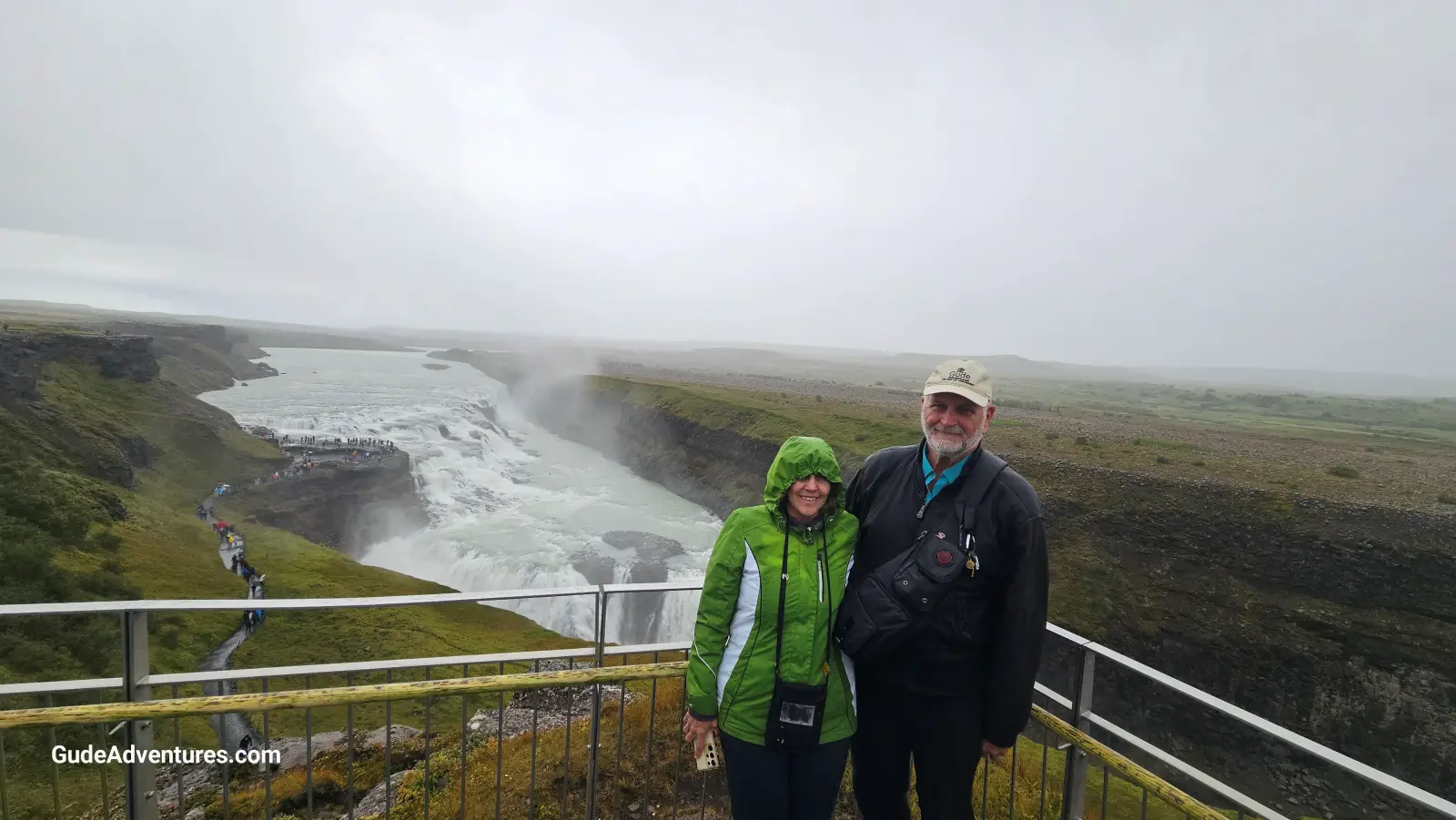
Overlook of the upper Gullfoss waterfall.
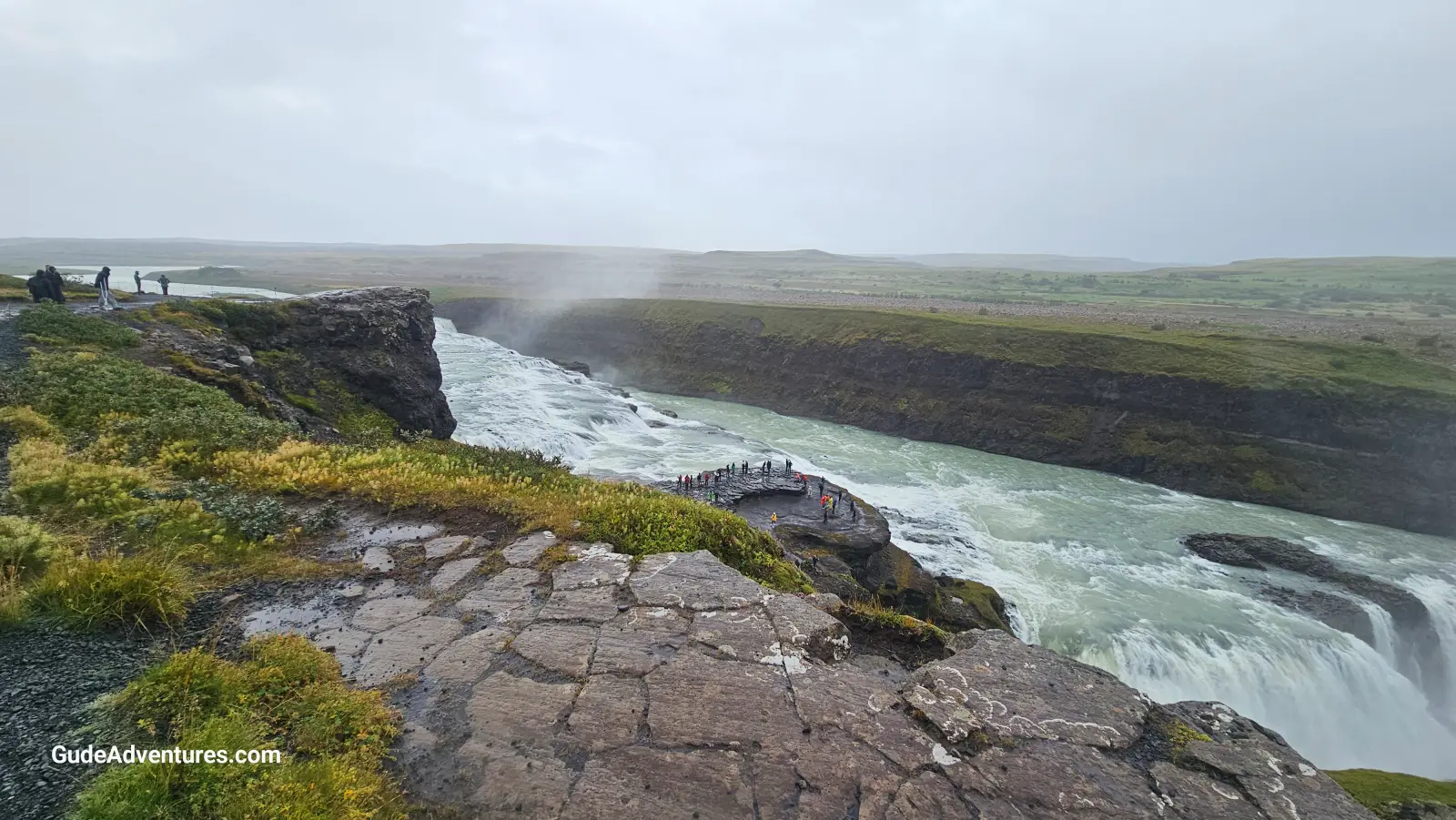
The Hvítá River at the Gullfoss waterfalls.
Nearby places we have visited
- Geysir, Iceland — 5 miles
- Secret Lagoon, Iceland — 14 miles
- Thingvellir National Park — 29 miles
- Kerid Crater, Iceland — 30 miles
- Reykjavík, Iceland — 56 miles
- Grindavik, Iceland — 77 miles